
Why go
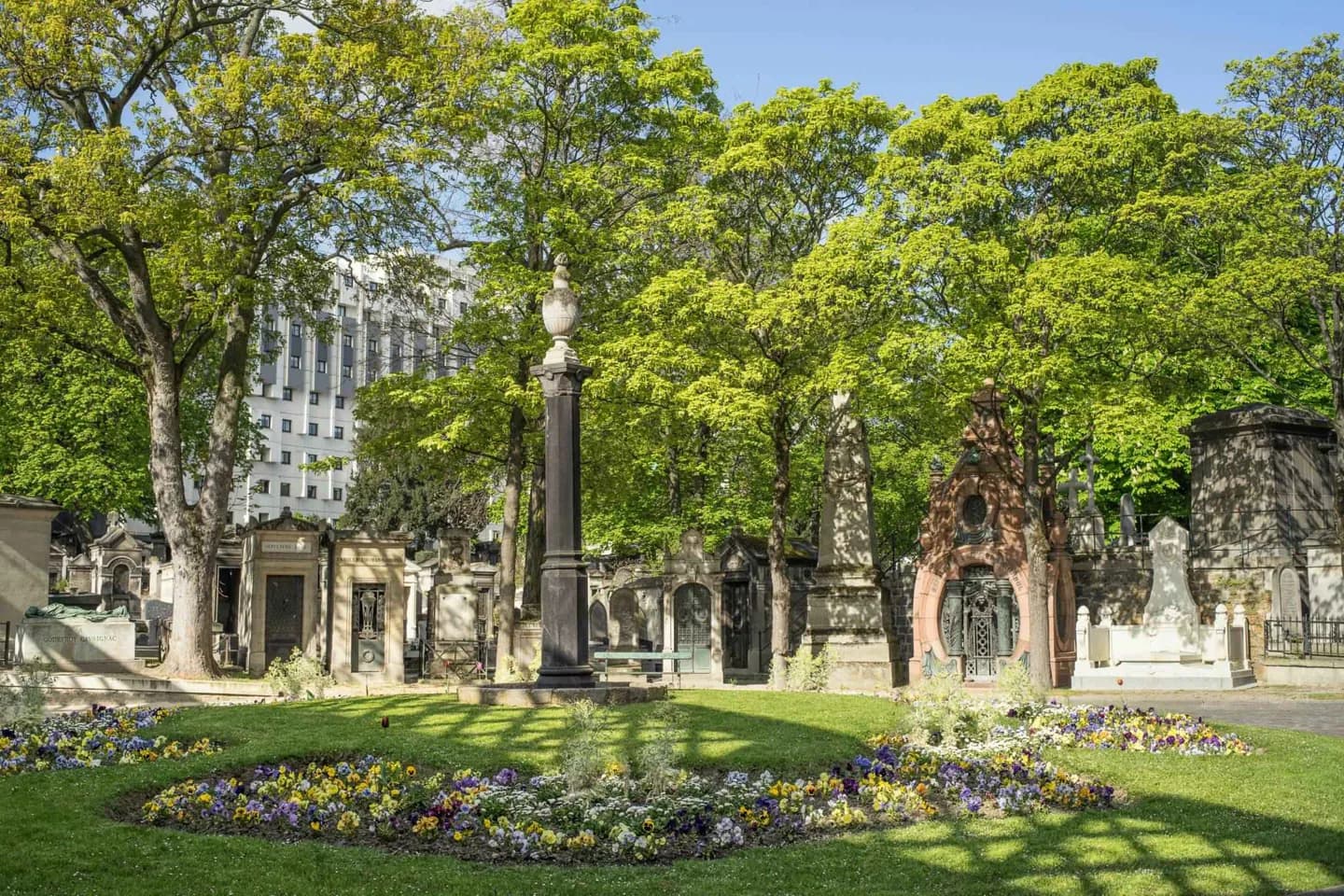
The cemetery connects Montmartre’s artistic reputation with individual lives. Edgar Degas, Hector Berlioz, Dalida and many other painters, composers, writers and performers are buried among ornate chapels and family monuments. Its sunken quarry setting and the bridge of Rue Caulaincourt give the landscape an unusual urban character.
What to look for
- The cemetery occupies the hollow of a former gypsum quarry.
- Rue Caulaincourt crosses above part of the burial ground on a metal bridge.
- Graves include those of Edgar Degas, Hector Berlioz and Dalida.
The full story
Montmartre Cemetery opened in 1825 as Paris reorganized burial outside the dense historic centre. Its official name, Cimetière du Nord, reflects its role alongside Père Lachaise in the east, Montparnasse in the south and Passy in the west. The site was an abandoned gypsum quarry below the Butte Montmartre, which explains both its sunken terrain and its earlier name, the Cemetery of the Large Quarries. Its entrance still descends from Avenue Rachel, while Rue Caulaincourt passes overhead. Over time the cemetery became closely tied to the surrounding artistic district. Composers Hector Berlioz and Léo Delibes, painter Edgar Degas, filmmaker François Truffaut and singer Dalida are among those buried here. Their monuments make the cemetery a record of cultural lives as well as a distinctive landscape.
Useful to know
- Check the City of Paris schedule before visiting and allow enough time to leave before the gates close.
- Use the official cemetery map or entrance information to locate specific graves.
Your next visit
Estimated · Declared scenario and planning estimates; no live opening, weather, queue or booking service.
Outdoor visit · 30–45 min
World planning estimate; admission, opening, visit duration and access need checking.