
Why go
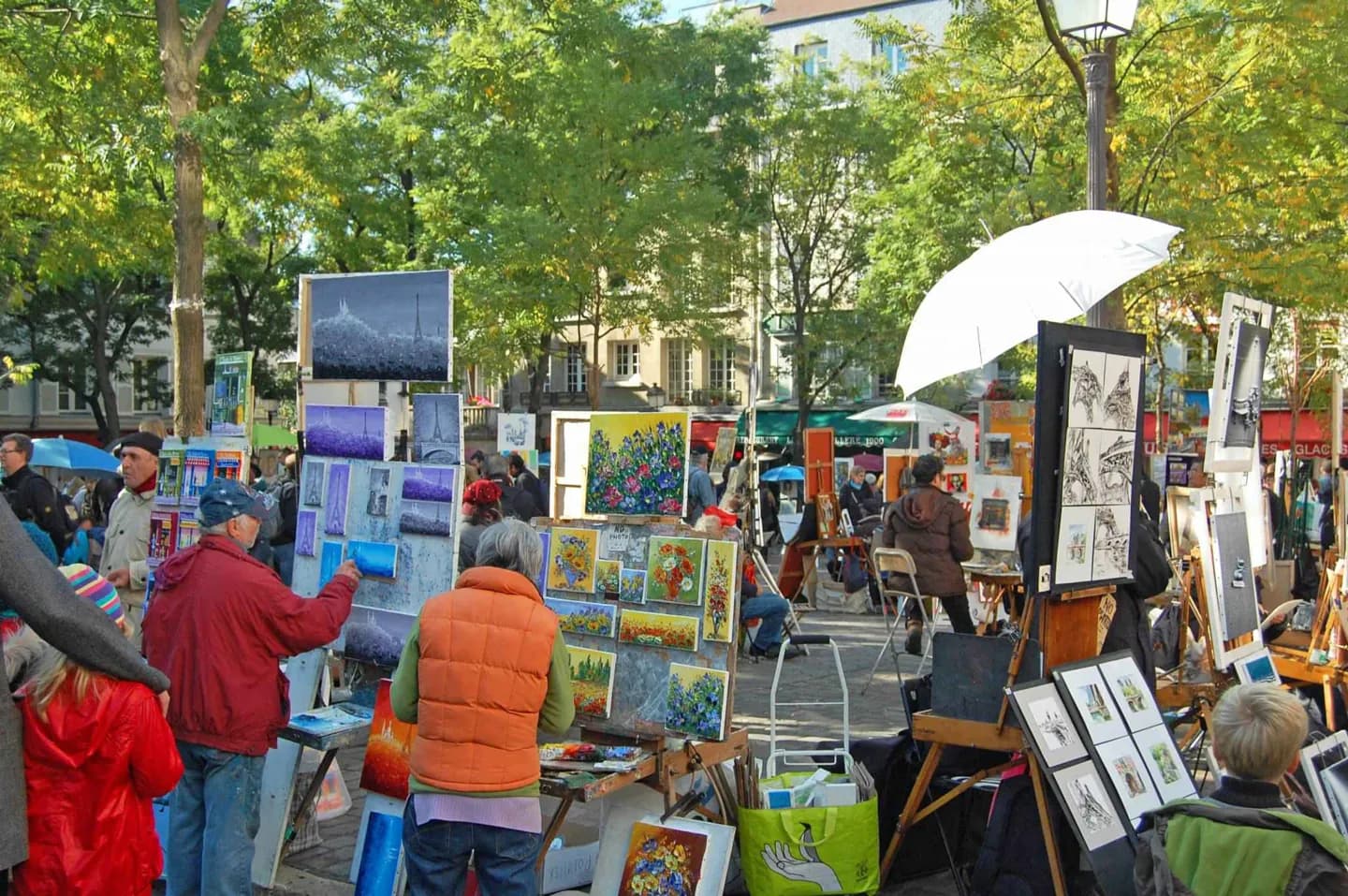
Place du Tertre makes Montmartre’s artistic identity visible in the street. Portraitists and painters work within a tight square surrounded by restaurants and old village lanes. The experience can be crowded and performative, yet it provides a direct link between today’s working artists and the quarter that attracted Picasso, Utrillo and their contemporaries.
What to look for
- Painters and portrait artists work from allocated pitches around the square.
- Narrow lanes connect the square with Sacré-Cœur and the older Montmartre village.
- The dense ring of façades preserves the scale of the hilltop settlement.
The full story
The square sits at the centre of the old village of Montmartre, close to the former town hall and parish church. Its modern fame comes from the artists who gathered on the hill when rents were low and studios, cabarets and informal meeting places supported a new creative community. Around the turn of the twentieth century, painters including Pablo Picasso and Maurice Utrillo lived or worked nearby, although the artistic life of Montmartre extended far beyond this one square. Today’s licensed portraitists and painters continue that public image in a highly organized setting. The result is neither an untouched artists’ village nor merely a souvenir stop: it is a working square where Montmartre’s history has become an active, sometimes crowded performance for visitors.
Useful to know
- Visit earlier in the day for more room to look at the artists’ work and the square itself.
- Agree on the price and format before commissioning a portrait.
Your next visit
Estimated · Declared scenario and planning estimates; no live opening, weather, queue or booking service.
Outdoor visit · 30–45 min
World planning estimate; admission, opening, visit duration and access need checking.