
Why go
The basilica gives a religious landmark a more complicated context than its hilltop setting suggests. Paul Abadie's design emerged from a public competition, then survived political argument, changing architects and the interruption of war. It is a worthwhile stop for visitors who want to connect Montmartre's views with the political and devotional history built into the monument.
What to look for
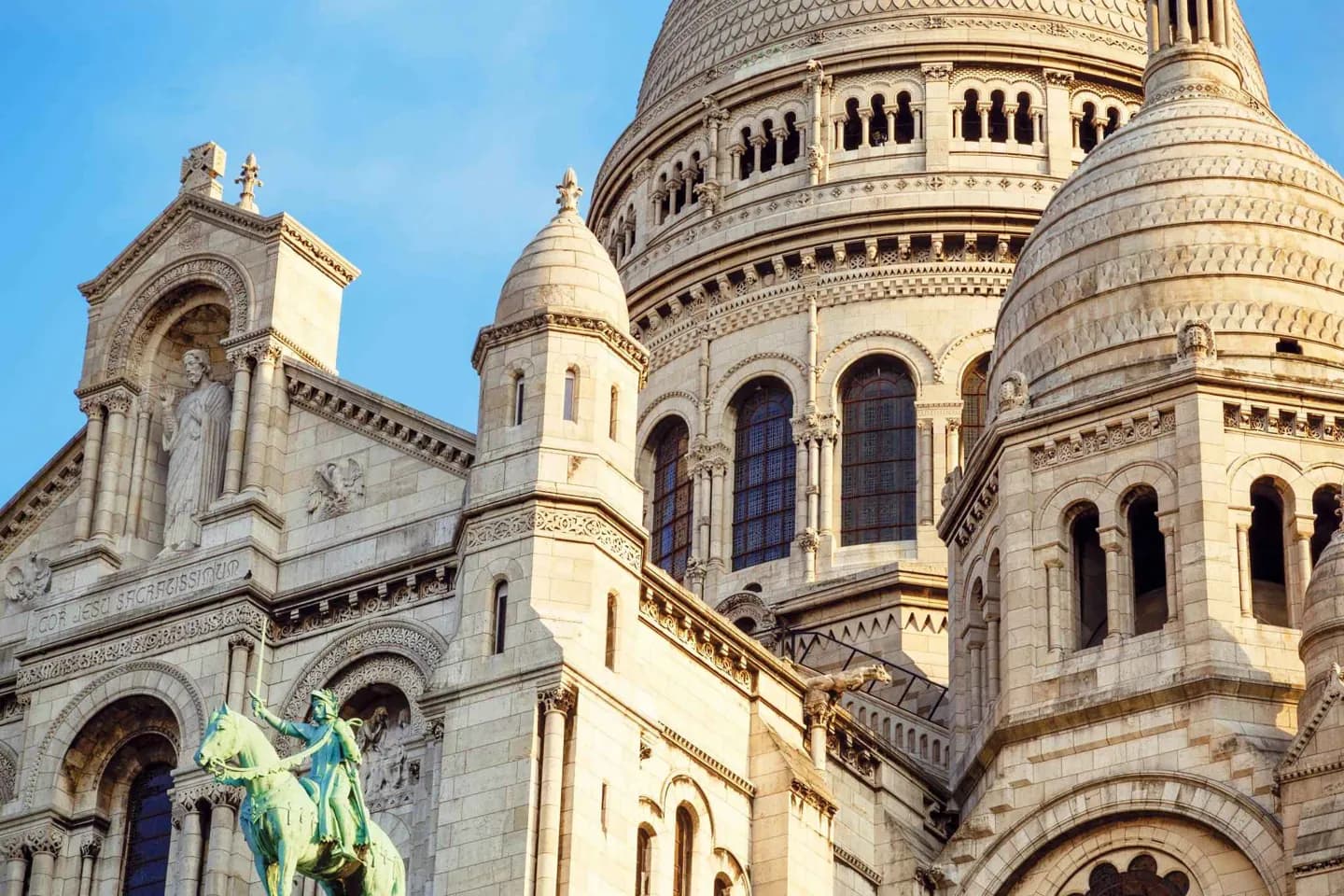
- The basilica’s white domes define the Montmartre skyline.
- From the hilltop, the church and its forecourt frame broad views over Paris.
- The climb makes the basilica’s position above the surrounding district clear.
The full story
Sacré-Cœur was built on Montmartre after a law of public utility secured the summit for the project. Paul Abadie won the design competition, but the project was never a simple architectural commission. In 1880, Paris councillors argued over whether the basilica was an affront to the Revolution, and the dispute continued in the national legislature. Abadie died in 1884, when little of the final building was complete, and five architects carried the work forward. Construction was complete by 1914, but the First World War delayed its formal dedication until 1919. That sequence changes the building's meaning on site: its domes belong to the Montmartre skyline, while its long construction records arguments over religion, memory and the politics of Paris for decades.
Useful to know
- Allow for the hill: the steps and funicular make the ascent a real choice.
- Pair the basilica with a Montmartre walk rather than treating it as an isolated stop.
Your next visit
Estimated · Declared scenario and planning estimates; no live opening, weather, queue or booking service.
Outdoor visit · 30–45 min
World planning estimate; admission, opening, visit duration and access need checking.