
Why go
This is a performance choice rather than a casual landmark stop. The venue opened in 1889 at the foot of Montmartre and made its name through revue, the can-can and artists such as Toulouse-Lautrec. Go if a ticketed cabaret belongs in your evening; its cultural value lies in the link between a working entertainment venue and the enduring picture of Belle Époque Paris.
What to look for
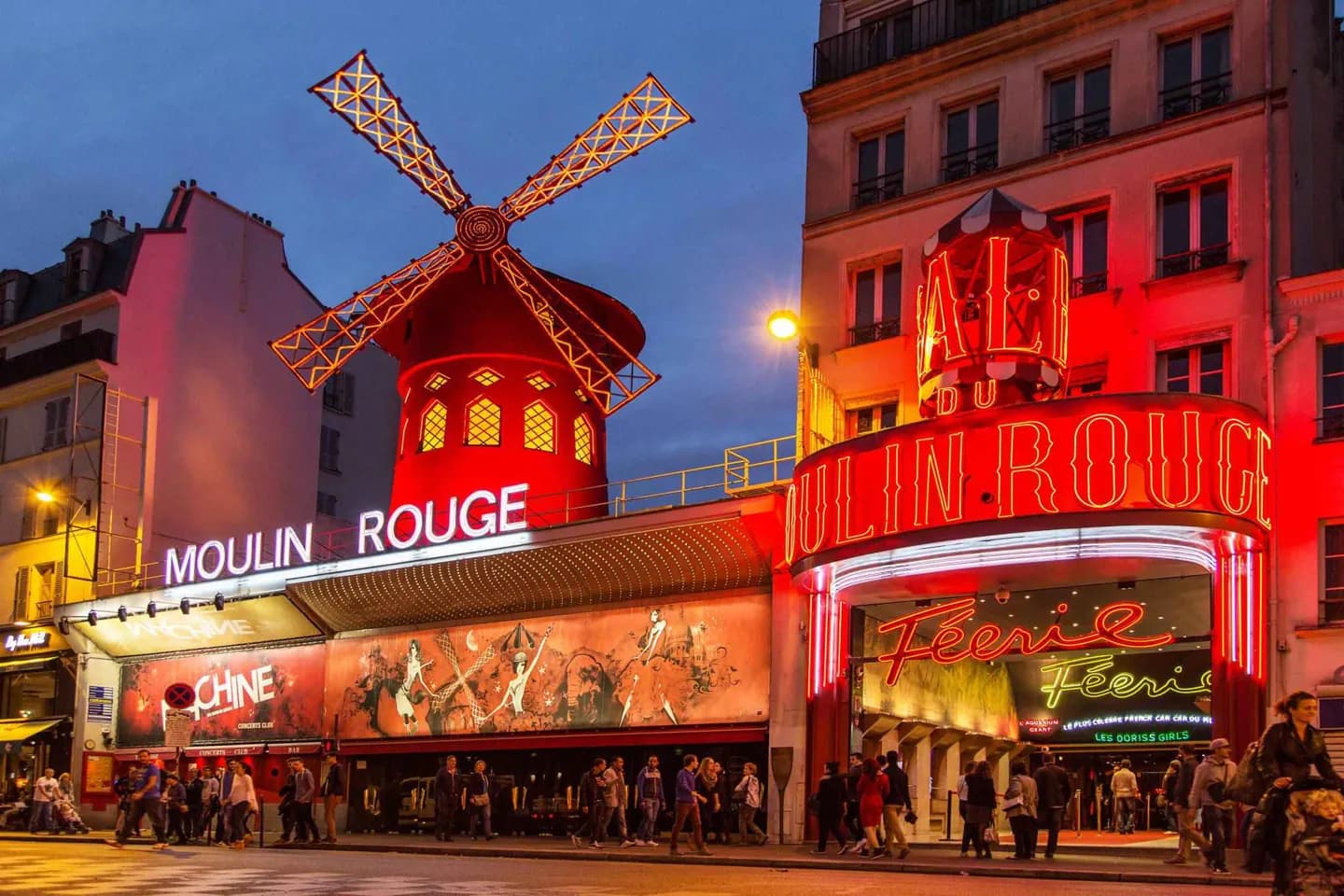
- The red windmill marks the cabaret at the foot of Montmartre.
- The venue’s stage revues keep the can-can central to its public image.
- Look for the poster imagery associated with Toulouse-Lautrec around the cabaret’s story.
The full story
The Moulin Rouge opened in 1889, when Montmartre still retained a village character at the edge of an expanding city. Its founders, Joseph Oller and Charles Zidler, created an extravagant cabaret where artists, local residents and visitors could share the same room. Revue, circus-like turns and the can-can established the tone, while dancers such as La Goulue and Jane Avril became part of its public identity. Henri de Toulouse-Lautrec's posters and paintings gave the venue an image that travelled quickly beyond Paris. The Moulin Rouge has also remained a reference in films, books and popular music, but that legacy makes most sense after seeing it as a working Belle Époque entertainment house: a place where commercial spectacle and Montmartre's artistic reputation grew together.
Useful to know
- Treat it as a booked evening performance and confirm the programme before planning around it.
- Combine it with a walk through lower Montmartre, then keep the performance as the evening's fixed point.
Your next visit
Estimated · Declared scenario and planning estimates; no live opening, weather, queue or booking service.
Outdoor visit · 30–45 min
World planning estimate; admission, opening, visit duration and access need checking.