
Why go
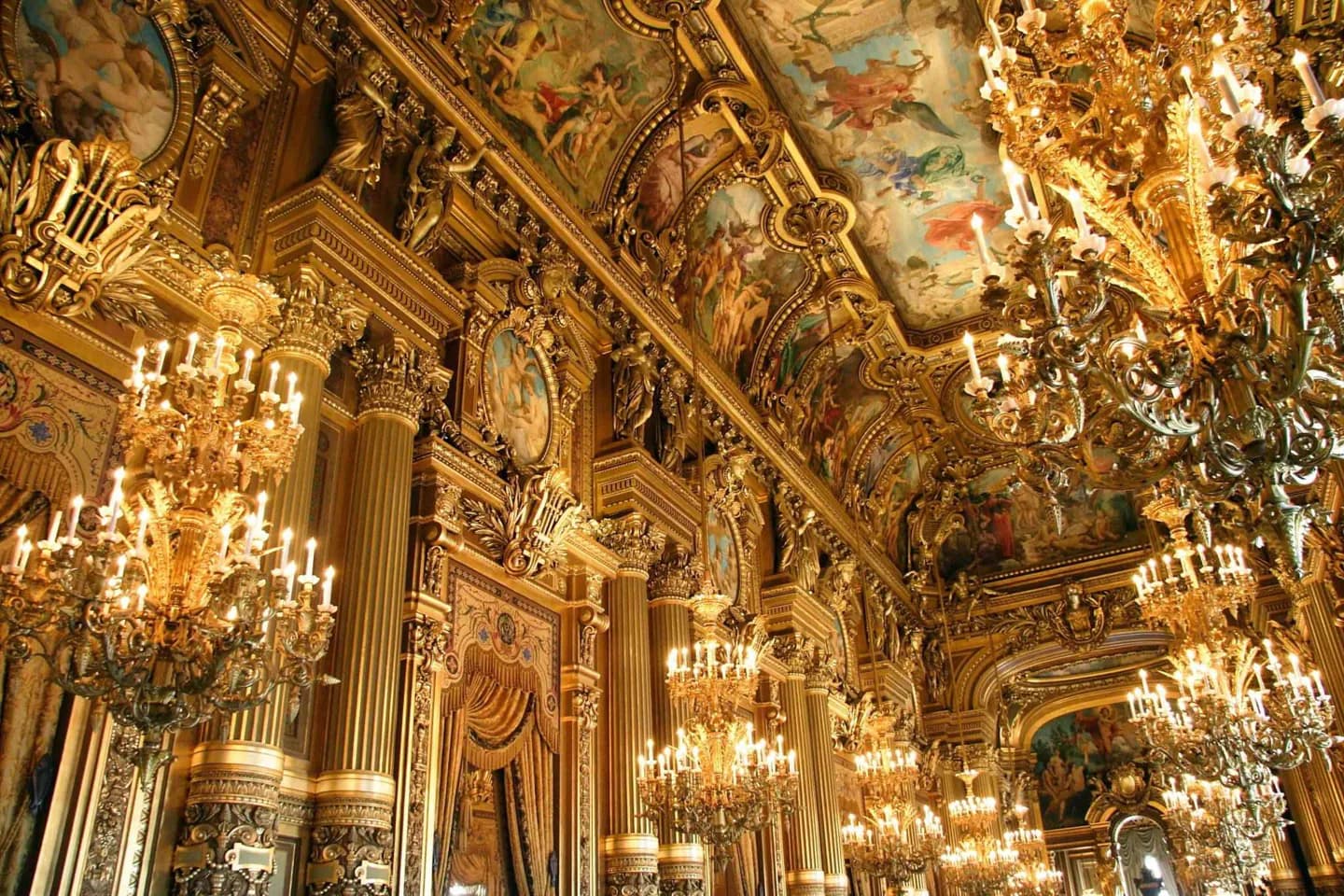
Palais Garnier is worth entering for the building itself, whether or not you attend a performance. Charles Garnier's nineteenth-century design turns staircases, corridors and public rooms into part of the spectacle. It suits visitors who want a concentrated architecture visit near Place de l'Opéra and who will look beyond the main façade to its sculpture, stairways and ceiling details.
What to look for
- Second Empire Beaux-Arts façade facing Place de l'Opéra.
- A grand staircase designed as a public theatrical space.
- Gilded façade groups and composer busts between the columns.
The full story
Palais Garnier was built as the new home of the Paris Opéra after the limitations of the earlier Salle Le Peletier made a purpose-built theatre urgent. Charles Garnier won the design competition in 1861, and his project gave Place de l'Opéra a building whose public spaces are designed to be seen as much as the stage. The façade is Second Empire Beaux-Arts, with multicoloured marble, columns, sculpture and gilded figures; composer busts line the front between its columns. Inside, corridors, landings and the grand staircase create a sequence for arriving and circulating during an interval. The central bronze-and-crystal chandelier is part of that theatrical effect, even though its position was debated because it affected sightlines. Notice how the building uses sculpture, light and movement to make the act of attending an opera part of the architecture.
Useful to know
- Visit for the architecture even when a performance is not part of your plan.
- Start outside on Place de l'Opéra, then allow time for the staircase and public rooms inside.
- Confirm the visitor programme for your chosen date before relying on interior access.
Your next visit
Estimated · Declared scenario and planning estimates; no live opening, weather, queue or booking service.
Outdoor visit · 30–45 min
World planning estimate; admission, opening, visit duration and access need checking.