
Why go
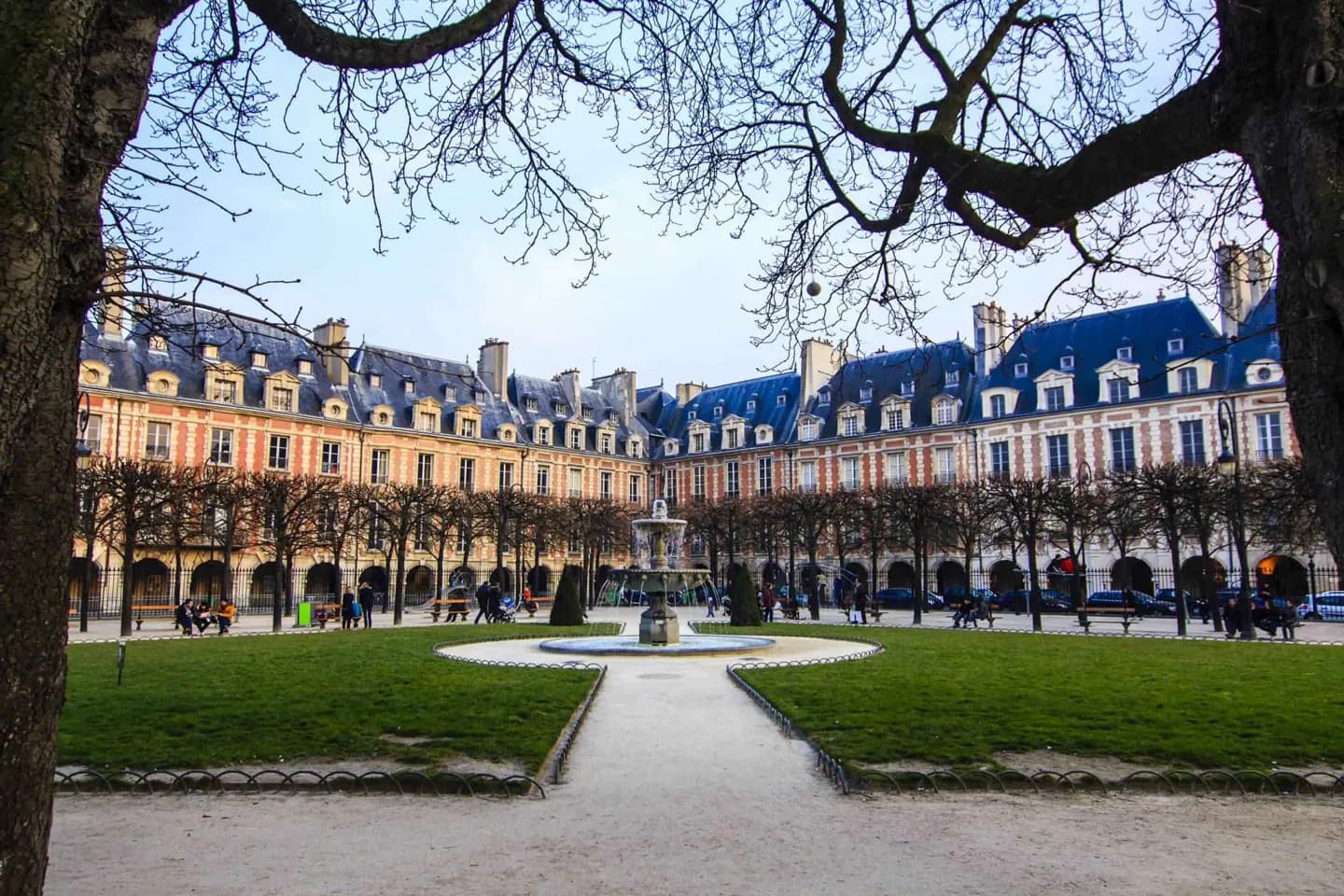
Place des Vosges shows how planned urban design changed Paris long before Haussmann. Nearly matching houses, steep slate roofs and continuous arcades create a coherent room around Square Louis XIII. The setting also connects royal history with everyday use: residents, gallery visitors and picnickers share the same enclosed space.
What to look for
- Red brick, pale stone and slate roofs repeat around all four sides.
- The King’s and Queen’s pavilions rise above the otherwise even roofline.
- Vaulted arcades shelter entrances, galleries and cafés around the perimeter.
The full story
Henri IV ordered the Place Royale, as it was first known, after the Hôtel des Tournelles was demolished. Built from 1605 to 1612, it introduced a coordinated residential square whose façades followed a shared design of brick, stone and steep slate roofs. The square was inaugurated with celebrations for the marriage of Louis XIII and Anne of Austria. Two taller gateways became known as the King’s and Queen’s pavilions, although neither monarch lived here. The central garden and equestrian statue of Louis XIII developed later. The name changed during the Revolution to honour the Vosges, the first département to pay taxes supporting the revolutionary army. Victor Hugo lived at number 6 from 1832 to 1848; his former home is now a City of Paris museum. The square remains both a major work of urban planning and a lived neighbourhood space.
Useful to know
- Walk once beneath the arcades before crossing the central Square Louis XIII.
- Check the garden’s current opening times if planning an early or late visit.
Your next visit
Estimated · Declared scenario and planning estimates; no live opening, weather, queue or booking service.
Outdoor visit · 30–45 min
World planning estimate; admission, opening, visit duration and access need checking.