
Why go
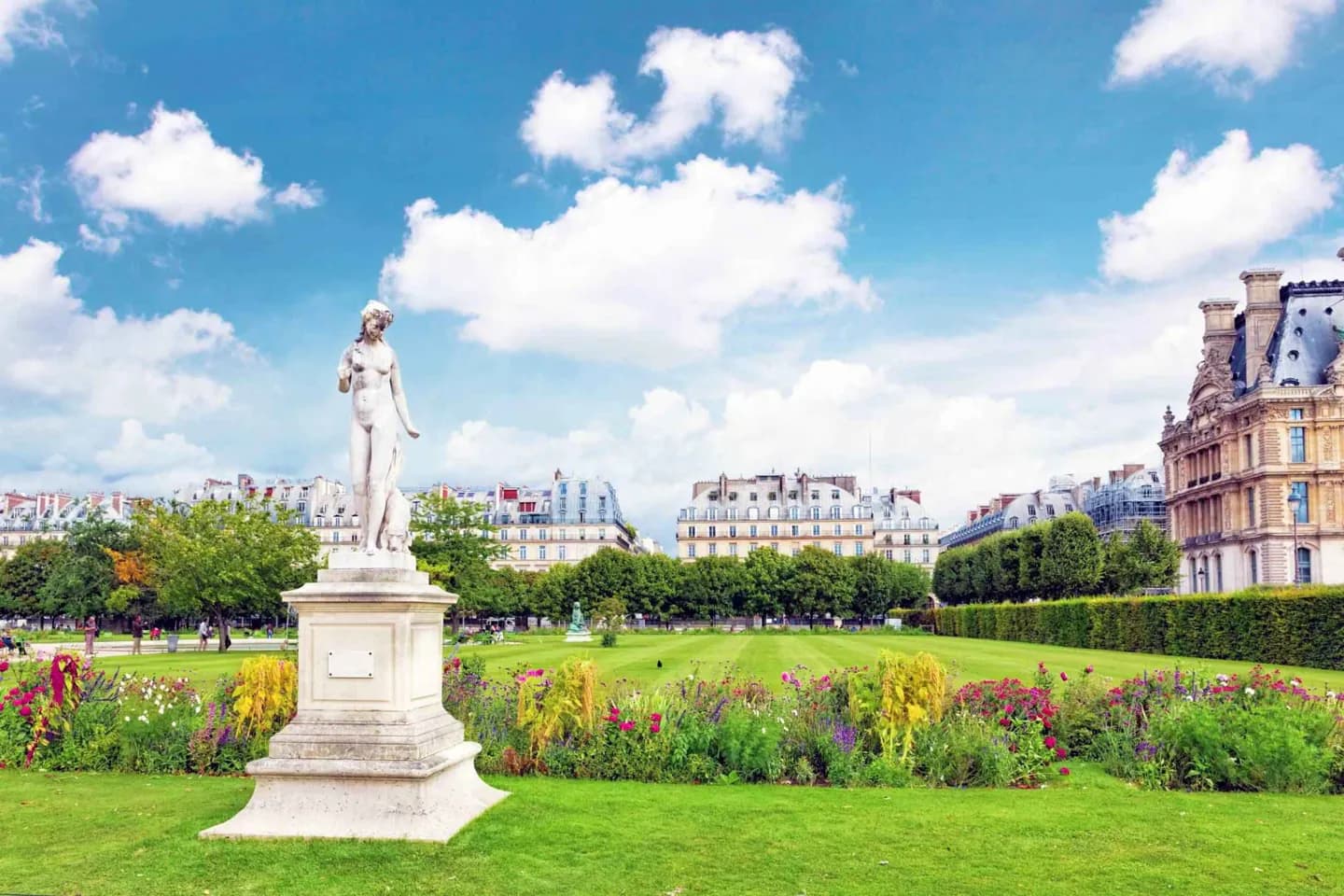
The garden lets you follow the scale of royal Paris on foot. At the Louvre end, the Place du Carrousel opens the transition from palace courtyard to planted space. Further west, the long alignment draws your eye toward Concorde, giving the walk a clear direction instead of a circuit through unrelated paths.
What to look for
- Place du Carrousel marks the garden's eastern edge beside the Louvre courtyard.
- The main westward alignment continues toward Place de la Concorde.
- Henri Vidal's Cain sculpture depicts the figure after killing his brother Abel.
The full story
Catherine de' Medici began the palace and garden in 1564 on land once occupied by tile workshops. Those workshops supplied the name Tuileries. Her original garden drew on the gardens of Florence; André Le Nôtre later redesigned it under Louis XIV. What looks like a garden beside the Louvre was once the setting for a separate royal residence. The Tuileries Palace eventually joined the Louvre's wings and closed the courtyard on its western side. It burned during the Paris Commune in 1871, and the ruins were cleared in 1883. The eastern terrace of the garden occupies its former site. Looking back toward the Louvre from here, imagine a long palace façade blocking the space. Its removal created the uninterrupted opening that now connects the courtyard with the historic westward axis.
Useful to know
- Use the garden as the outdoor link between a Louvre visit and Place de la Concorde.
- For a shorter combination, pair the western end with the Musée de l'Orangerie.
Your next visit
Estimated · Declared scenario and planning estimates; no live opening, weather, queue or booking service.
Outdoor visit · 10–15 min
Public-space walk and exterior observation only; no interior, garden, tower or ticketed admission included. Durations and walking are estimates. Check temporary restrictions and park or market opening times.
Outdoor visit · 30–45 min
World planning estimate; admission, opening, visit duration and access need checking.