
Why go
The appeal is the relationship between the canvases and the space around them. Instead of facing one framed painting at a time, you turn through an extended painted landscape. This makes the museum a distinct companion to a garden walk: outside you follow paths and sightlines, while inside colour and reflections carry the view.
What to look for
- Eight Water Lilies murals extend around the walls of two oval rooms.
- Diffused natural light is part of the presentation Monet intended.
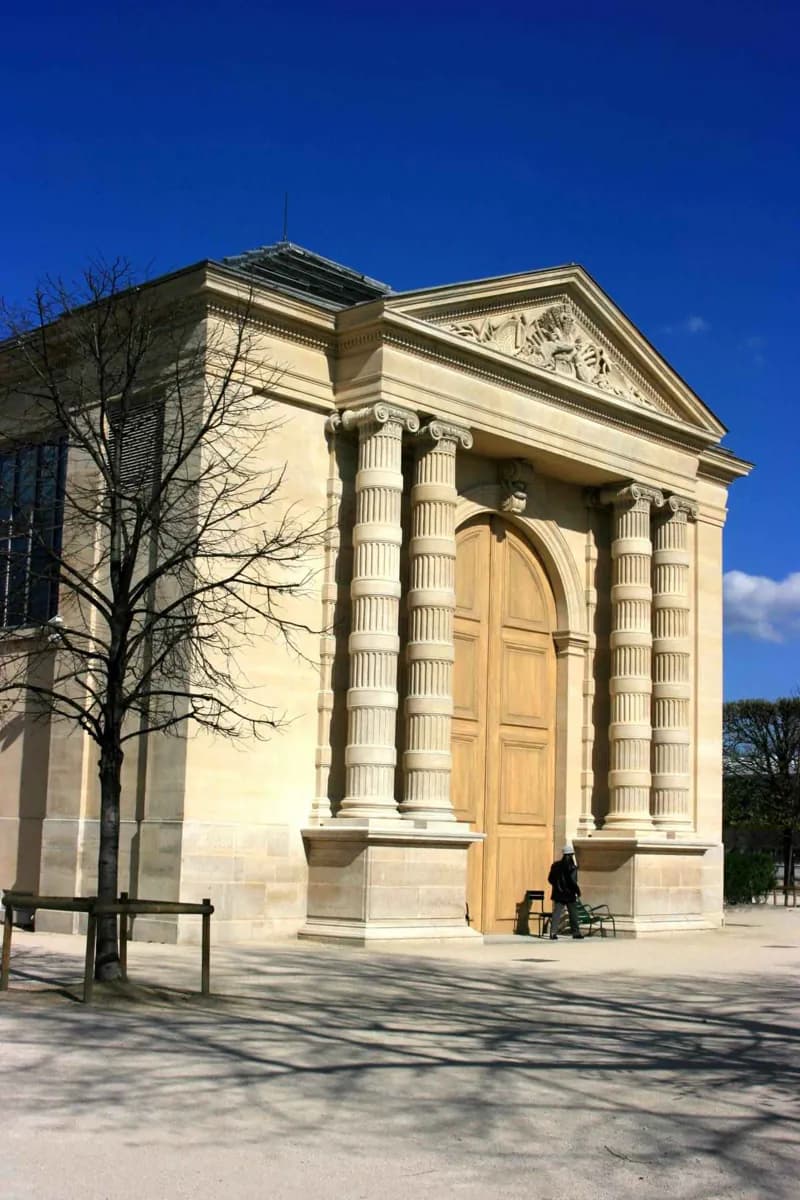
- The museum occupies the former orangery beside the Seine and Place de la Concorde.
The full story
The building began in 1852 as shelter for the orange trees of the Tuileries. Its later uses included storage, events and exhibitions before it became a museum space. Monet's installation changed the purpose of the rooms more radically than simply hanging a new collection. He offered the decorative panels to France as a monument to the end of the First World War. His friend Georges Clemenceau proposed the Orangerie, where the available wall space could accommodate them. Monet contributed to plans for oval rooms with natural light, plain walls and little competing decoration. The paintings remained with him until his death in 1926 and were arranged here in 1927. That history explains why the rooms feel like part of the work: their shape and light were conceived around the canvases.
Useful to know
- Spend time in both oval rooms before moving on to the museum's other paintings.
- Combine the museum with the western Tuileries rather than crossing the whole garden solely to reach it.
Your next visit
Estimated · Declared scenario and planning estimates; no live opening, weather, queue or booking service.
Indoor visit · 30–45 min
World planning estimate; admission, opening, visit duration and access need checking.