
Why go
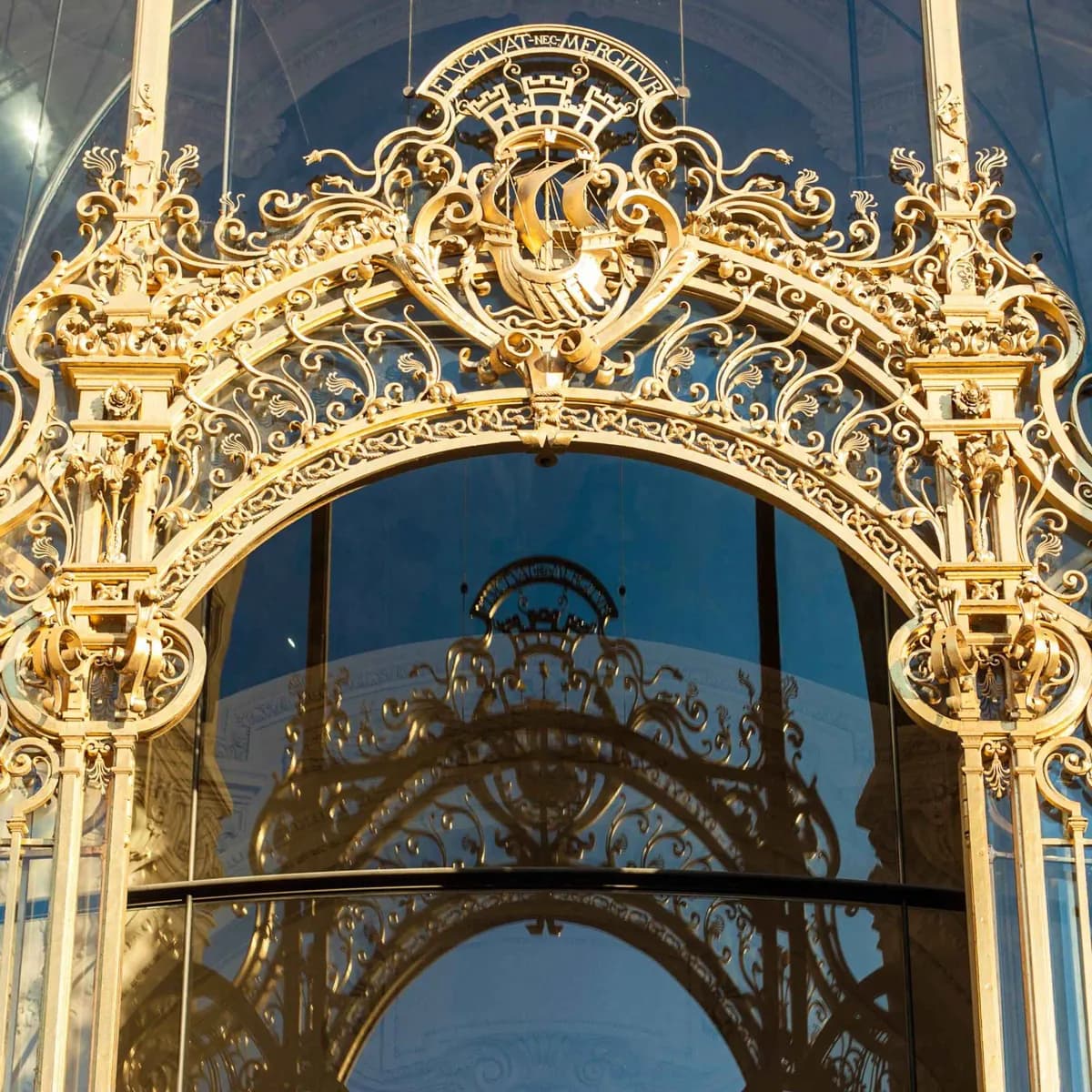
Choose the Petit Palais for art in a building that rewards close looking. Charles Girault designed it for the 1900 Universal Exhibition, and its façade, dome and semicircular courtyard make the museum feel like part of the collection rather than a neutral container.
What to look for
- The central courtyard is ringed by covered galleries, paired pink-granite columns and gilt-bronze details.
- The main façade faces the Grand Palais, making the two buildings a useful architectural comparison.
- The permanent collection spans paintings, decorative arts and sculpture in rooms designed for different kinds of works.
The full story
The Petit Palais was built by Charles Girault for the 1900 Universal Exhibition, replacing the earlier Palais de l’Industrie on this site. It was intended from the outset to remain a fine-arts museum after the fair. Girault used a Beaux-Arts language of stone, metal and rich surface decoration, but organised it around a calm semicircular courtyard and garden. The building’s trapezoid plan turns its broad façade toward the Grand Palais and encloses the courtyard behind it. Inside, galleries were arranged for different media, with skylit rooms for paintings and more intimate spaces for objects and sculpture. The courtyard’s covered gallery, pink-granite columns and gilt-bronze details make the transition between galleries and garden part of the architectural experience, rather than simply a pause between rooms.
Useful to know
- Allow time for the courtyard as well as the galleries; it is integral to the building’s design.
- Combine it with the Grand Palais exterior and Pont Alexandre III for a focused 1900 Exhibition walk.
- Check the museum’s official information before setting a fixed visit time, especially if an exhibition is your priority.
Your next visit
Estimated · Declared scenario and planning estimates; no live opening, weather, queue or booking service.
Outdoor visit · 30–45 min
World planning estimate; admission, opening, visit duration and access need checking.