
Why go
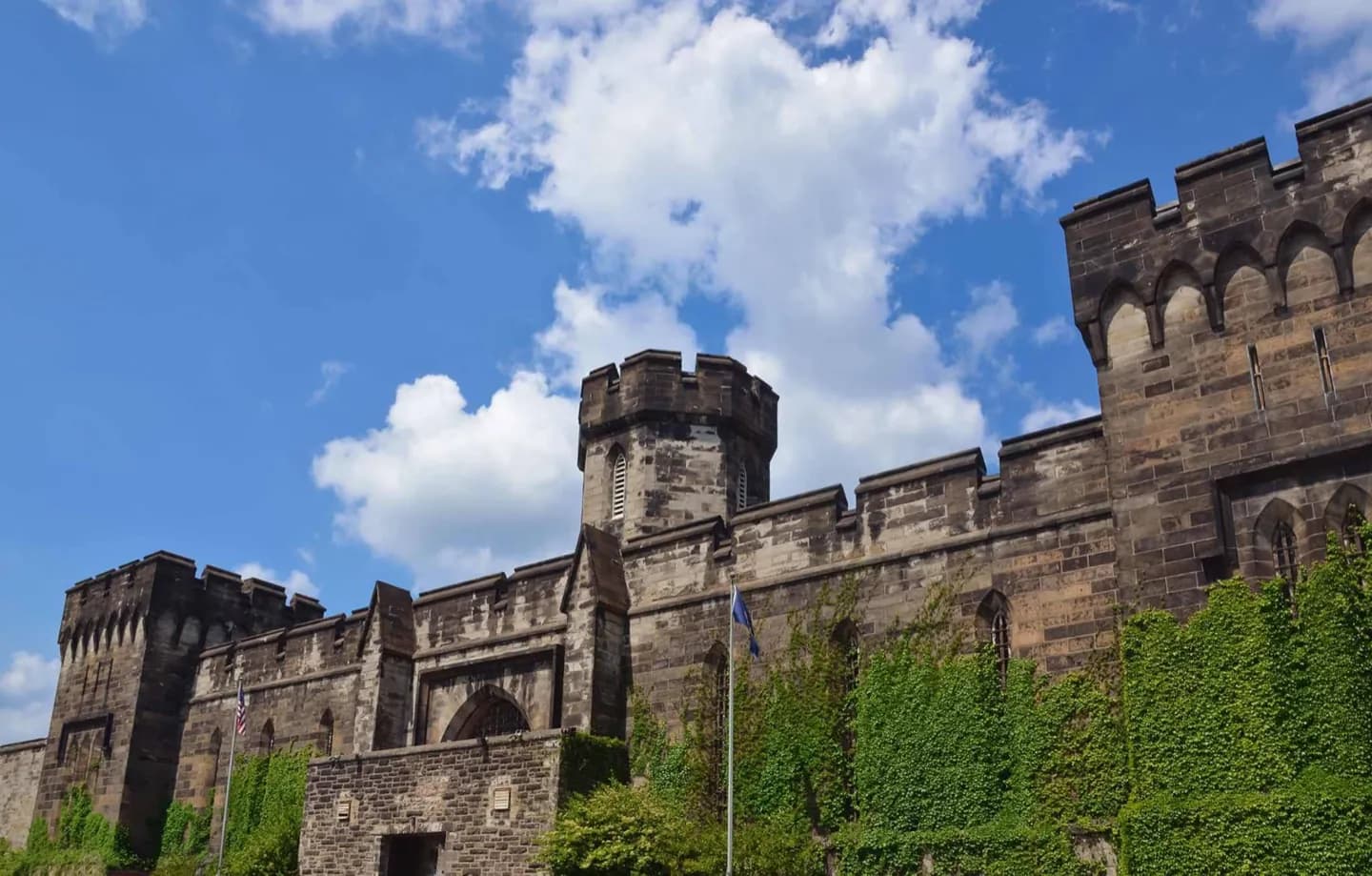
Eastern State Penitentiary earns time because it offers architecture that makes early theories of isolation visible while connecting them to present-day justice questions. Its central thread is a radial 19th-century prison preserved as a ruin and interpreted through incarceration history. Cellblocks radiate from a central hub, allowing surveillance along long vaulted corridors. Peeling walls and stabilized ruins reveal layers of use rather than a polished reconstruction.
What to look for
- Cellblocks radiate from a central hub, allowing surveillance along long vaulted corridors.
- Peeling walls and stabilized ruins reveal layers of use rather than a polished reconstruction.
The full story
Eastern State Penitentiary is best understood through a radial 19th-century prison preserved as a ruin and interpreted through incarceration history. The Eastern State Penitentiary, also known as ESP, is a former American prison in Philadelphia, Pennsylvania. It is found at 2027 Fairmount Avenue between Corinthian Avenue and North 22nd Street in the Fairmount section of the city, and was operational from 1829 until 1971. The penitentiary refined the revolutionary system of separate incarceration first pioneered at the Walnut Street Jail which emphasized principles of reform rather than punishment. Notorious criminals such as bank robber Willie Sutton and Al Capone were held inside its innovative wagon wheel design. At its completion, the building was the largest and most expensive public structure ever erected, and quickly became a model for more than 300 prisons worldwide. The prison is currently a U.S. National Historic Landmark, which is open to the public as a museum for tours seven days a week, twelve months a year 10 am to 5 pm. The Eastern State Penitentiary, also known as ESP, is a former American prison in Philadelphia, Pennsylvania. It is found at 2027 Fairmount Avenue between Corinthian Avenue and North 22nd Street in the Fairmount section of the city, and was operational from 1829 until 1971. The penitentiary refined the revolutionary system of separate incarceration first pioneered at the Walnut Street Jail which emphasized principles of reform rather than punishment.
Useful to know
- Allow about two hours for the audio route and exhibits.
- Much of the visit is exposed to seasonal heat or cold inside the unconditioned cellblocks.
Your next visit
Estimated · Declared scenario and planning estimates; no live opening, weather, queue or booking service.
Indoor visit · 30–60 min
World planning estimate; admission, opening, visit duration and access need checking.