
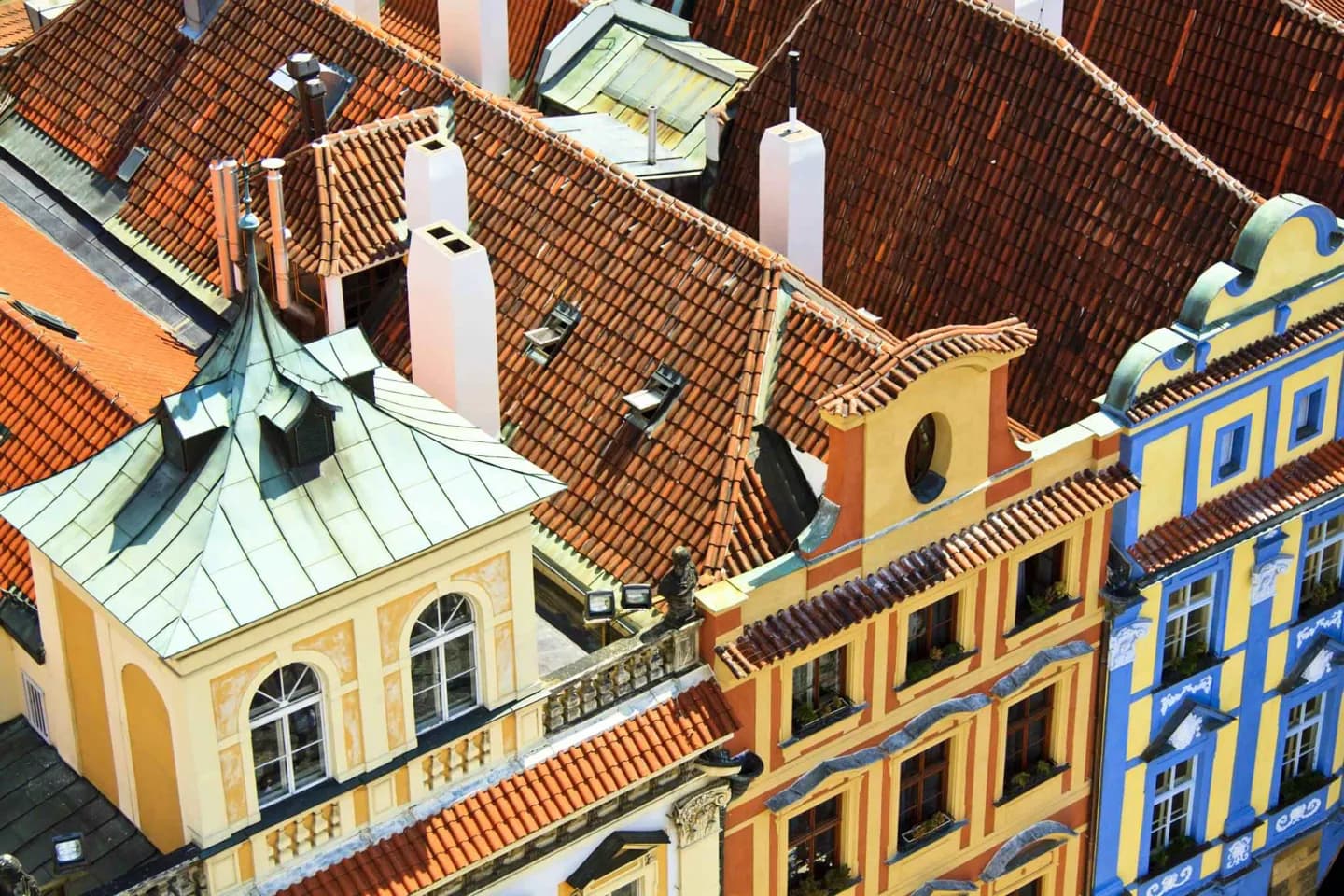
Why go
St Vitus Cathedral and Charles Bridge show medieval ambition; Malá Strana's palaces carry a later courtly scale. The Municipal House, House of the Black Madonna and Dancing House then show how Prague kept building beyond the old city. Each shift is visible on a walk.
The full story
Prague is easier to read by walking between buildings than by trying to label every street with one period. At Prague Castle, St Vitus Cathedral began as a Gothic project and was completed centuries later. Charles Bridge carries the medieval route across the Vltava into Malá Strana. Below the castle, palaces and churches give that quarter a different scale from Old Town's streets and square. In the centre, the Municipal House brings Art Nouveau decoration into a civic building, while the House of the Black Madonna is a distinctive Cubist intervention near the older town. Farther along the river, the Dancing House makes the city's modern layer unmistakable. Josefov adds a difficult lesson: much of the older Jewish quarter was rebuilt around the turn of the twentieth century, while surviving synagogues and the cemetery preserve earlier history. These contrasts make architecture a way to follow Prague's changes, not a collection of styles to tick off.