Chapter 1 / Prague
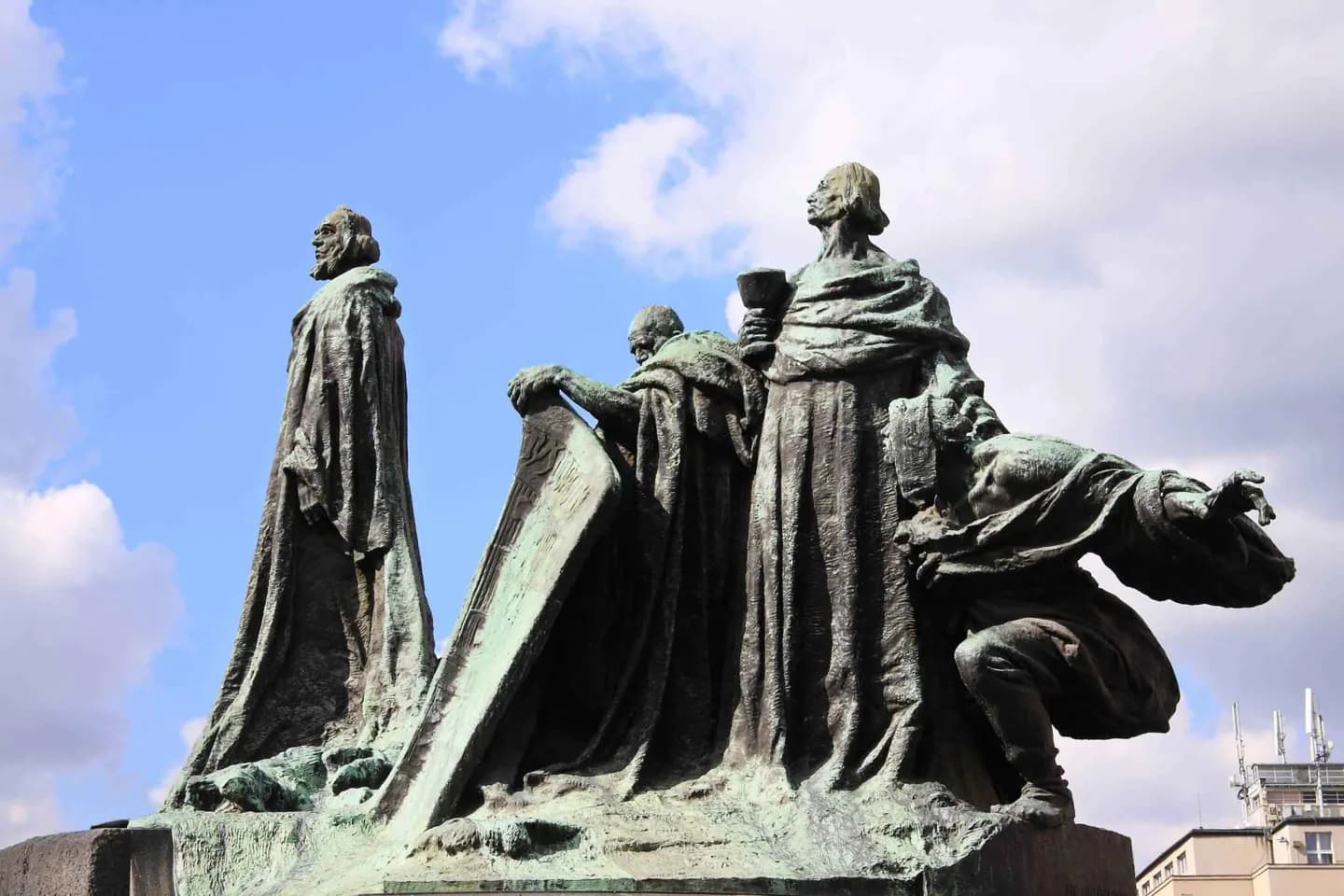
Jan Hus Monument.
Start with Jan Hus Monument. Let a detail decide which thread you follow next.
Compare this place with the last. What feels different?
Outdoor walks and façade observations. Interior admission is not included.
The full story
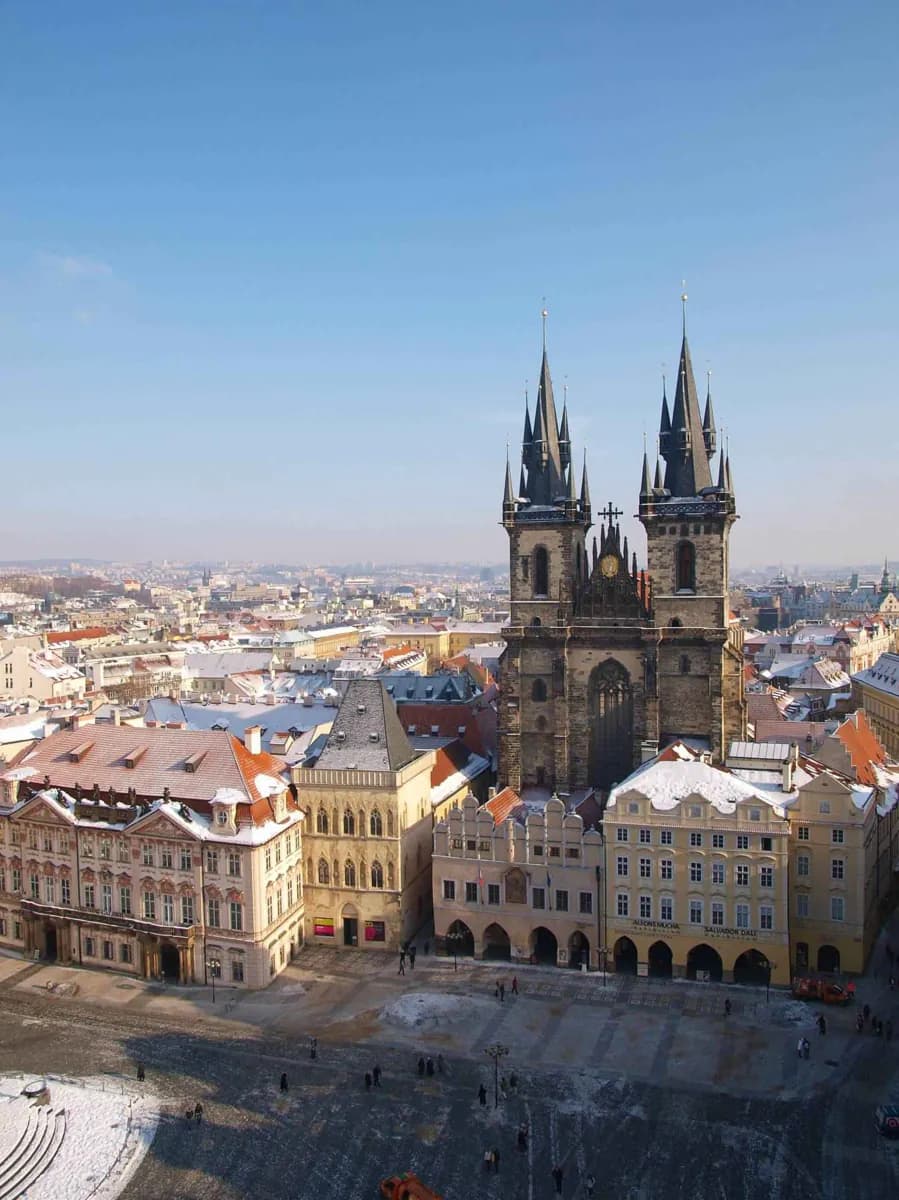
The large sculptural group in Old Town Square turns Czech religious reform and exile into figures you can read while crossing the open square.
It gives the square a historical centre beyond the surrounding façades. Walk around the monument to distinguish Hus, Hussite fighters and exiles instead of treating the whole group as one statue. Those figures connect a single reformer's death to centuries of religious conflict and Czech national memory.
Jan Hus was a Prague preacher and religious reformer who criticized abuses within the Church. He was condemned and burned in 1415. His death helped set off the Hussite movement, and later generations made him a symbol of religious conscience and Czech identity. Ladislav Šaloun's monument was unveiled in 1915, five hundred years after Hus's death. It does more than portray a single man. Fighters recall the movement that followed him, while exiles point to later Protestants driven from Bohemia. A young mother adds a theme of national renewal. Those groups explain why the sculpture occupies such a prominent space in Old Town Square: it asks viewers to connect one medieval life with a much longer history. Walking around it makes the sequence of figures clearer than a single photograph from one side.
- Jan Hus stands above the main sculptural group.
- Hussite fighters form one side of the composition.
- Figures of exiles and a mother extend the story beyond Hus himself.
Circle the monument to see the different groups rather than viewing it from the clock façade alone.
Use it as a pause between the Astronomical Clock and Týn Church.
What is pulling you next?
Another door into this story