
Why go
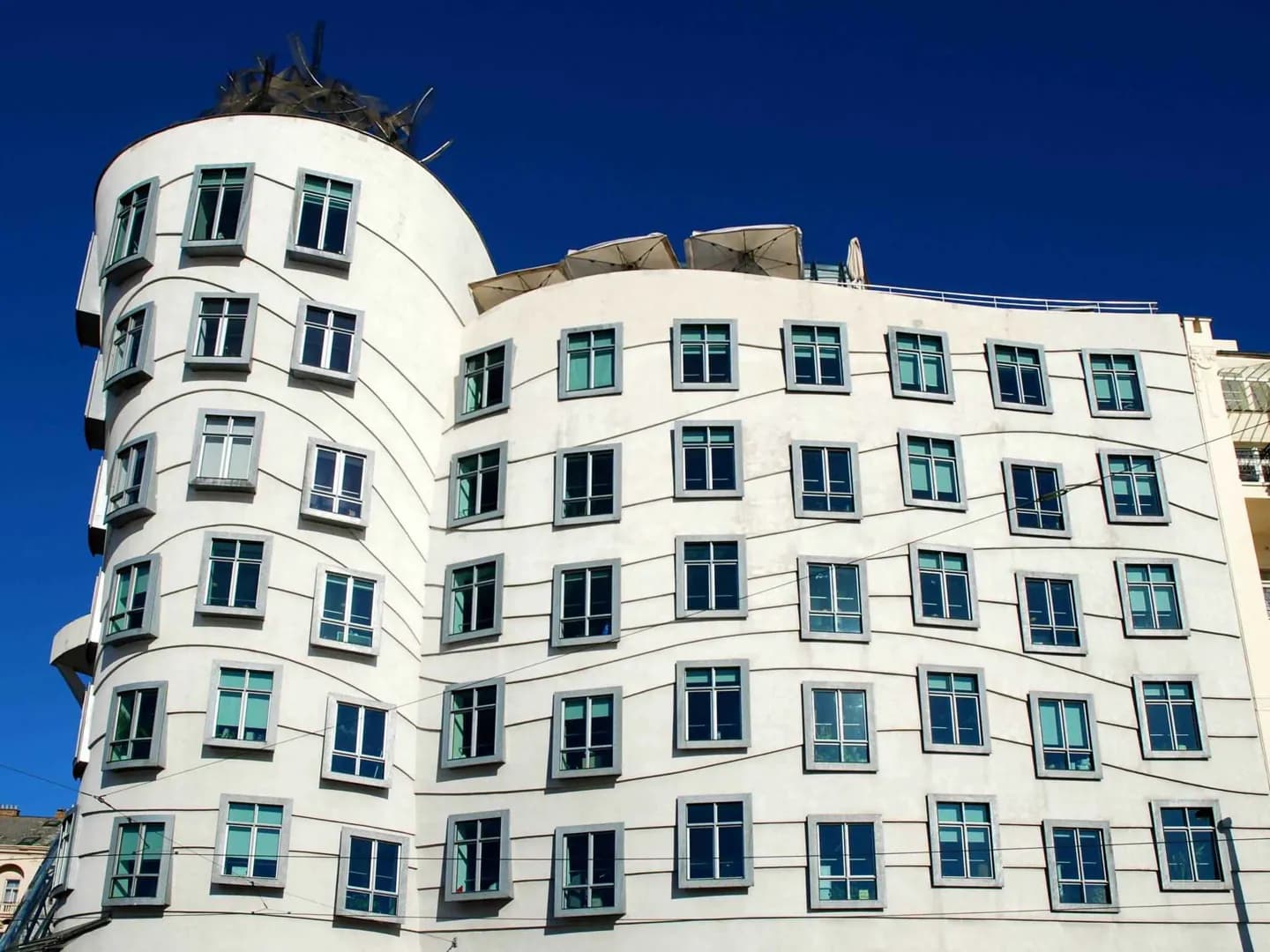
On Rašínovo Embankment, Vlado Milunić and Frank Gehry set a curving glass tower beside a heavier stone one. The pair makes a sharp contrast with Prague's older riverfront, and the changing outline is easiest to read from across the street or farther along the quay.
What to look for
- The glass and stone towers lean and curve like two dancers.
- The building's irregular outline stands against the older embankment façades.
- The riverfront setting lets you compare the building from more than one angle.
The full story
The Dancing House occupies a riverfront plot left vacant after a building was destroyed in the 1945 bombing of Prague. Architect Vlado Milunić began developing a proposal for the site before the end of Communist rule. He later worked with Frank Gehry on the building that was completed in 1996. Their design joined a more solid stone form to a flowing glass one, which led to the informal name Fred and Ginger. Its arrival made a conspicuous break from the older façades along the embankment. That contrast is still the main reason to stop: from a little distance, the two forms seem to move against one another, while the neighbouring buildings keep a straighter, more regular line. The building also marks a visible chapter in Prague's architecture after the Velvet Revolution.
Useful to know
- View the exterior from the embankment before deciding whether to enter.
- If the gallery or terrace matters to you, check its own current access details.
Your next visit
Estimated · Declared scenario and planning estimates; no live opening, weather, queue or booking service.
Outdoor visit · 30–45 min
World planning estimate; admission, opening, visit duration and access need checking.