
Why go
Národní connects a practical city walk with a decisive moment in Czech history. The plaque at Kaňka House marks the events of 17 November 1989, when police violently suppressed a peaceful student march. The street also follows the former edge of medieval Old Town, so one route reveals two very different boundaries in Prague's past.
What to look for
- A plaque at Kaňka House commemorates 17 November 1989.
- The street follows the line of the former medieval Old Town walls.
- It links the river side with central Prague and the New Town edge.
The full story
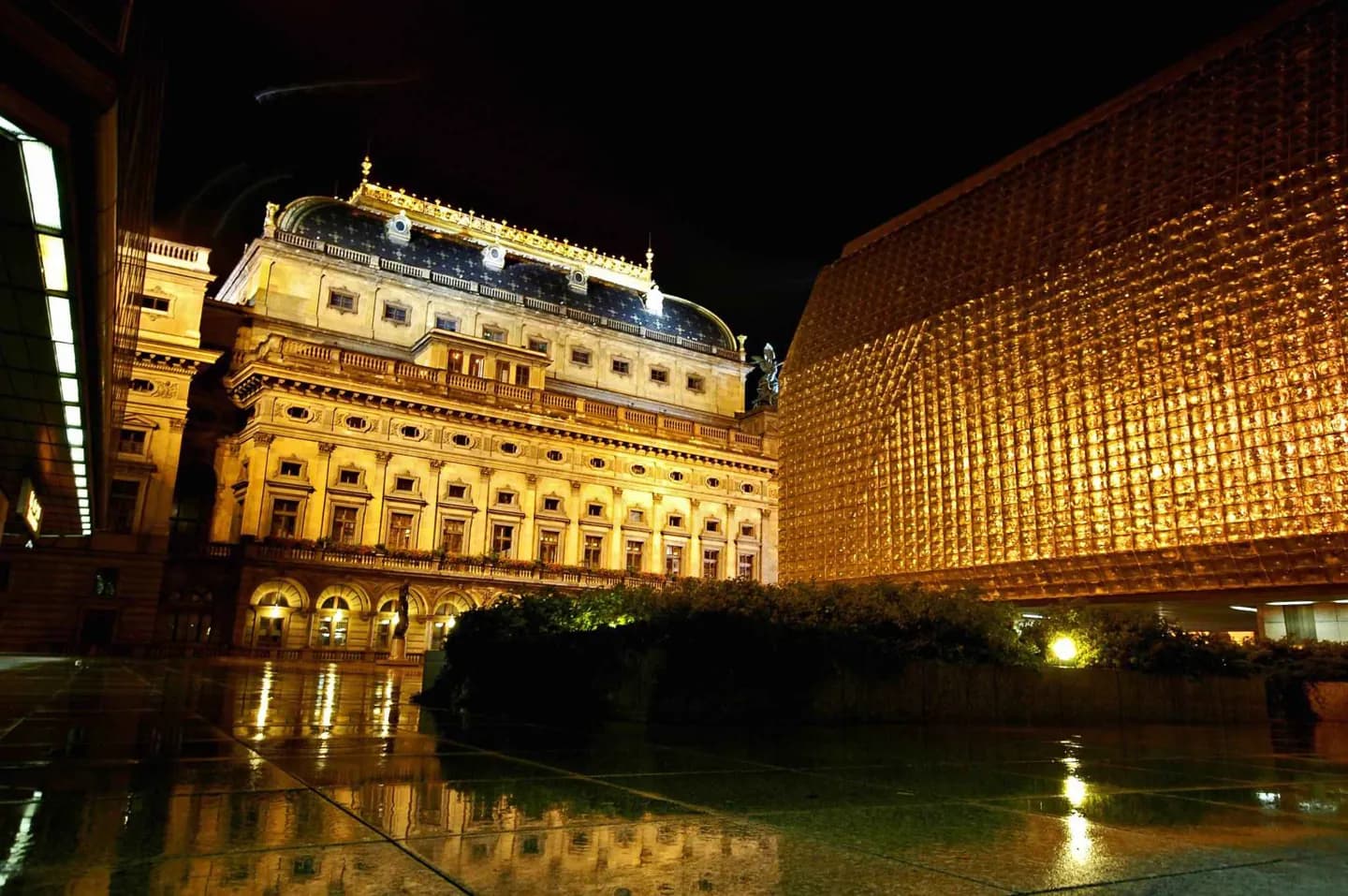
Národní runs along a former boundary of medieval Old Town. Centuries later it became a route through the civic heart of Prague, near institutions such as the National Theatre. On 17 November 1989, police violently broke up a peaceful student demonstration here. The attack sparked wider protests that led to the end of Communist one-party rule in Czechoslovakia. The plaque at Kaňka House marks that event on an otherwise busy street. It is worth stopping because the setting is ordinary: the memorial is embedded in the route people still use between the river and central Prague. Reading it there gives the Velvet Revolution a precise place, rather than leaving it as an abstract date. The plaque offers a reason to slow down and locate the turning point amid the buildings and daily movement around it.
Useful to know
- Look for the Kaňka House plaque rather than expecting one monument to occupy the whole street.
- Combine this short historical pause with a walk between the National Theatre area and central New Town.
Your next visit
Estimated · Declared scenario and planning estimates; no live opening, weather, queue or booking service.
Outdoor visit · 15–25 min
World planning estimate; admission, opening, visit duration and access need checking.