
Why go
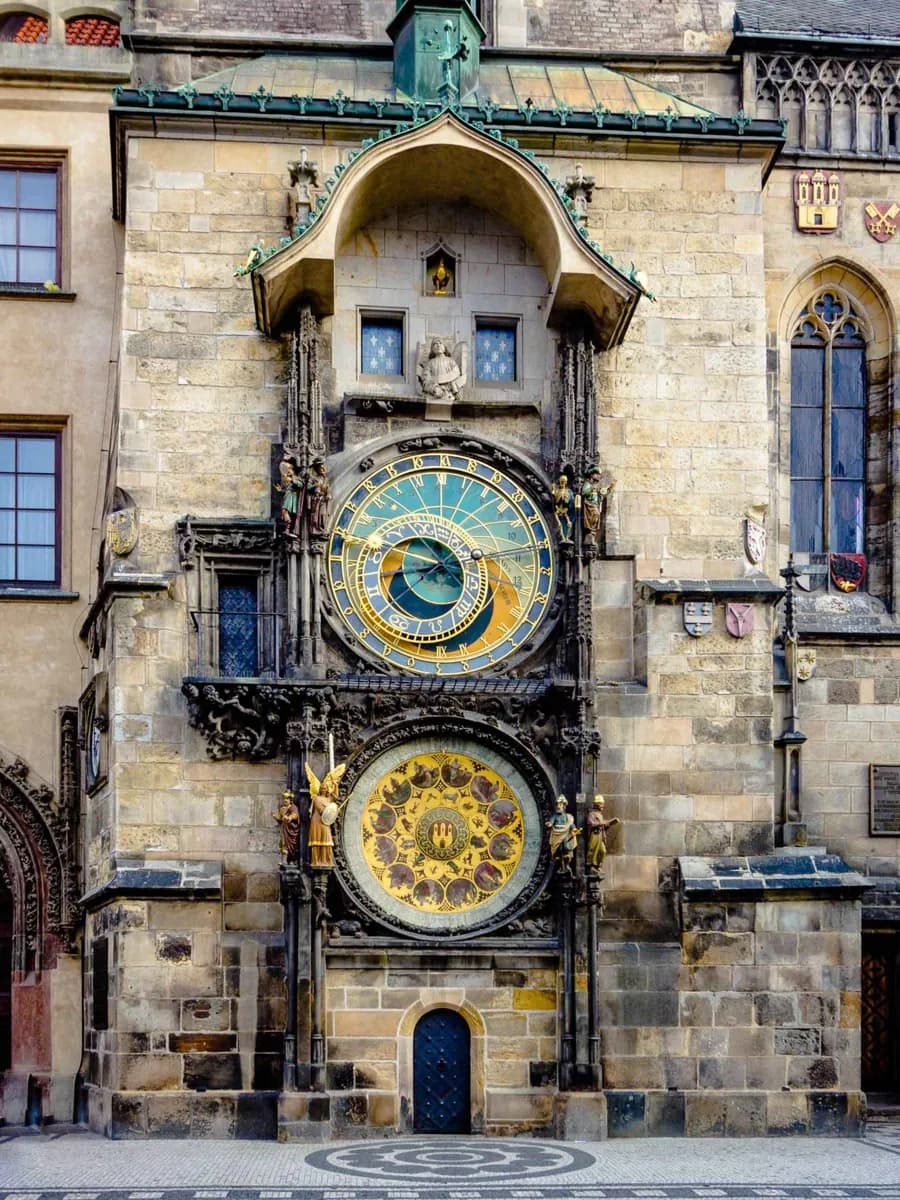
The astronomical dial is the real reason to linger. Its symbols place the Sun and Moon within a medieval model of the sky, while the lower calendar dial tracks the year. The apostles and moving figures draw attention at the hour, but looking before or after the show reveals more of the clock's design.
What to look for
- The astronomical dial shows the Sun and Moon against zodiac signs.
- The lower calendar dial is ringed with images of the months.
- A skeleton and other figures move during the apostles' display.
The full story
The oldest mechanism of the Orloj dates to 1410, when clockmaker Mikuláš of Kadaň and astronomer Jan Šindel made its astronomical dial. Later makers added the calendar and decorative figures. That layered construction is visible on the wall of Old Town Hall: the upper dial describes positions in the sky, while the lower one turns the passing months into images. The moving apostles are memorable, but they can distract from the more unusual achievement of putting a medieval picture of time and the heavens into a public square. The clock also gathered legends, including a tale that its maker was blinded to prevent him repeating the work. That story is not its documented origin. A careful look at the two dials gives a better sense of why the Orloj has held attention for so long.
Useful to know
- Look at both dials before waiting for the moving figures; the display itself is brief.
- Treat the Old Town Hall tower and interiors as a separate visit from viewing the outdoor clock.
Your next visit
Estimated · Declared scenario and planning estimates; no live opening, weather, queue or booking service.
Outdoor visit · 15–25 min
World planning estimate; admission, opening, visit duration and access need checking.