
Why go
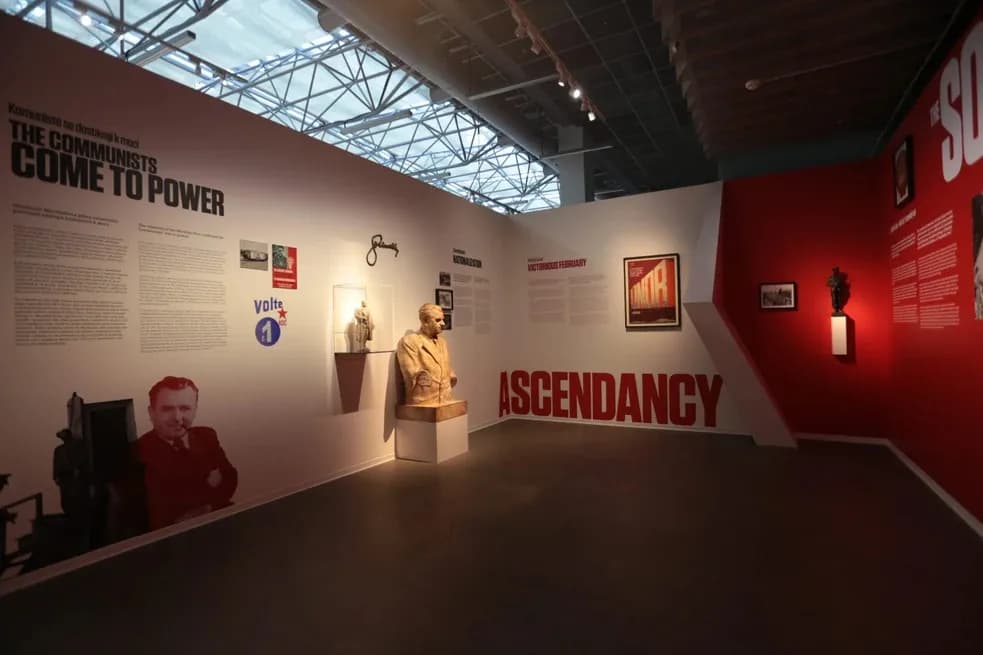
A classroom, shop and interrogation room make the gap between official promises and private life tangible. Documents on propaganda, secret police and show trials give those spaces their harder political context. The museum connects them to the 1948 takeover and the Velvet Revolution, helping you place Prague’s twentieth-century landmarks in a wider story.
What to look for
- A reconstructed shop and classroom show the material texture of daily life under the regime.
- An interrogation room sets the documents on policing and political trials in a human scale.
- The exhibition moves from the communist takeover in 1948 toward the Velvet Revolution of 1989.
The full story
Czechoslovakia’s communist period began with the party’s takeover in 1948 and ended in the Velvet Revolution of 1989. The museum follows that arc through objects, documents and rooms built to evoke ordinary settings. A schoolroom and a shop bring daily routines into view; the interrogation room and material on secret police and show trials reveal the coercive state behind them. That contrast is the useful thread to carry through the exhibition. It also helps explain why public spaces elsewhere in Prague became politically charged in 1989. The museum itself opened in 2001, with a collection gathered after the regime had fallen. Visit for the social and political history, and give the text panels time: the recreated spaces make more sense alongside the accounts of propaganda and dissent.
Useful to know
- Use the current V Celnici address when navigating; older descriptions place the museum at a former site.
- Allow time to read the documents as well as walk through the recreated rooms.
Your next visit
Estimated · Declared scenario and planning estimates; no live opening, weather, queue or booking service.
Indoor visit · 30–45 min
World planning estimate; admission, opening, visit duration and access need checking.