
Why go
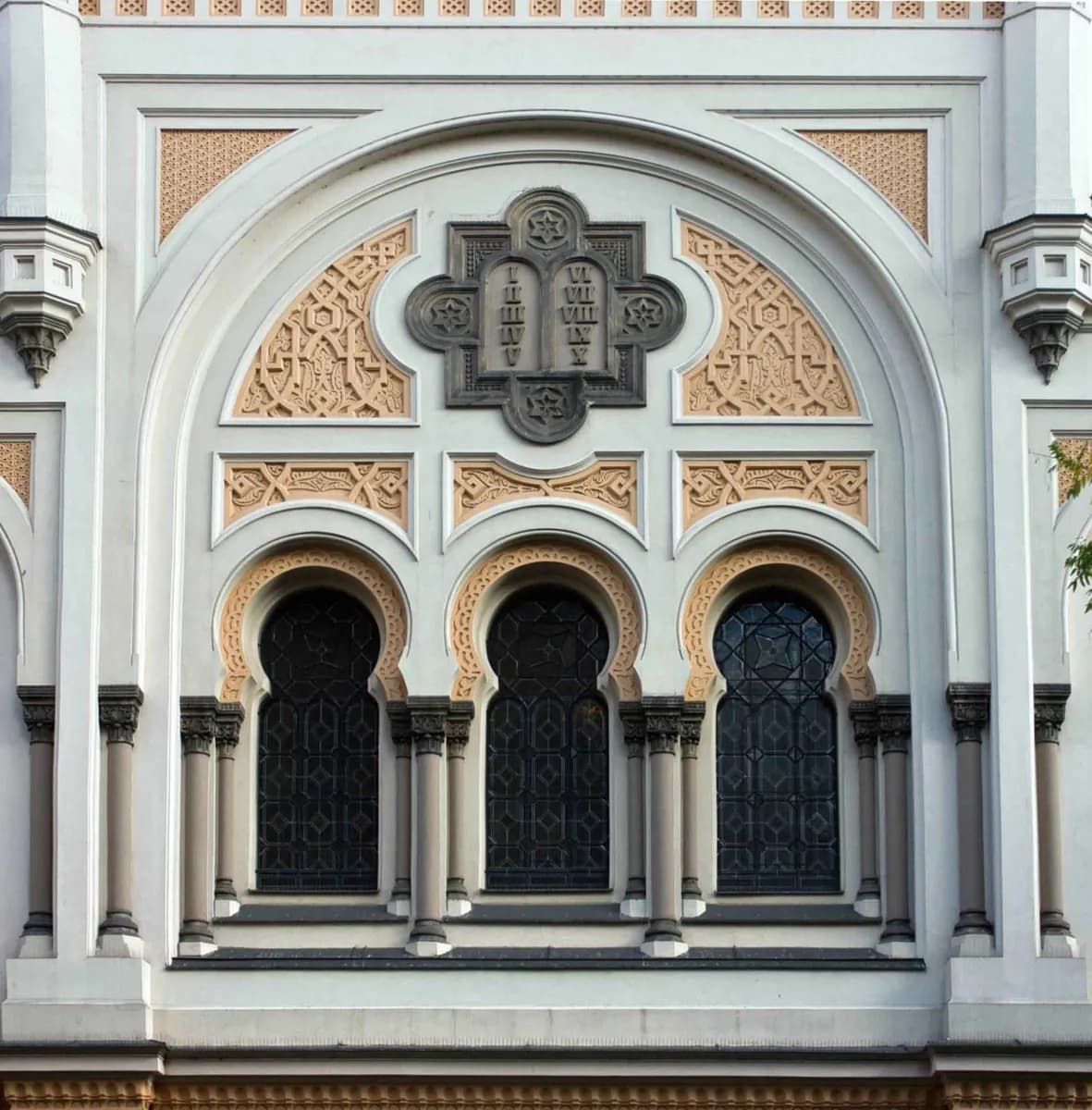
Its dome, balconies and patterned surfaces create a striking contrast with the Gothic Old-New Synagogue. The exhibition shifts the focus from medieval Josefov toward the nineteenth and twentieth centuries. Looking at both buildings helps show how Jewish religious architecture and community life changed over time.
What to look for
- Gilded patterns cover the hall beneath the dome and galleries.
- A round stained-glass window with a Star of David lights the eastern wall.
- The exhibition follows Jewish life in the Bohemian lands through the modern period.
The full story
The Spanish Synagogue stands on the site of the earlier Old School synagogue. Its nineteenth-century Moorish Revival design uses patterns inspired by Islamic architecture, giving the interior its dense bands of color and gold. The arrangement of the prayer hall also differs from older synagogues nearby: the reading platform is by the eastern wall rather than in the center, and seating faces forward in rows. Those choices reveal a different period and approach to worship. The building's present exhibition carries the story into the nineteenth and twentieth centuries, so the visit links a spectacular room to the lives of the people who used it and to the wider history of Jews in the Bohemian lands. Nearby buildings preserve very different architectural answers to the needs of worship, making this ornate hall most revealing as part of a Josefov walk.
Useful to know
- Allow time for both the hall and the exhibition rather than treating the decoration as a quick photo stop.
- Combine it with the Old-New Synagogue for a clear architectural contrast.
Your next visit
Estimated · Declared scenario and planning estimates; no live opening, weather, queue or booking service.
Indoor visit · 30–45 min
World planning estimate; admission, opening, visit duration and access need checking.