
Why go
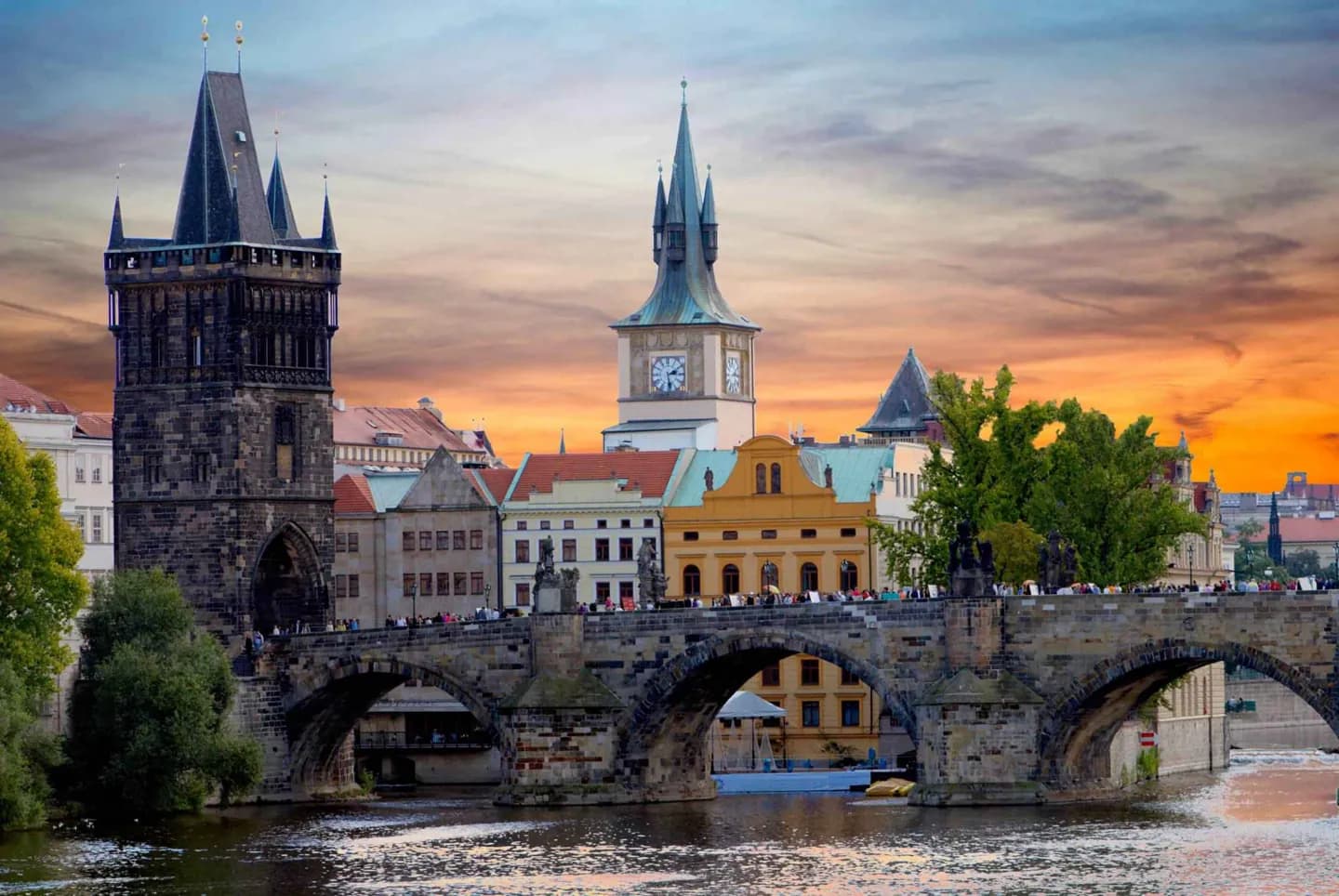
This crossing joins Old Town to Lesser Town, so it gives a walk through central Prague a natural direction. Pause by the bridge towers to see the Gothic structure, then look along the line of saints added centuries later. The river views help place both banks in relation to the Castle.
What to look for
- The Old Town and Lesser Town bridge towers frame opposite ends of the crossing.
- Thirty sculptures of saints line the parapets.
- The Castle rises above the west bank when you look upstream.
The full story
Charles IV began the bridge in 1357 after a flood had badly damaged its predecessor, the Judith Bridge. Work continued into the early fifteenth century. For centuries this was the main fixed crossing between Old Town and the Castle side of the Vltava. That explains why the bridge feels like a street connecting two parts of Prague rather than a viewpoint detached from them. Its architecture carries two periods at once: the stone arches and towers belong to the medieval crossing, while most of the statues were installed around 1700. The figures made a processional route of the bridge as well as a practical way across the river. Looking from a tower toward the far bank makes the route's political geography clear: the town's commercial centre lay to the east, while the royal seat stood above the west bank.
Useful to know
- Allow time to cross on foot and stop at both ends; the cobbled surface calls for steady footing.
- Combine the crossing with Old Town Square on one side and the lanes of Malá Strana on the other.
Your next visit
Estimated · Declared scenario and planning estimates; no live opening, weather, queue or booking service.
Outdoor visit · 10–25 min
Public-space walk and exterior observation only; no interior, garden, tower or ticketed admission included. Durations and walking are estimates. Check temporary restrictions and park or market opening times.
Outdoor visit · 15–25 min
World planning estimate; admission, opening, visit duration and access need checking.