
Why go
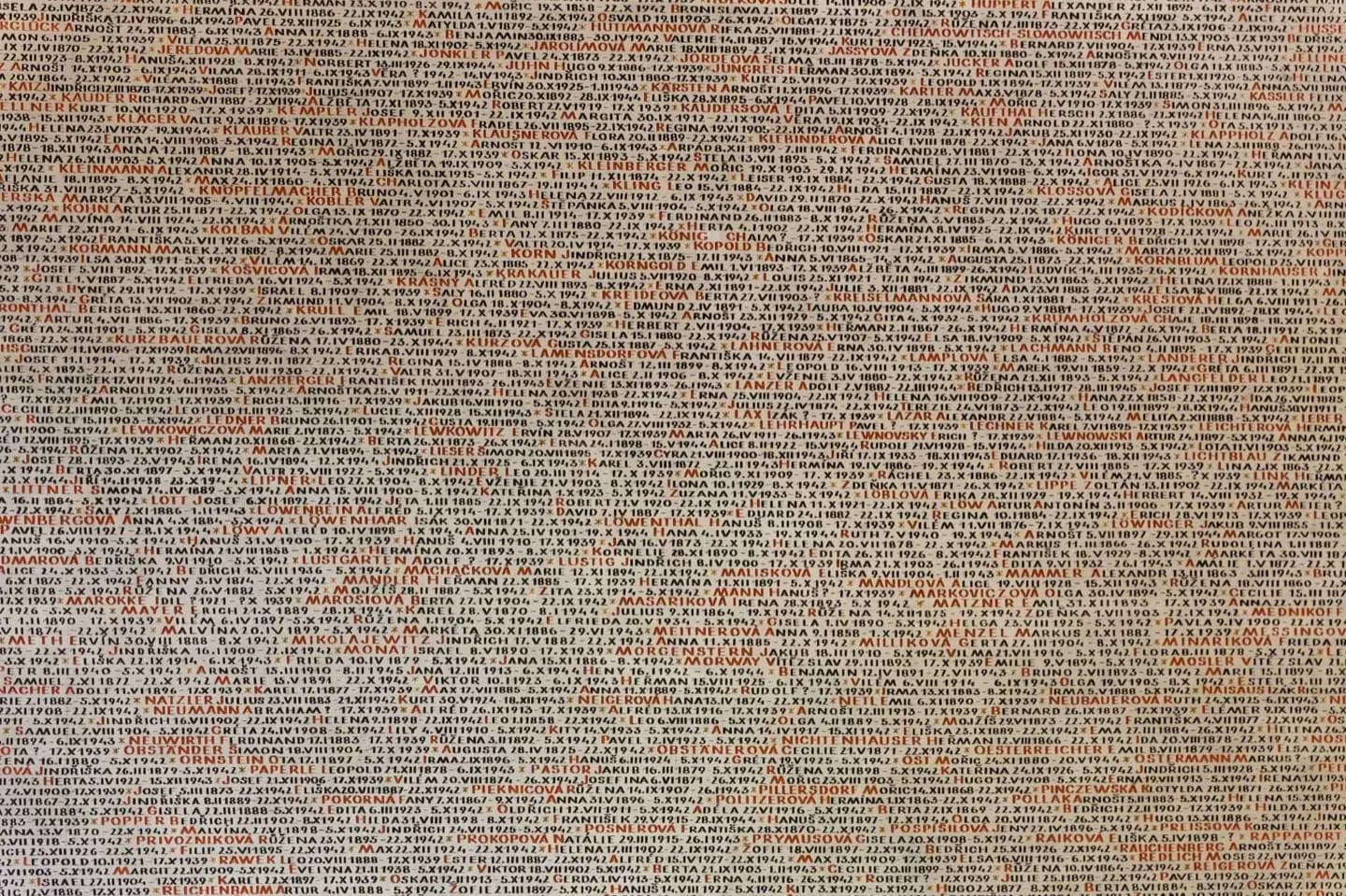
The memorial gives a human scale to the murder of Jews from Bohemia and Moravia. Its walls record about 80,000 names, while the drawings upstairs show the lives and imaginations of children imprisoned in the Terezín ghetto. The building's older Gothic and Renaissance details frame a history far beyond its original use.
What to look for
- Memorial walls list Jewish victims from Bohemia and Moravia by community.
- Drawings made by children in the Terezín ghetto are displayed upstairs.
- The synagogue retains late Gothic and early Renaissance architectural details.
The full story
The synagogue grew from a private prayer space associated with the Horowitz family in the early sixteenth century. Later additions brought Renaissance elements into the older Gothic fabric. After the Second World War, its purpose changed profoundly. Artists Václav Boštík and Jiří John designed a memorial that covered its walls with the names of Jews murdered from communities across Bohemia and Moravia. The names organize loss by place, showing that the destruction reached far beyond Prague. Drawings by children held in the Terezín ghetto add another, intimate form of testimony upstairs. The building still lets you see its earlier architectural life, but the memorial is the reason to enter and the context that should guide the visit. The nearby cemetery holds a much longer record of community life, which makes the sudden rupture represented here still more powerful.
Useful to know
- Allow a quiet, unhurried visit; this is a memorial rather than a decorative synagogue stop.
- Continue to the adjacent Old Jewish Cemetery for a longer view of Prague's Jewish community.
Your next visit
Estimated · Declared scenario and planning estimates; no live opening, weather, queue or booking service.
Indoor visit · 30–45 min
World planning estimate; admission, opening, visit duration and access need checking.