
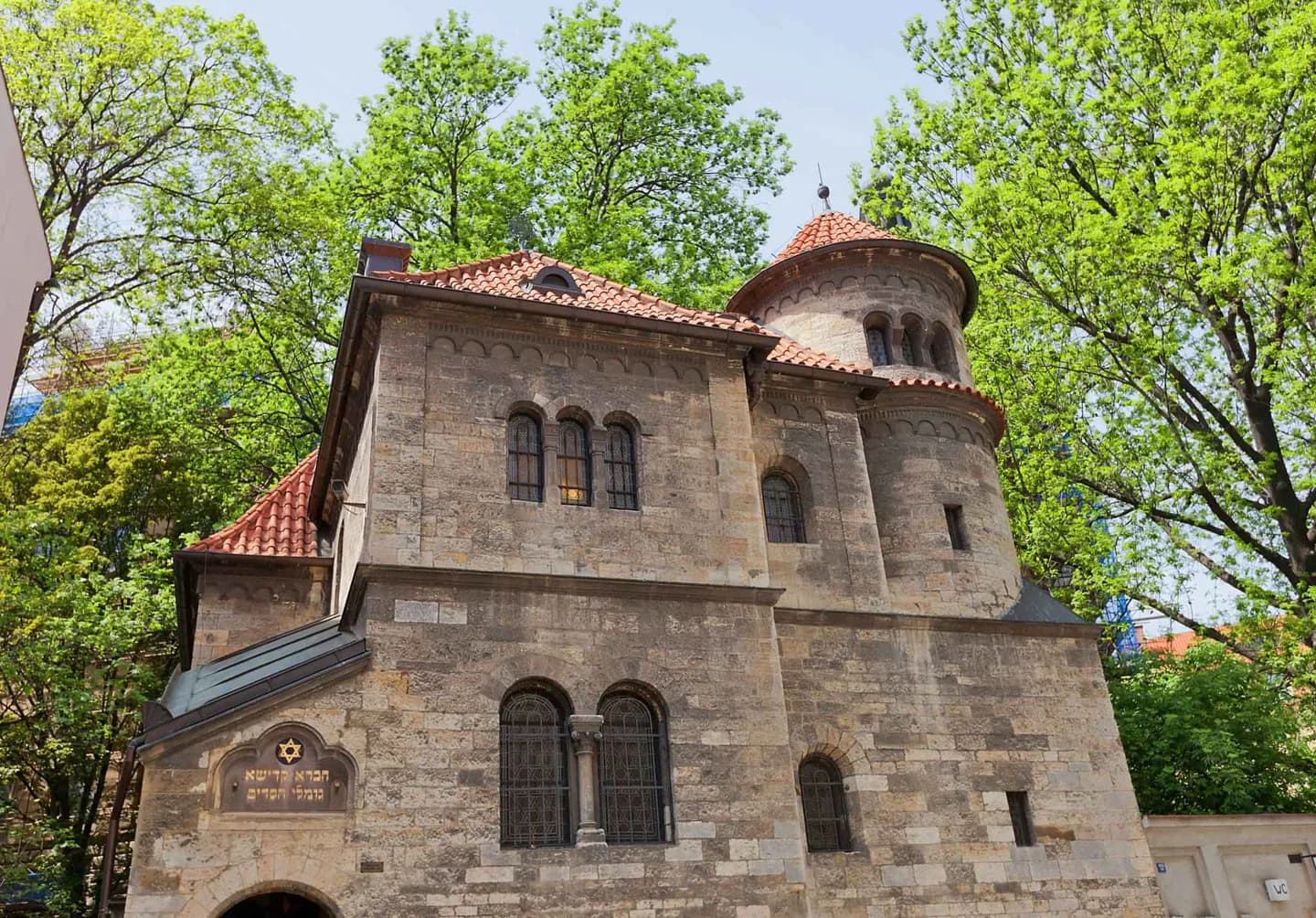
Why go
The synagogue's size and Baroque form distinguish it from the quarter's medieval and Moorish Revival buildings. Its name remembers the earlier cluster of small buildings on this site, including a school associated with Rabbi Judah Loew. That connection helps make sense of the synagogue's position beside the cemetery and its layered history.
What to look for
- The early Baroque building is the largest surviving synagogue of the former ghetto.
- Its site lies next to the Old Jewish Cemetery.
- The name recalls the earlier 'klausen' buildings that occupied this area.
The full story
In the sixteenth century, Mordechai Maisel established a group of buildings on this site, including religious and teaching spaces. Rabbi Judah Loew, often called the Maharal, is associated with the school. The great ghetto fire of 1689 destroyed those earlier buildings. The synagogue that followed kept their collective name, Klausen, while taking on an early Baroque form. That sequence explains why the building looks different from the older Gothic synagogue elsewhere in Josefov. Its location beside the Old Jewish Cemetery also makes the area's religious and communal history visible in a very short walk. Later museum exhibitions used the building to explain Jewish festivals and customs, adding another chapter to a site already shaped by teaching and prayer. The museum displays followed its earlier religious uses.
Useful to know
- Check the Jewish Museum's venue-specific event listing if you hope to enter; ordinary circuit access cannot be assumed.
- View the exterior while visiting the cemetery and nearby Pinkas Synagogue.
Your next visit
Estimated · Declared scenario and planning estimates; no live opening, weather, queue or booking service.
Outdoor visit · 30–45 min
World planning estimate; admission, opening, visit duration and access need checking.