
Why go
Prague's underground lines meet at central interchanges, making the metro a practical backbone for longer hops. Large stations can have exits far apart, so the exit on your map matters as much as the station name. Use current network information for lines, service times and disruptions.
The full story
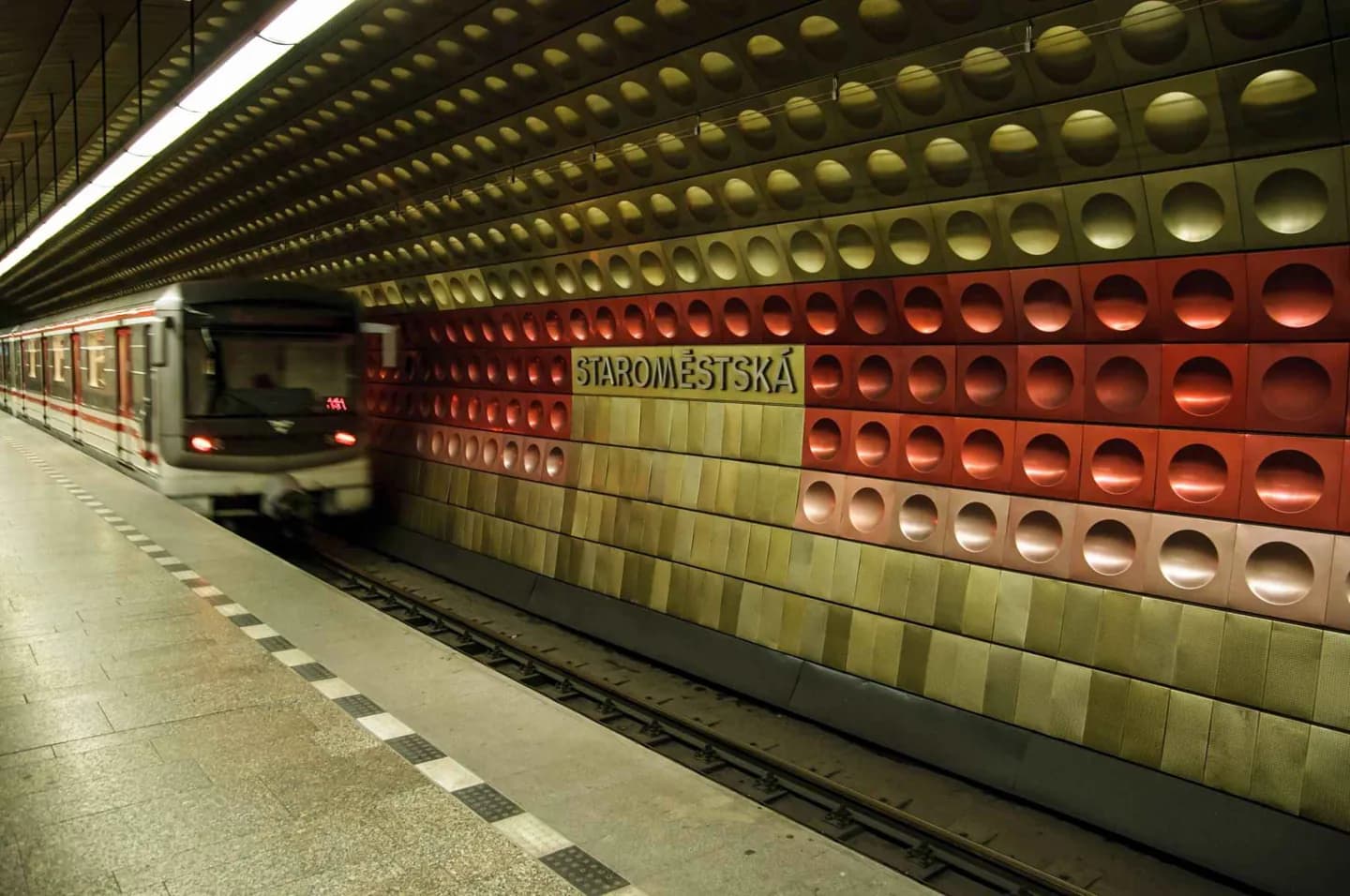
The Prague metro began operating in 1974 and became the rapid transit core of the city's integrated network. For a visitor, its main advantage is crossing distances that would use up a large part of a walking day. Central interchange stations can be extensive, with separate platforms and exits for different directions. At Můstek or Muzeum, pause to check the line, destination and street exit before following signs. A station entrance near your target may save a long surface detour. Pair the metro with a tram or bus where the underground line does not reach your final stop. Historical line lengths, train intervals and future-line plans do not tell you what is running today; consult the current PID or operator map when you travel.
Useful to know
- Check the line direction and the street exit before leaving a large interchange.
- Use a current network map for service changes and your complete transfer.