
Why go
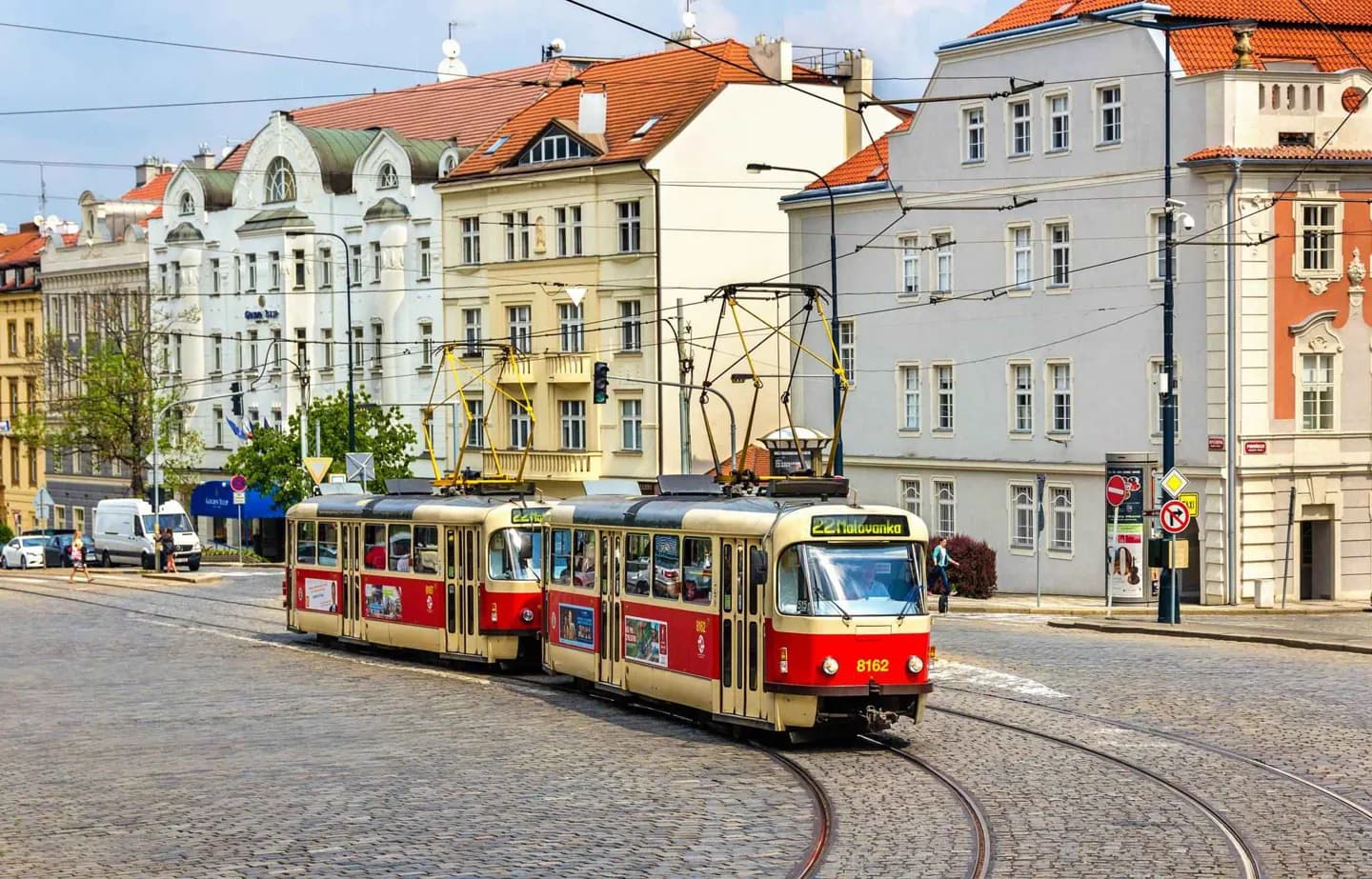
Prague's tram tradition reaches back to horse-drawn service in 1875 and electric service in 1891. Today the practical value is a surface link where walking would take too long and the metro misses your exact destination. Check current route and stop information instead of relying on historical line numbers.
The full story
The tram is a useful partner to walking in Prague. It keeps you above ground as you move between districts, which can make orientation easier than a deep station transfer. The network grew from a horse-drawn line in the 1870s; electric trams arrived for the 1891 exhibition period and later connected expanding suburbs such as Vinohrady and Žižkov. That history is visible in the way tracks thread through established streets rather than acting only as a fast radial link. Use a current PID map or journey planner to choose your stop, direction and transfer. Do not assume an old route number, night pattern or heritage service still applies. For a central sightseeing day, combine short walks within a district with a tram only when it saves meaningful distance.
Useful to know
- Check the current stop and direction before boarding; routes can change.
- Use a tram for a longer district-to-district move, then explore the next area on foot.