
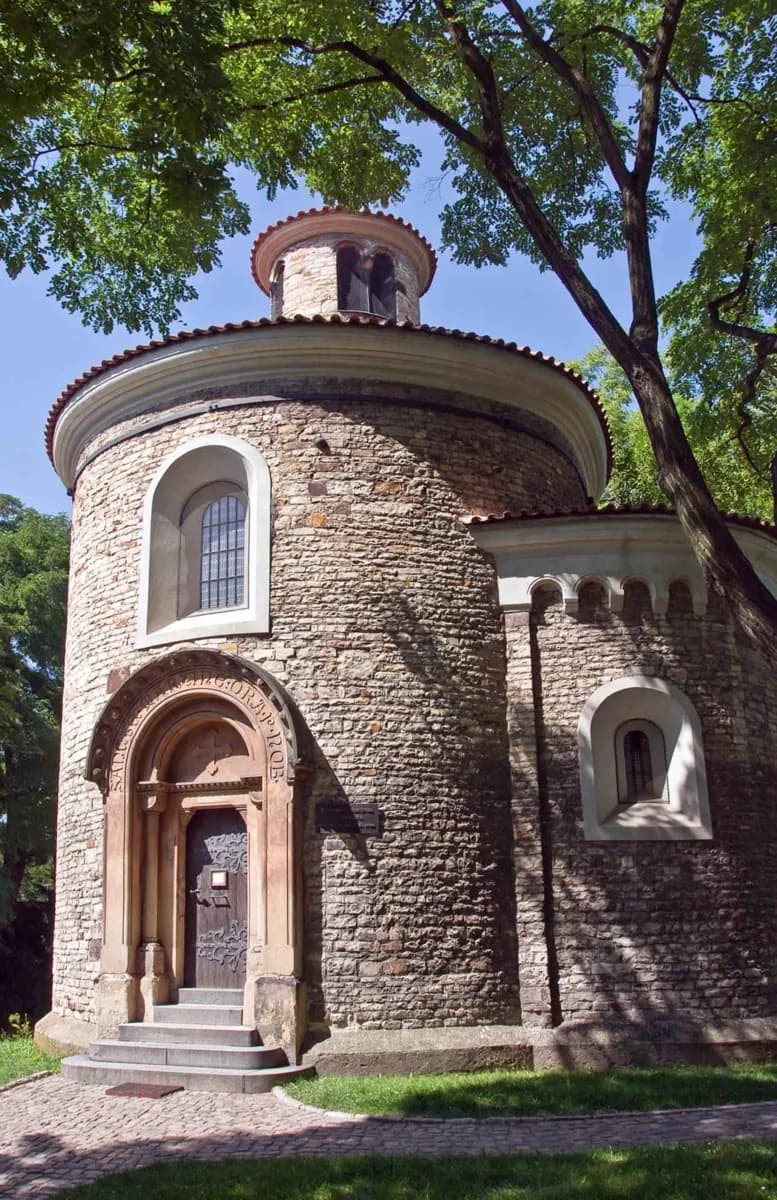
Why go
Vyšehrad feels distinct from the Castle district: ramparts and green space frame the river, while the Rotunda of St Martin, basilica and Slavín cemetery reward a slower circuit. Come for both the outlook and the layered history of an early royal seat.
What to look for
- The ramparts look across the Vltava and the city.
- The small Romanesque Rotunda of St Martin survives within the fortress area.
- The basilica and Slavín cemetery stand close together inside the grounds.
The full story
Vyšehrad occupies a steep rise above the right bank of the Vltava. It was an important seat of the Přemyslid rulers in the eleventh century, before political power settled elsewhere. Charles IV later gave the site a place in his vision of Prague, and the fortifications were reshaped again in the Baroque period. Those changes explain why a walk here moves between very different remains: the small Romanesque Rotunda of St Martin, broad defensive walls and the much later appearance of the basilica. The cemetery beside the church holds figures central to Czech cultural life, including Antonín Dvořák and Bedřich Smetana. Local legend casts Vyšehrad as Prague's first settlement, but the site's documented history is substantial enough without that claim. The ramparts make its strategic position clear as soon as you look down to the river.
Useful to know
- Walk the ramparts first, then decide which indoor sites to enter.
- Check individual opening arrangements for the basilica, cemetery and other managed spaces.
- Allow for a hilltop circuit; this is a broad area rather than one entrance.
Your next visit
Estimated · Declared scenario and planning estimates; no live opening, weather, queue or booking service.
Outdoor visit · 15–25 min
World planning estimate; admission, opening, visit duration and access need checking.