
Why go
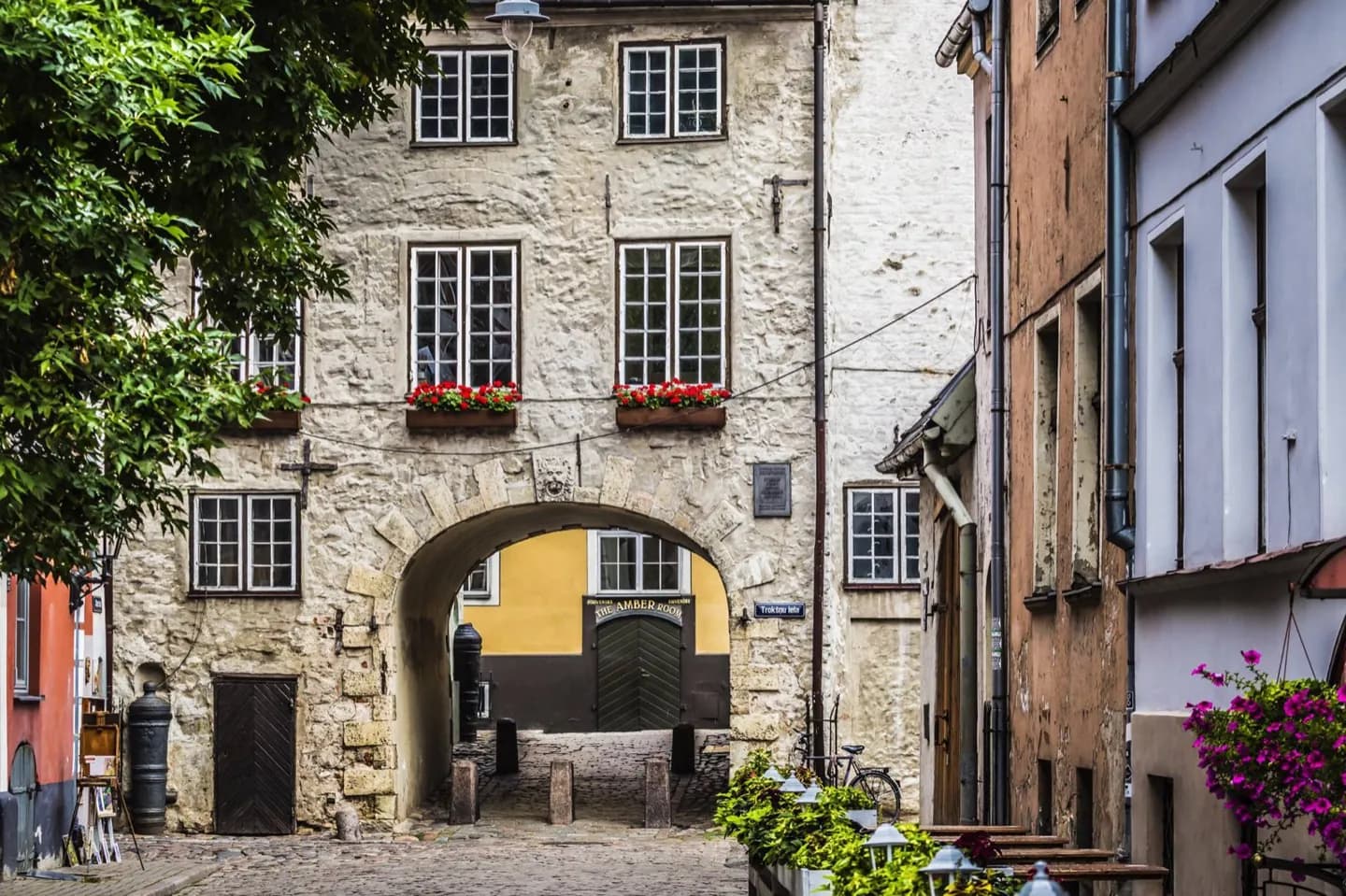
Passing through the arch makes the old boundary of the city easier to imagine than a map does. Built in 1698, it linked the streets inside the wall with barracks beyond. The pleasure here is in the tight passage and its relationship to the nearby wall line, not in a staffed attraction.
What to look for
- The 1698 gate arch in Torņa iela.
- A surviving trace of Riga's former city wall.
- The passage towards the area of the old barracks.
The full story
The Swedish Gate was built in 1698 while Riga was under Swedish rule. It formed a passage through the city's defensive wall to barracks outside it. Most of the old gates disappeared as the city changed, leaving this arch as a rare place where a visitor can physically cross the former boundary. Its modest scale is part of its appeal. The gate does not explain itself through a museum display or a panoramic viewpoint; the useful comparison is between the enclosed Old Town streets and the area beyond the wall line. Riga's defenses once controlled movement in and out of the city, while the same opening now belongs to an ordinary pedestrian route. Stand on each side to see how the passage sits within the surrounding buildings. That simple movement makes the wall's former position more tangible than viewing the gate as a single façade.
Useful to know
- Allow about 10 minutes to pass through and inspect the arch from both sides.
- Include it on a northern Old Town walk with the nearby cathedral quarter.
Your next visit
Estimated · Declared scenario and planning estimates; no live opening, weather, queue or booking service.
Outdoor visit · 30–45 min
World planning estimate; admission, opening, visit duration and access need checking.