
Why go
The city's history explains its unusual concentration of churches, palaces and defensive architecture. Following a few durable turning points makes the built landscape easier to understand and keeps Mozart and the festival from eclipsing the city's many important earlier chapters.
The full story
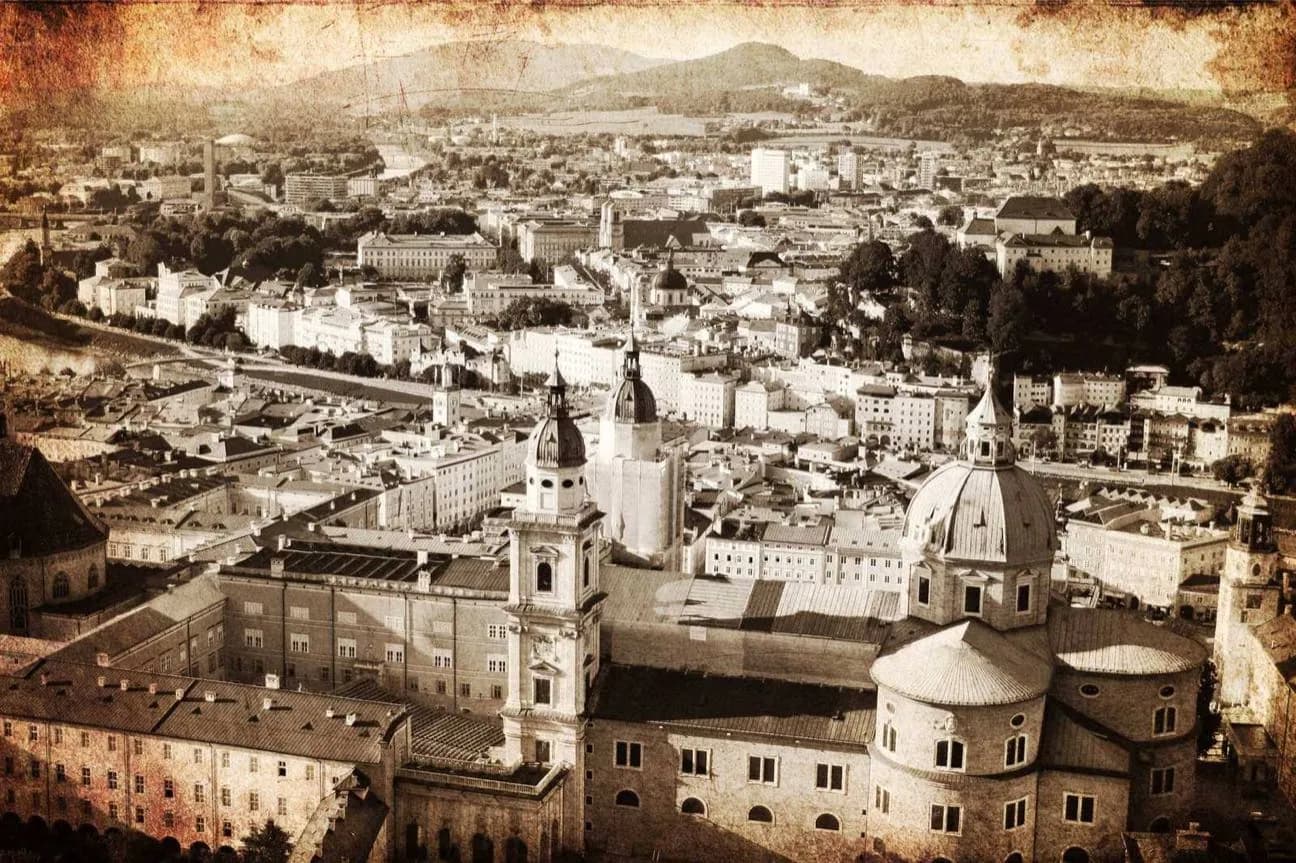
Roman Juvavum occupied a strategic place beside the Salzach and Alpine routes. After late-antique decline, the religious center was renewed under St. Rupert, and St. Peter's Abbey became a lasting anchor. Medieval archbishops accumulated secular as well as church authority, while Hohensalzburg Fortress grew above the city as protection and political statement. The early modern salt economy supported a court whose prince-archbishops reshaped streets and squares. After a destructive fire, seventeenth-century builders created the cathedral and much of the Baroque city seen today. Salzburg lost its independent ecclesiastical rule during the Napoleonic era and eventually became part of Austria. The nineteenth century reframed Mozart as a civic symbol and drew visitors to the mountain setting. In the twentieth century, the Salzburg Festival turned existing squares, churches and performance halls into an international stage, while the city also endured dictatorship, war and postwar reconstruction.
Useful to know
- Use St. Peter's, the fortress and cathedral as anchors for three major historical layers.
- Notice how Baroque squares overlay a much older street and monastic landscape.