
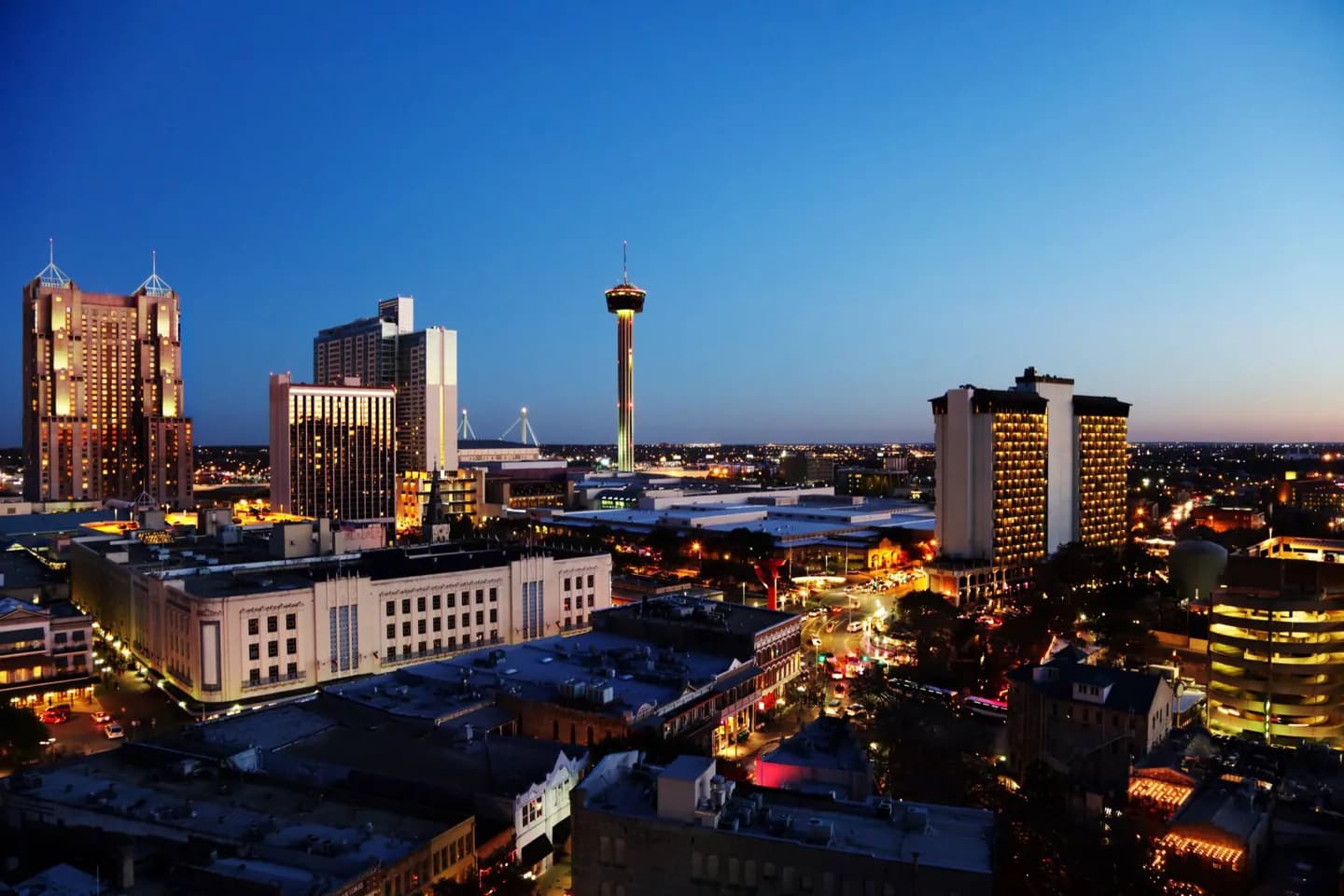
Why go
The Alamo gives many visitors their first point of reference, but the wider mission landscape explains more of the city's beginnings. Pair a downtown walk with at least one southern mission to see how the river connected religious compounds, settlements and later public spaces.
The full story
San Antonio's name dates to a Spanish expedition that reached the river on the feast day of Saint Anthony of Padua in 1691. Spanish settlement followed in the early eighteenth century, when a mission, a military post and civilian homes took shape near the water. The former Mission San Antonio de Valero later became known as the Alamo. Other missions remain farther south along the river, so the colonial story is spread across several places rather than contained in one downtown monument. The Alamo and the San Antonio missions were inscribed together as a UNESCO World Heritage site in 2015. Today the central River Walk offers a different view of the same river that guided the city's early development. For a short first visit, the Alamo and downtown riverfront give clear orientation. With more time, continue south to compare the scale and setting of the mission churches and their grounds.