
Chapter 1 / San Antonio
The Alamo.
Start with The Alamo. Let a detail decide which thread you follow next.
Pause here. What detail would you keep from this place?
Outdoor walks and façade observations. Interior admission is not included.
The full story
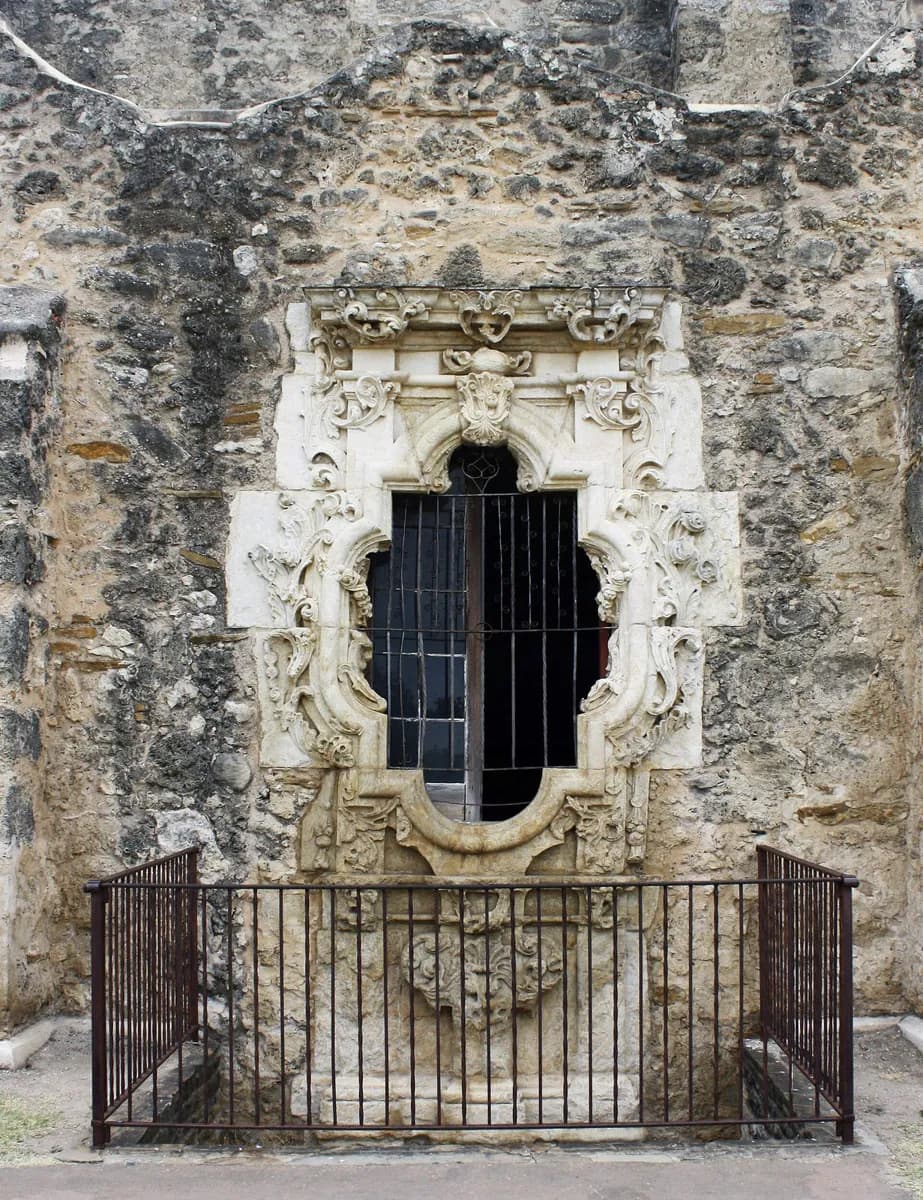
The former mission and 1836 battlefield place San Antonio's best-known historic site within its broader colonial and Texas history, beyond the familiar church façade.
Seeing the surviving church and grounds makes the scale and setting of the 1836 battle easier to grasp than the familiar image of the façade alone. The site also asks you to hold two histories together: an earlier mission and the later battlefield that extended around it.
The Alamo began as Mission San Antonio de Valero before its role in the 1836 battle. That earlier purpose matters when you look at the surviving church: it was not built simply as the monument it has since become. The battlefield also extended beyond the church façade, so a visit limited to one building can give a narrow sense of the place. Walk the grounds with the mission and the battle in mind, and notice how much of the story depends on the spaces around the recognizable structure. The exhibit's objects from the Phil Collins Collection and its replica 18-pounder cannon offer another way to consider the events associated with the site. Together, the church, grounds and displays place the battle within a longer history, rather than treating the familiar image as the whole account.
- The Alamo Church is the most recognizable surviving structure.
- The grounds mark a battlefield that extended beyond the church façade.
- The exhibit includes objects from the Phil Collins Collection and an 18-pounder cannon replica.
Allow time for the grounds as well as the church so the site reads as more than a single building.
Arrange the church's timed entry through the official site before heading to Alamo Plaza.
What is pulling you next?
Another door into this story