
Why go
The three sites let you compare nineteenth-century art rooms, contemporary galleries and a preserved household that includes the history of enslaved workers. Each needs its own entrance and pace; the umbrella name is useful for planning, not as one stop.
What to look for
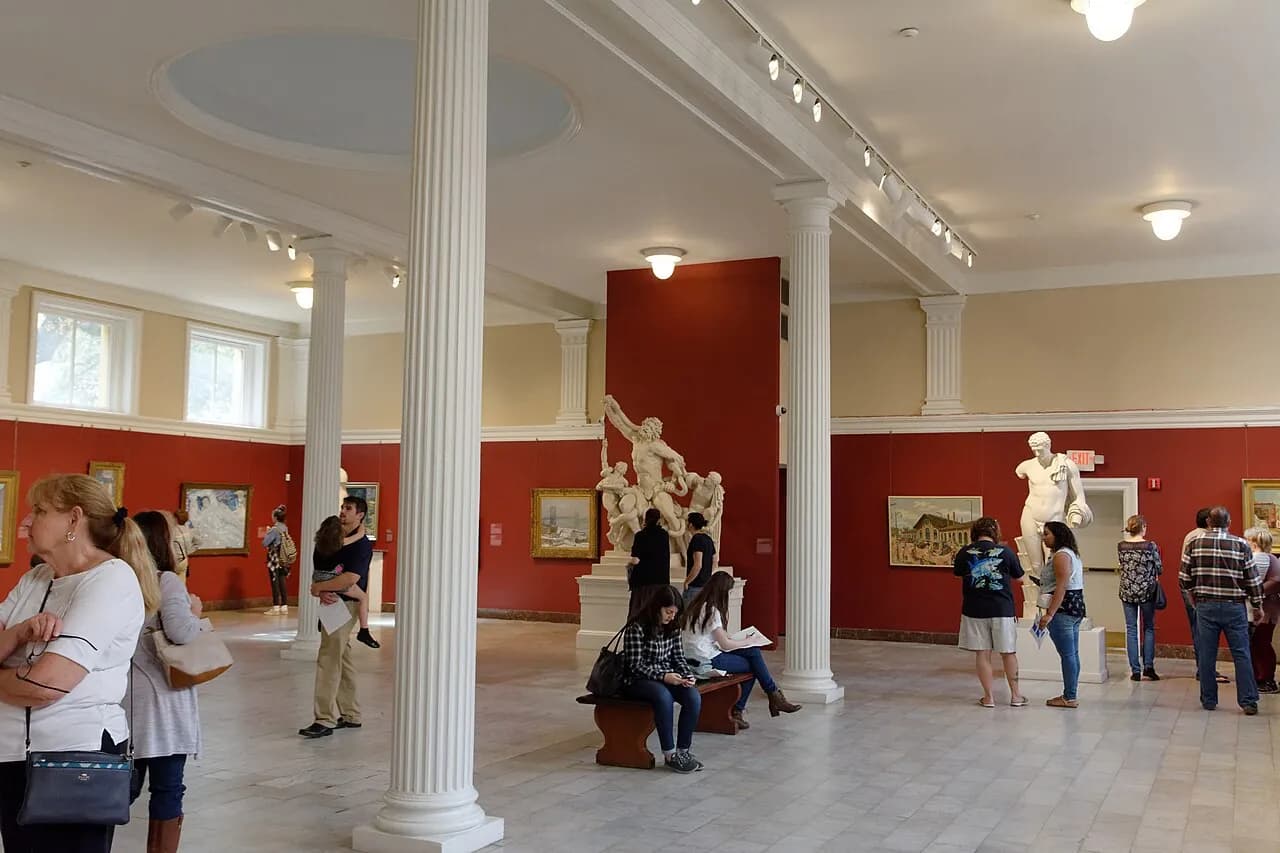
- Telfair Academy presents historic rooms and art in a former family home.
- Jepson Center shows contemporary art in a markedly different building.
- Owens-Thomas House & Slave Quarters interprets a household and its labor.
The full story
Telfair Museums grew from Mary Telfair’s bequest; Telfair Academy opened to the public in 1886 in the family’s former home. The institution now spans three buildings with different purposes and architectural languages. At the Academy, period rooms and art place collecting in the setting of a nineteenth-century household. Moshe Safdie’s Jepson Center, completed in 2006, shifts the experience to contemporary galleries. The Owens-Thomas House & Slave Quarters asks a different question: how a well-appointed urban home functioned, and whose labor sustained it. Its surviving quarters make the lives of enslaved people part of the visit rather than an aside to decorative arts. Treating the three as separate stops gives that contrast room to register. A shared admission arrangement can help with planning, but it does not make the sites one continuous museum visit.
Useful to know
- Choose Academy and Jepson as distinct museum visits, even when using a shared ticket.
- Arrange the Owens-Thomas tour separately; assigned departures can fill.
- Check access needs by site: the Owens-Thomas House has original stairs and no elevator.
Your next visit
Estimated · Declared scenario and planning estimates; no live opening, weather, queue or booking service.
Outdoor visit · 30–45 min
World planning estimate; admission, opening, visit duration and access need checking.