
Why go
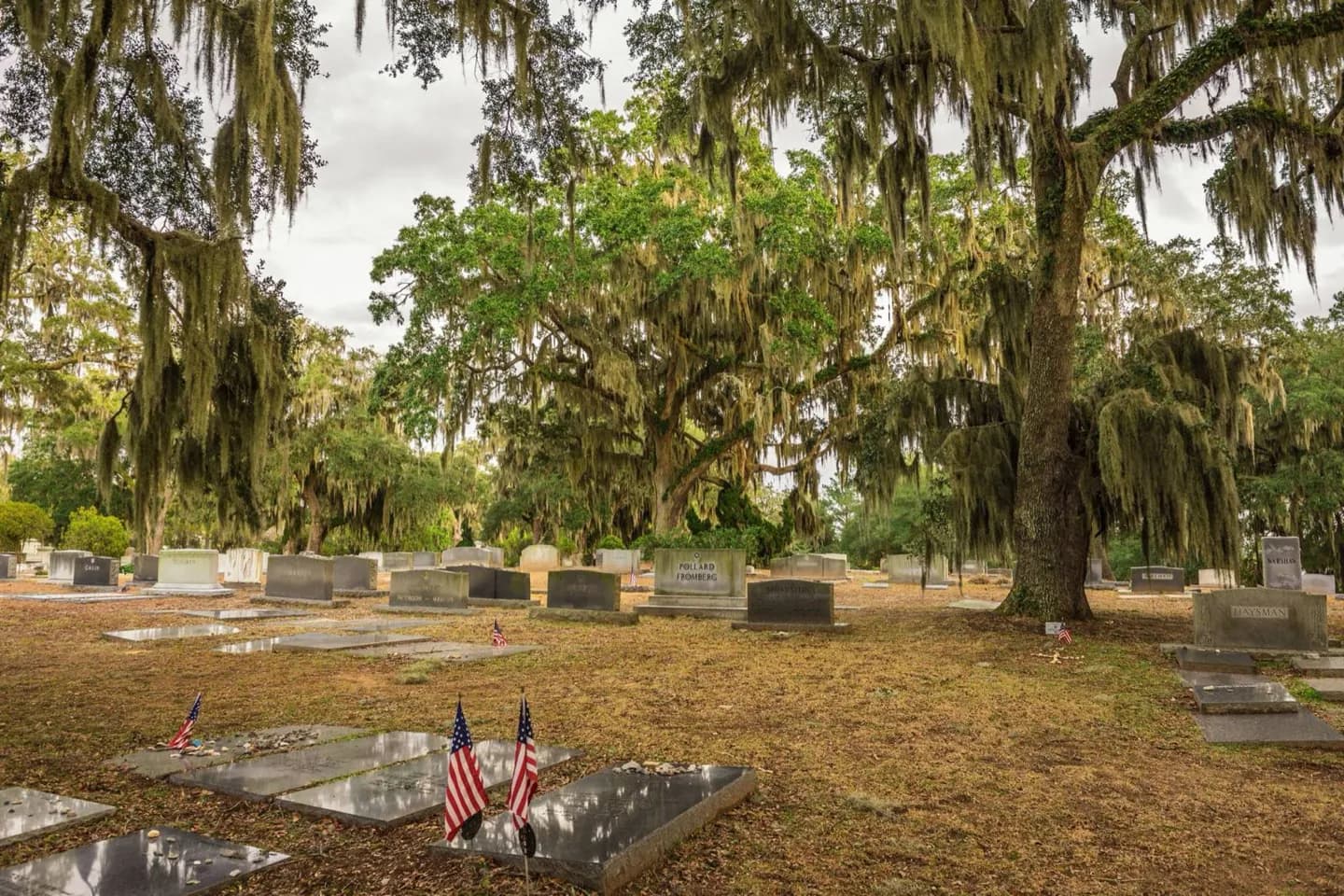
The oak avenues, Spanish moss and graves overlooking the Wilmington River make this a distinctly Savannah landscape. Follow the cemetery roads beyond the entrance to see how monuments and trees frame one another; the broad grounds deserve more than a photo stop.
What to look for
- Live oaks arch over old cemetery roads, their branches draped in Spanish moss.
- Carved memorials and family plots show changing styles of remembrance.
- The cemetery bluff looks across the Wilmington River.
The full story
Bonaventure began as part of a plantation east of Savannah, then became Evergreen Cemetery in the nineteenth century. The city acquired it in 1907 and gave it its present name. That sequence matters as you move through the grounds: the planted live-oak avenues, family memorials and river setting are parts of a designed landscape, not a wild woodland. Naturalist John Muir stayed here in 1867 and wrote at length about the trees, especially the moss hanging from their branches. The cemetery later reached a wider audience through Midnight in the Garden of Good and Evil. The Bird Girl sculpture associated with that story no longer stands here; it is displayed at Telfair Academy. Look at the cemetery on its own terms, including the sculpture and the view from the Wilmington River bluff.
Useful to know
- Allow time for a walk on the cemetery roads; the grounds are extensive.
- Treat this as an active burial ground and give mourners space.
- For the Bird Girl sculpture, visit Telfair Academy instead.
Your next visit
Estimated · Declared scenario and planning estimates; no live opening, weather, queue or booking service.
Outdoor visit · 30–45 min
World planning estimate; admission, opening, visit duration and access need checking.