
Why go
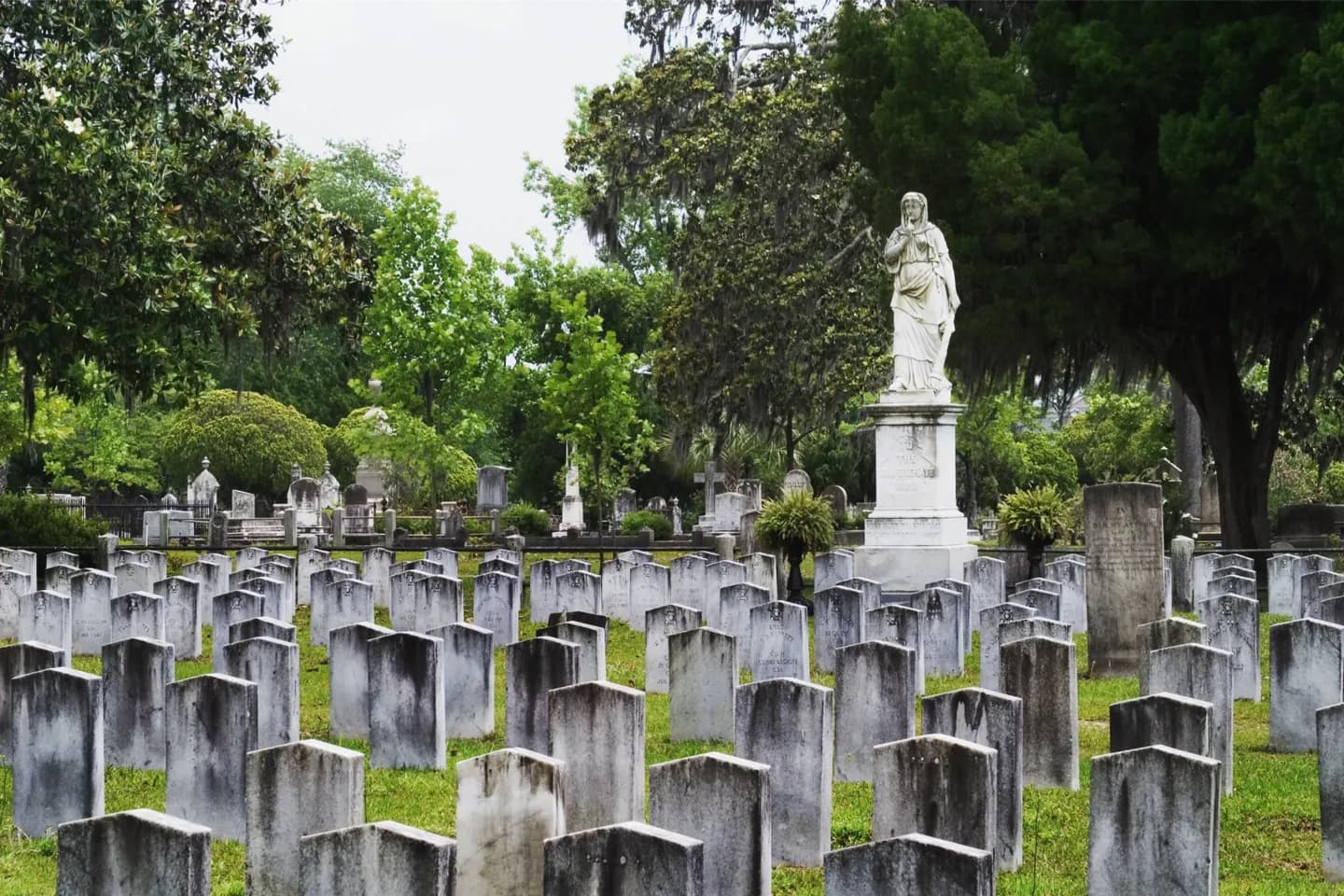
Opened for burials in the nineteenth century, Laurel Grove North shows how Savannah memorialized its dead through landscaped roads and funerary sculpture. Its North designation matters: Laurel Grove South is a separate burial ground with a distinct history of enslaved and free Black residents. Treat each as its own site rather than assuming one visit covers both.
What to look for
- Curving roads and mature trees give Laurel Grove North its landscaped cemetery character.
- Victorian monuments show a range of carved forms and inscriptions.
- Laurel Grove South is a separate cemetery, not another section of the same walk.
The full story
Laurel Grove North opened for burials in the nineteenth century and grew into a landscaped cemetery with curving roads, mature trees and Victorian monuments. It offers a different reading of Savannah from the tightly planned downtown squares: here family plots and carved memorials spread across a more open setting. Look closely at inscriptions and sculpture rather than treating the grounds only as a green space. The North cemetery also holds the graves of Confederate veterans, a reminder that memorial landscapes record choices about whom a city honors. Laurel Grove South has a separate and important history as a burial place for enslaved and free Black people. It lies apart from North and deserves its own visit and interpretation. Keeping those two sites distinct avoids compressing Savannah's unequal histories into a single pleasant cemetery stroll.
Useful to know
- Plan a respectful walk on the cemetery roads and leave time to read the stones.
- Check the city's cemetery information if you intend to visit Laurel Grove South as well.
Your next visit
Estimated · Declared scenario and planning estimates; no live opening, weather, queue or booking service.
Outdoor visit · 30–45 min
World planning estimate; admission, opening, visit duration and access need checking.