
Why go
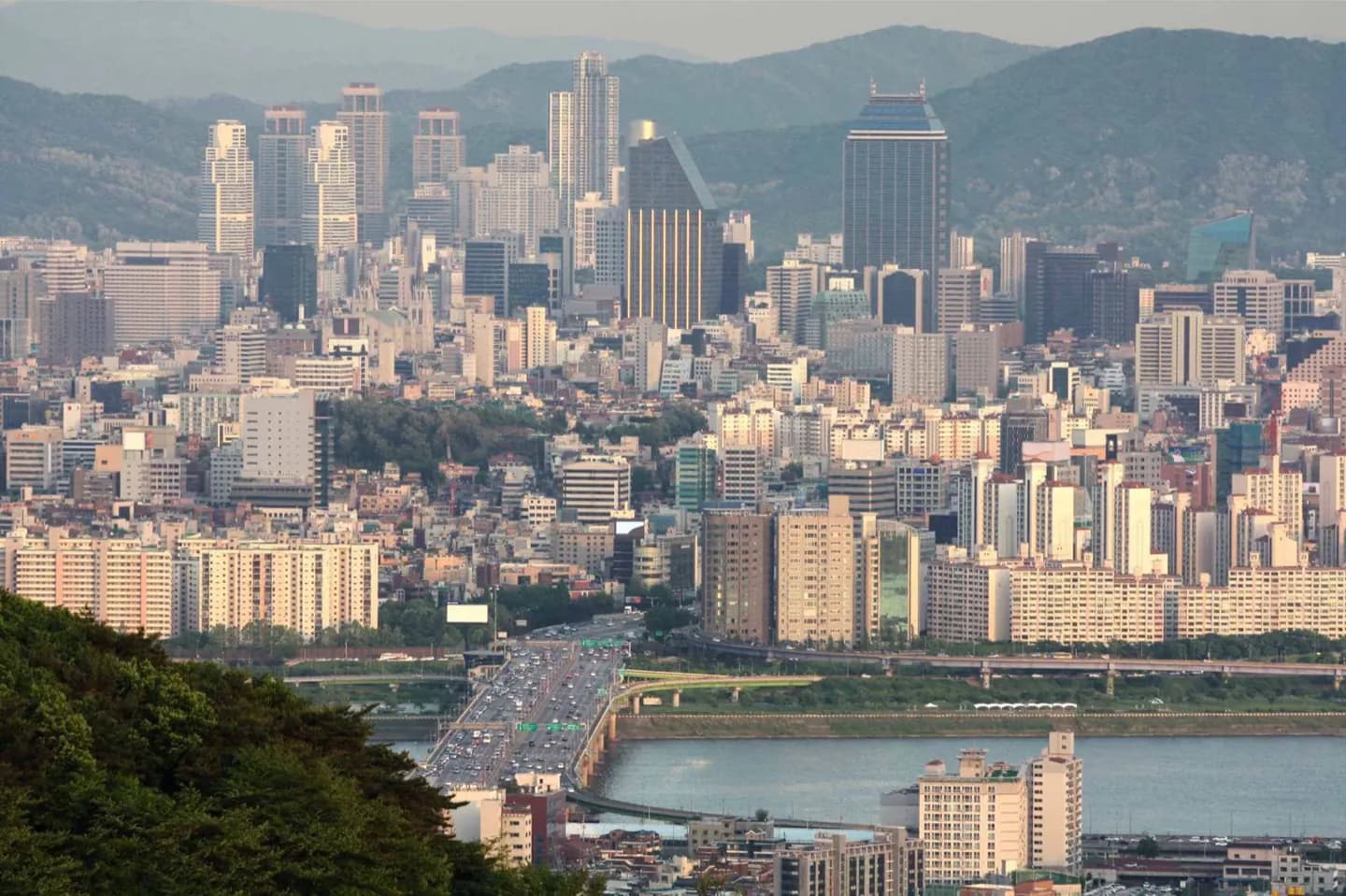
A little geographic orientation prevents long, unfocused crossings of a large city. Jongno puts palaces, Jongmyo and older street life within reach; Dongdaemun changes the emphasis to markets and fashion; Gangnam, Yeouido and the Han River show the more recent commercial city. Treat each as a different kind of outing rather than trying to cover them in one sweep.
The full story
Seoul is divided administratively into districts known as gu, but those borders are less useful to a visitor than the city’s larger contrasts. North of the Han River, Jongno holds much of the old capital’s fabric: palace grounds, Jongmyo Shrine, Insadong and nearby streets where an outing can move between royal architecture and everyday commerce. Dongdaemun is another northern reference point, shaped by its market and fashion trade. South of the river, Gangnam’s broad commercial streets feel markedly newer, while Yeouido reads as a river island of towers and civic institutions. The Han River itself is a practical visual line between these sides of the city. Start with one side and one purpose—heritage, shopping, river time or contemporary Seoul—then use public transport for the longer shift. That approach leaves room to notice the change in scale and street character instead of treating Seoul as one continuous center.