Chapter 1 / Seoul
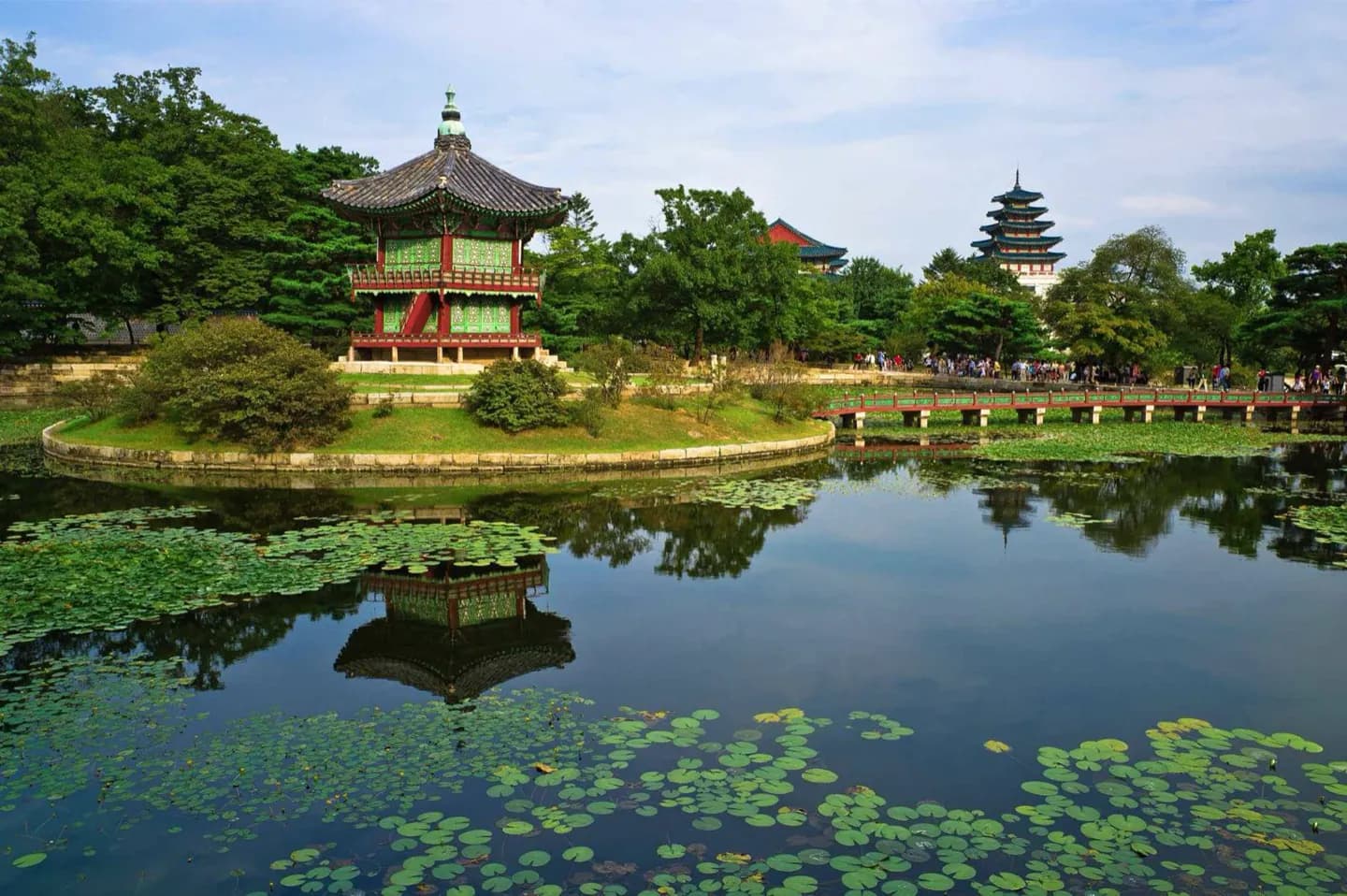
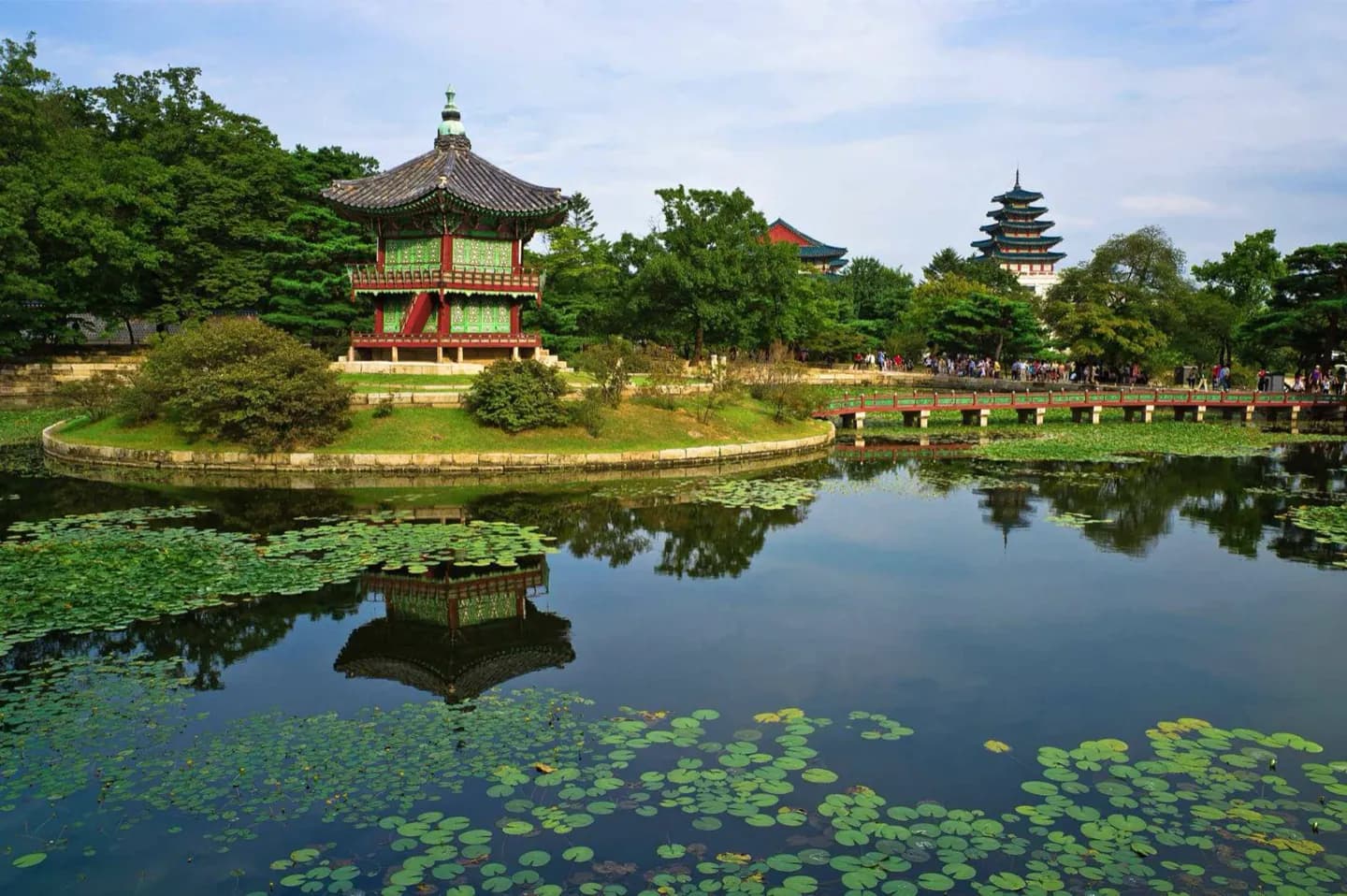
Gyeongbokgung Palace.
Start with Gyeongbokgung Palace. Let a detail decide which thread you follow next.
Pause here. What detail would you keep from this place?
Outdoor walks and façade observations. Interior admission is not included.
The full story
Seoul's primary Joseon palace delivers the clearest monumental royal axis, with grand gates, throne halls, pavilions and visible layers of reconstruction.
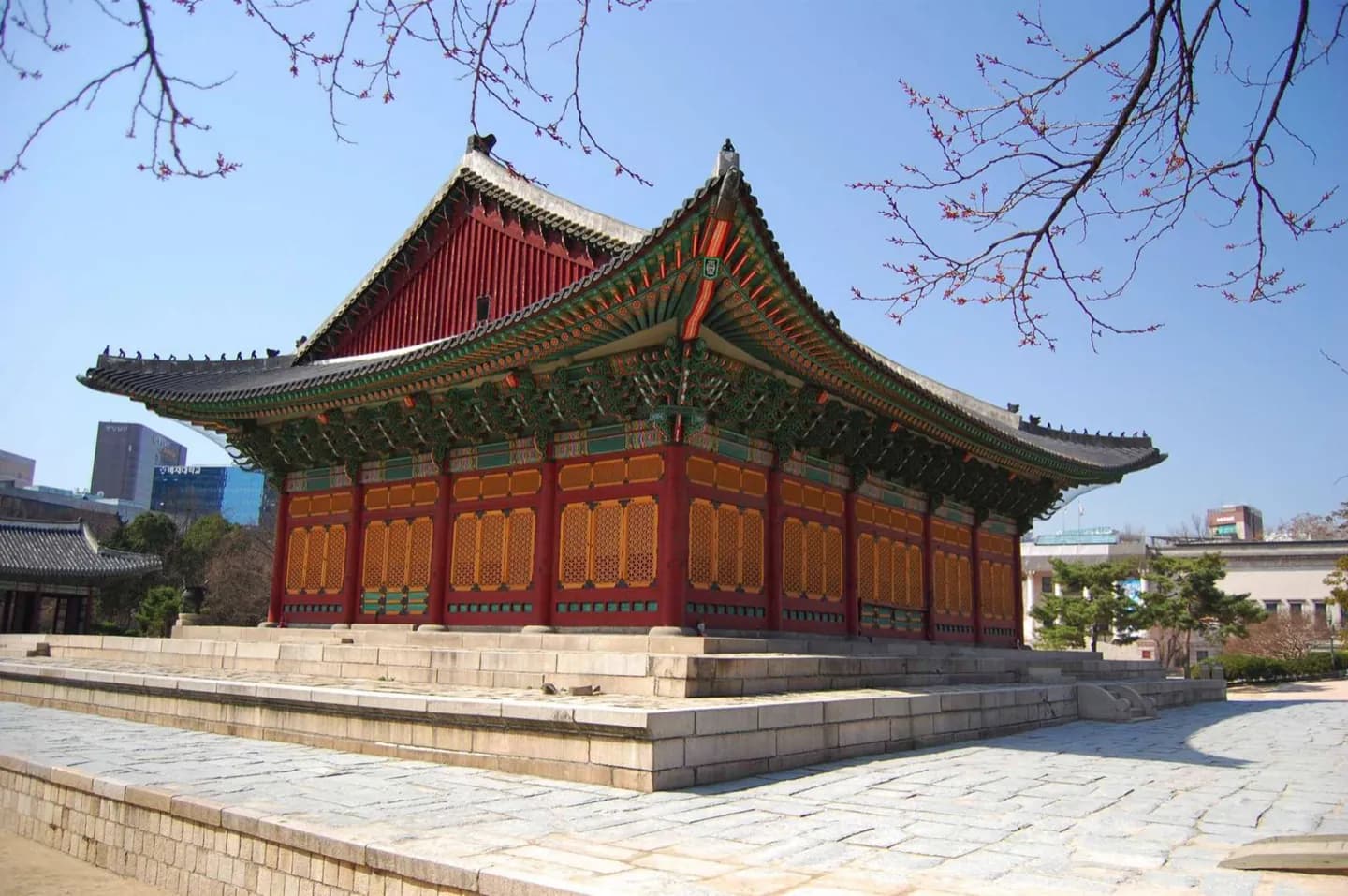
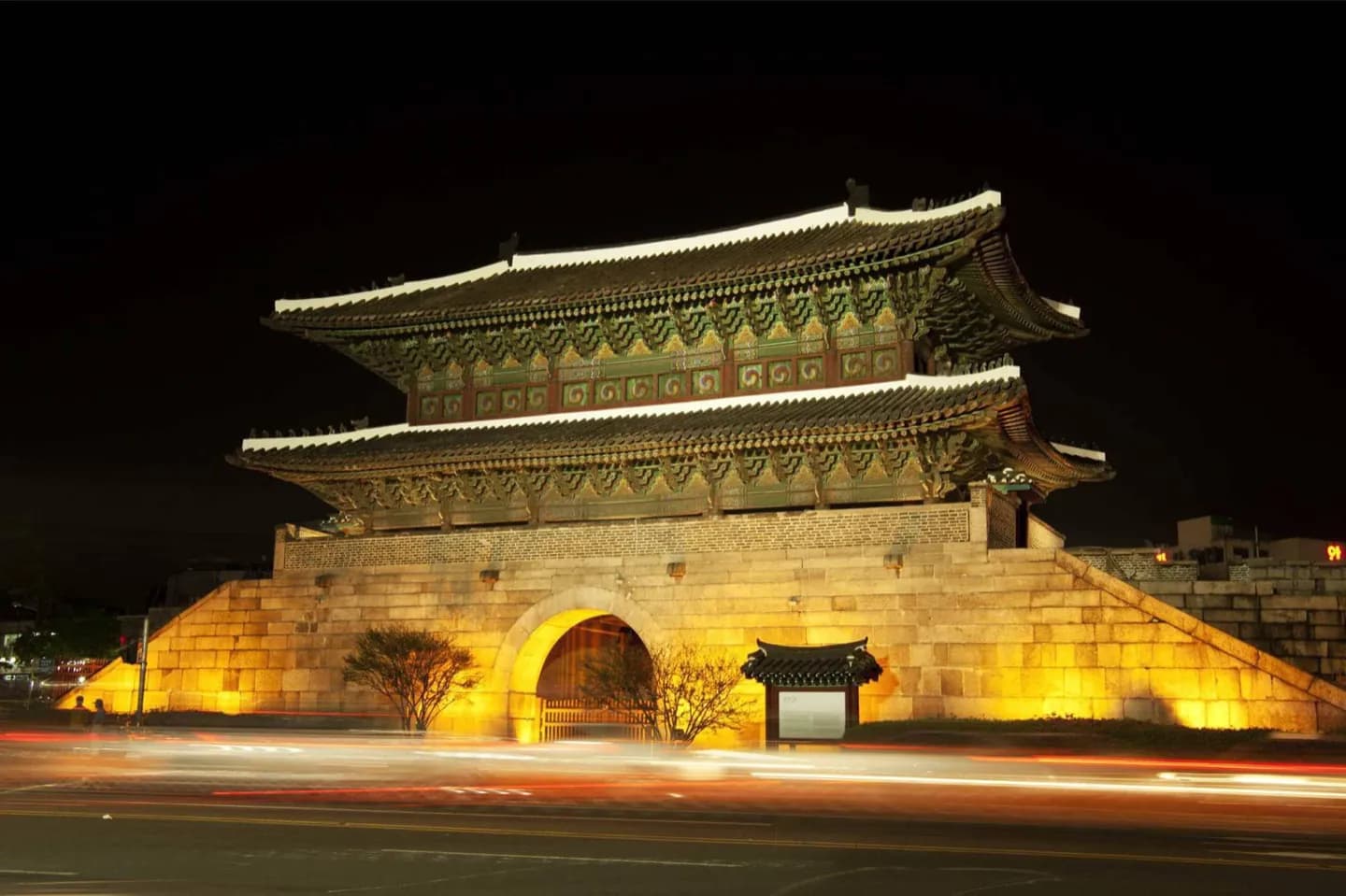
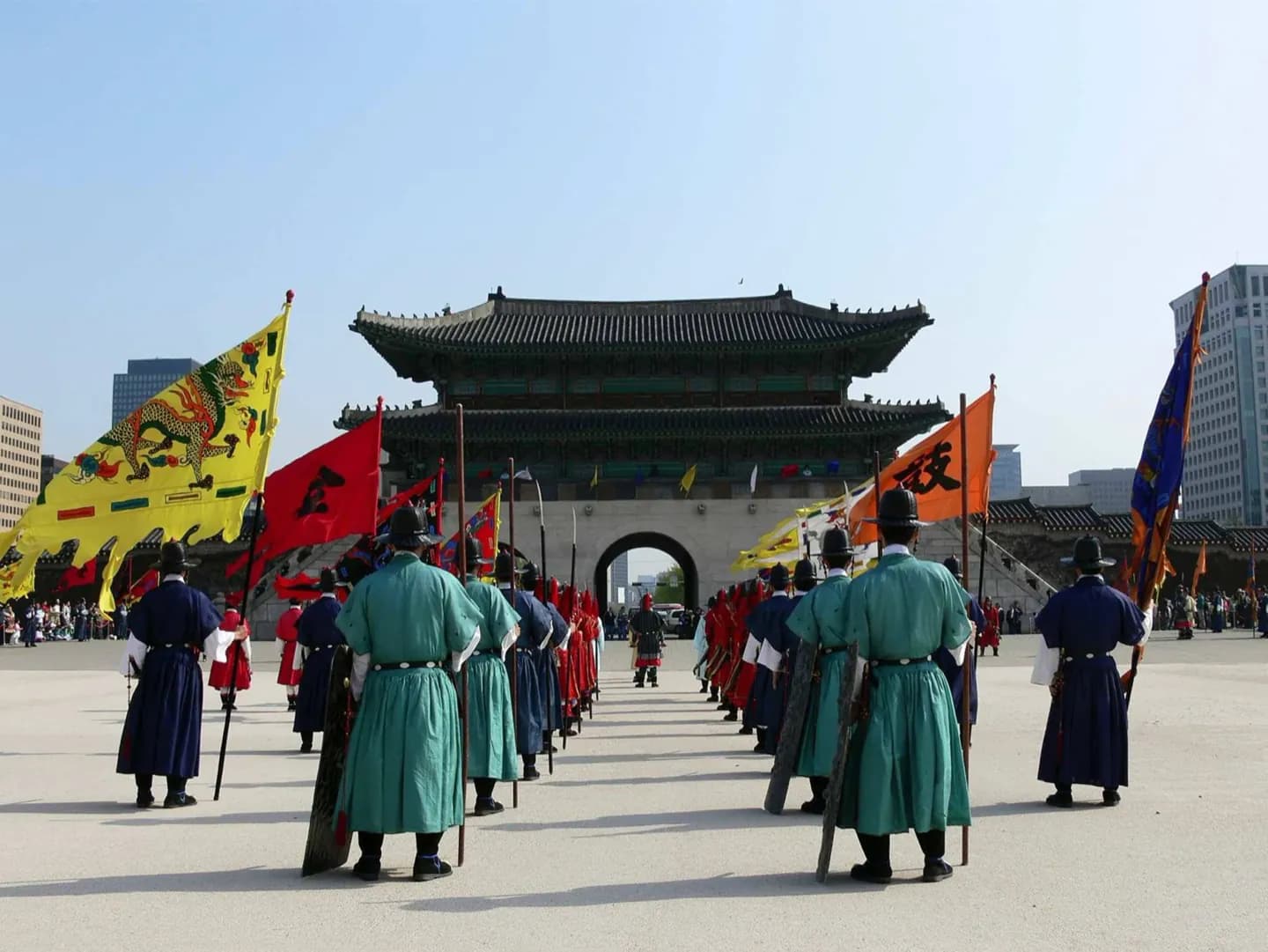
Gyeongbokgung is the strongest choice for understanding how the Joseon court projected authority through scale and alignment. Gwanghwamun, Geunjeongjeon and the water pavilions create a sequence that is both architecturally legible and historically complicated by repeated destruction and careful restoration.
Gyeongbokgung was founded in 1394 under King Taejo as the principal palace of the new Joseon Dynasty. Its broad north–south axis and large ceremonial courts made royal authority visible in architecture. Much of the complex burned during the Japanese invasions of the late sixteenth century and remained in ruins until a major reconstruction in 1867. In the early twentieth century, the Japanese colonial government demolished most buildings and placed its Government-General headquarters in front of Geunjeongjeon, deliberately interrupting the palace's symbolic order. Later restoration removed that colonial structure and began rebuilding gates and precincts. Gwanghwamun, the throne hall and the surrounding corridors create a convincing formal sequence, but the site is also an active reconstruction of a landscape repeatedly damaged and reconfigured. Surviving nineteenth-century buildings such as Geunjeongjeon, Gyeonghoeru, Hyangwonjeong and several residential halls provide crucial anchors. Notice both the restored symmetry and the gaps between structures: each is part of the palace's modern story.
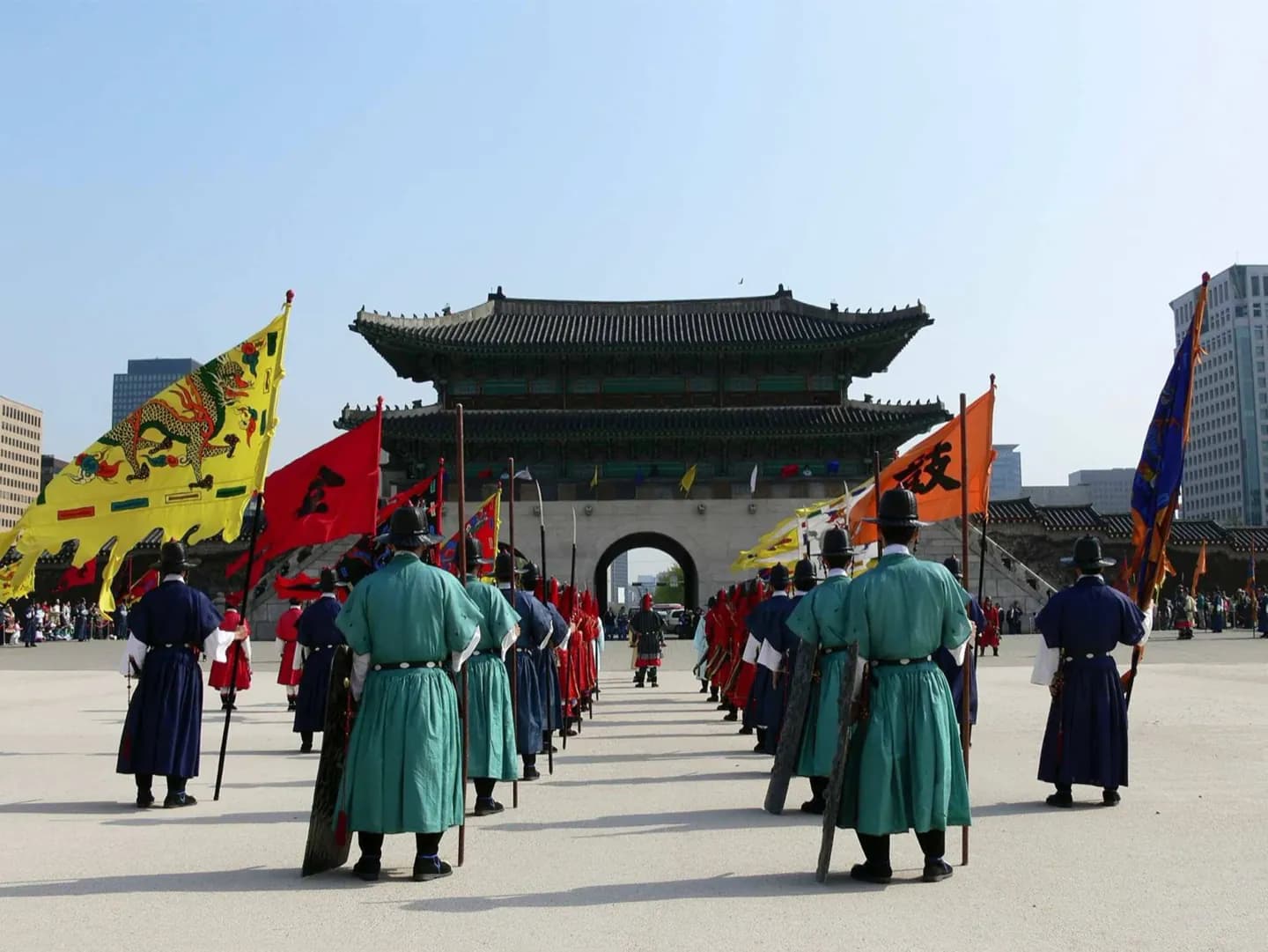
- Gwanghwamun establishes the palace's formal southern entrance and central axis.
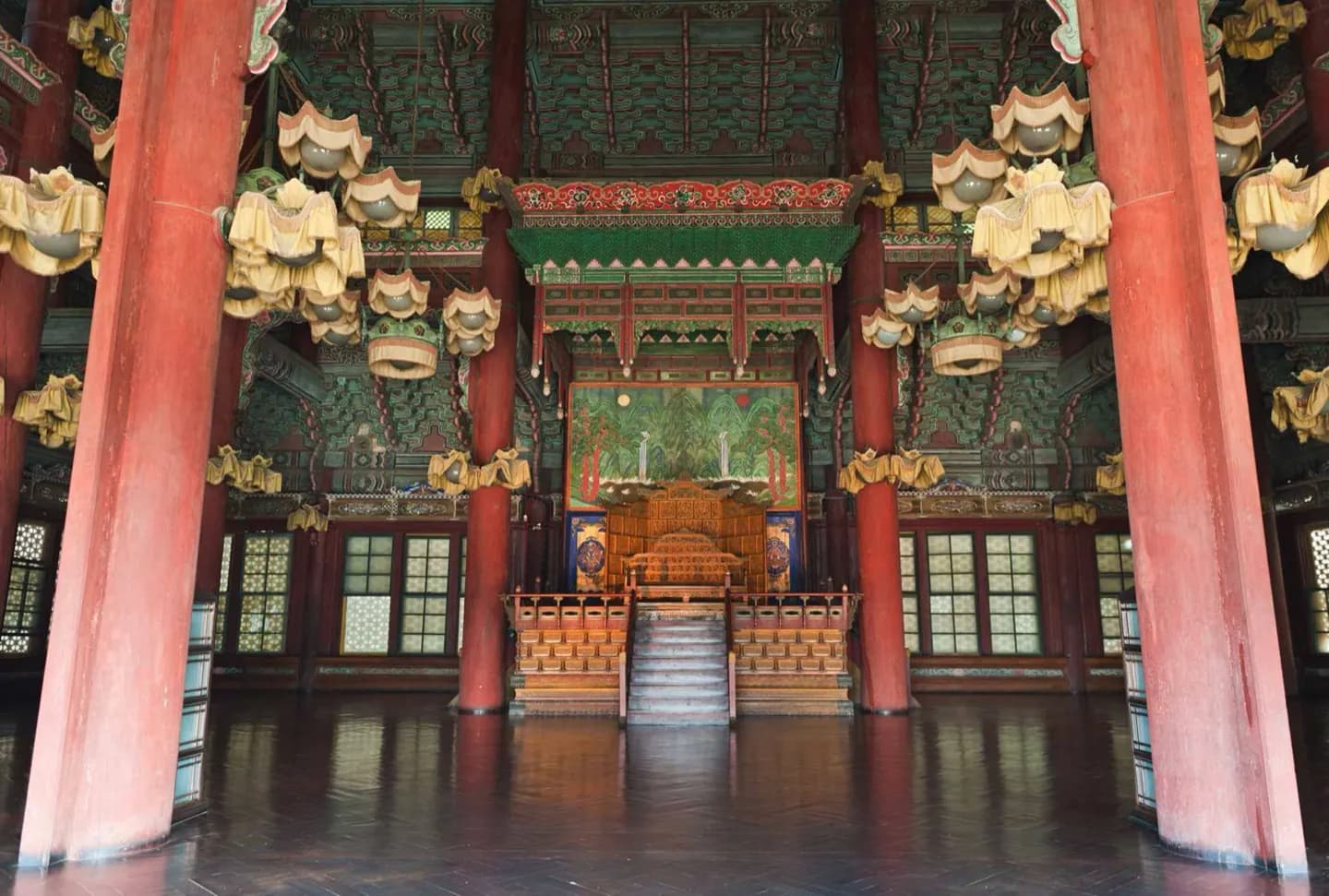
- Geunjeongjeon throne hall dominates a broad stone court built for state ceremony.
- Gyeonghoeru and Hyangwonjeong soften the complex with pavilions set beside water.
Follow the main axis from Gwanghwamun to Geunjeongjeon before branching toward residential halls and ponds.
Allow time for the large grounds and exposed courtyards; shade and distances differ from a compact palace.
Check the official site for current hours, closures and admission details.
What is pulling you next?
Another door into this story