
Why go
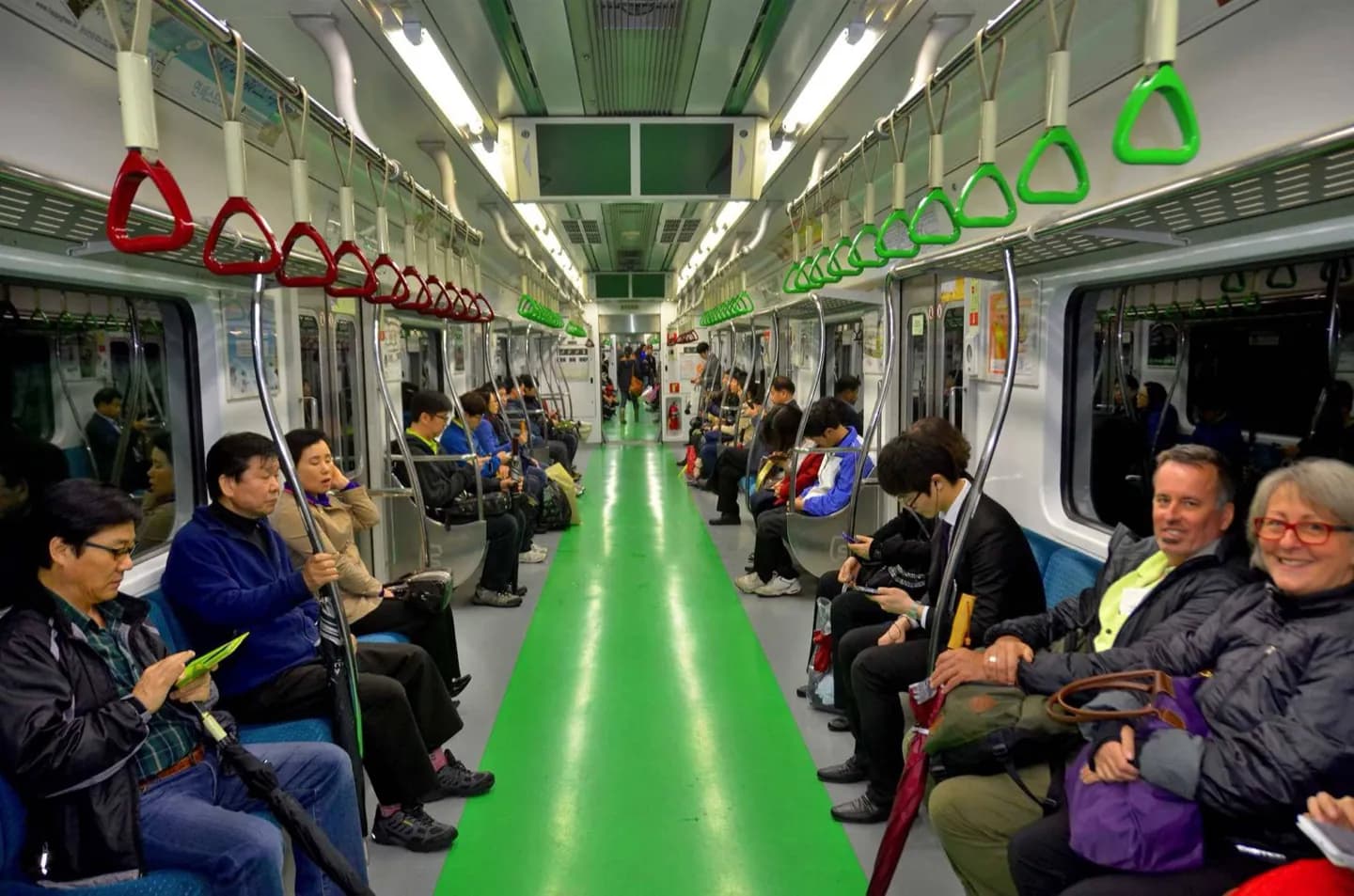
For most city sightseeing, the subway provides the clearest framework for moving between royal sites, market districts and commercial neighborhoods. English appears alongside Korean in the system, but the important decision at a platform is the direction of travel, not merely the line color.
The full story
Seoul's subway is the practical backbone for a day that crosses the city. Lines are identified by number and color, while signs commonly show Korean and English. At the platform, the useful cue is the set of station names shown in the direction you are traveling; read those before entering rather than relying only on a line number. A route that looks short on a map can still involve transfers, station exits and a final walk, so build a little margin when a timed visit follows. The system links many of the places travelers naturally pair, including central palace districts, market areas and the commercial neighborhoods south of the river. Fares, ticket media, transfer rules and train times are operational details that change, so check the current official transit information or a current route planner before setting out. Keep your journey flexible enough to use a different exit if it better matches the street-level destination.
Useful to know
- At the platform, confirm the direction from the listed station names before boarding.
- Allow time for transfers, exits and the final walk; check a current route planner for service details.