
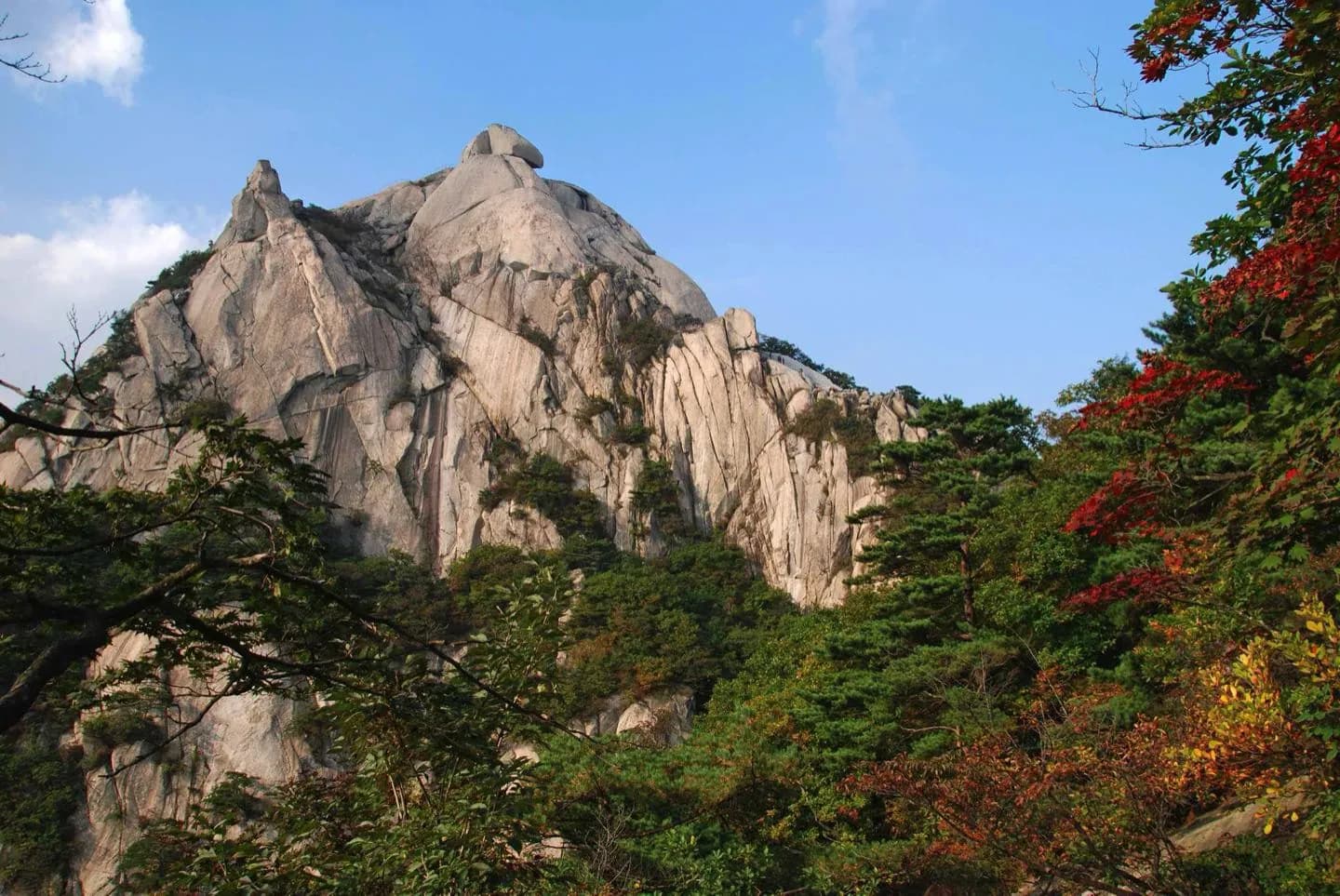
Why go
The appeal is geological as much as scenic. Large granite outcrops give the ridge a distinct profile, while the fortress wall, temple, shrine, and connection to painter Jeong Seon add layers of cultural meaning. Each pause can shift attention from city views to rock forms, defensive walls, or the mountain’s place in Korean painting.
What to look for
- Huge granite forms with names such as Train Rock and Skirt Rock
- The Seoul City Wall tracing the mountain ridge
- Views that recall Jeong Seon’s painting Inwang jesaekdo
The full story
Inwangsan rises to 338 meters in Seoul and stands apart through its granite forms. Many rocks have names based on their outlines, including Gicha Bawi, or Train Rock, and Chima Bawi, or Skirt Rock. Those names encourage an observant climb rather than a single-minded push to the summit. The Seoul City Wall crosses the mountain, joining natural defense with constructed fortification, while Inwangsa temple and Guksadang shrine add religious landmarks to the slopes. The mountain also occupies a place in Korean art. Jeong Seon depicted it in Inwang jesaekdo, a painting that emphasizes rain-darkened rock and mist rather than a neat panoramic prospect. Carrying that image into the hike changes what stands out: the granite’s mass, the changing weather, and the way the ridge frames the city below. Inwangsan is therefore more than a viewpoint. It is a place to read Seoul’s geology, defensive landscape, spiritual sites, and visual culture in the same ascent.
Useful to know
- Hike in daylight and wear shoes with grip for exposed granite and uneven terrain.
- Choose clear conditions for views, but avoid exposed sections in poor weather.
- Allow pauses along the wall rather than treating the summit as the only goal.
Your next visit
Estimated · Declared scenario and planning estimates; no live opening, weather, queue or booking service.
Outdoor visit · 30–45 min
World planning estimate; admission, opening, visit duration and access need checking.