
Why go
Use Yongsan Station when your rail itinerary departs from this hub or when its connections simplify a transfer across Seoul. The integrated commercial building and link toward the electronics market can make waiting practical, but neither turns the concourse into a destination in itself.
What to look for
- Rail and urban transit meet within one large interchange.
- The station building connects transport with shops, restaurants and a cinema.
- A pedestrian bridge links the complex toward Yongsan Electronics Market.
The full story
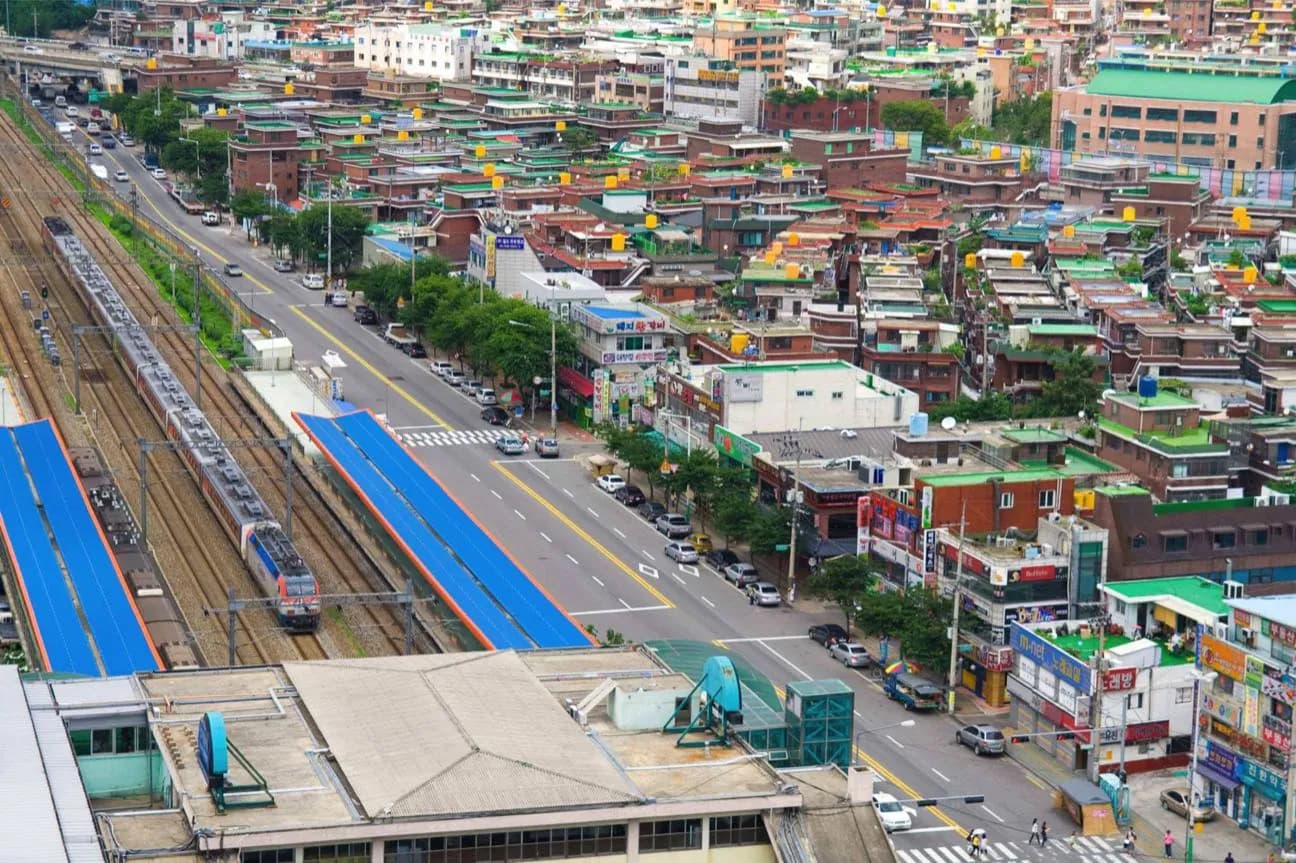
Yongsan Station became one of Seoul's principal long-distance rail hubs as the city's intercity network was reorganized around high-speed service in the early 2000s. Its role differs from a monumental terminus designed mainly as a civic landmark. Here, railway platforms, urban transit and a large commercial complex occupy the same connected structure. A bridge toward Yongsan Electronics Market further tied the interchange to the surrounding commercial district. That layered layout explains both the station's convenience and its potential confusion: a traveler may move between trains, subway services, restaurants, shops and neighboring buildings without a clear outdoor break. Read signs by service and departure rather than relying only on street orientation. The station's value lies in making connections and using waiting time efficiently. Its transport history is useful context, but there is little reason to visit the concourse unless a journey or nearby errand brings you here.
Useful to know
- Confirm the departure station and train details with Korail before traveling; Seoul has several major rail terminals.
- Allow transfer time inside the large station-and-mall complex rather than treating the map point as a single platform.
- Visit only when using the transport hub or adjacent facilities; it is not a separate sightseeing attraction.
Your next visit
Estimated · Declared scenario and planning estimates; no live opening, weather, queue or booking service.
Outdoor visit · 30–45 min
World planning estimate; admission, opening, visit duration and access need checking.