
Why go
The former factory's huge courtyards and defensive perimeter express the value of tobacco production. Its Baroque industrial architecture now forms the core of the university campus. At Royal Tobacco Factory, compare both closely. Royal Tobacco Factory rewards a slower circuit.
What to look for
- The former factory's huge courtyards and defensive perimeter express the value of tobacco production.
- Its Baroque industrial architecture now forms the core of the university campus.
The full story
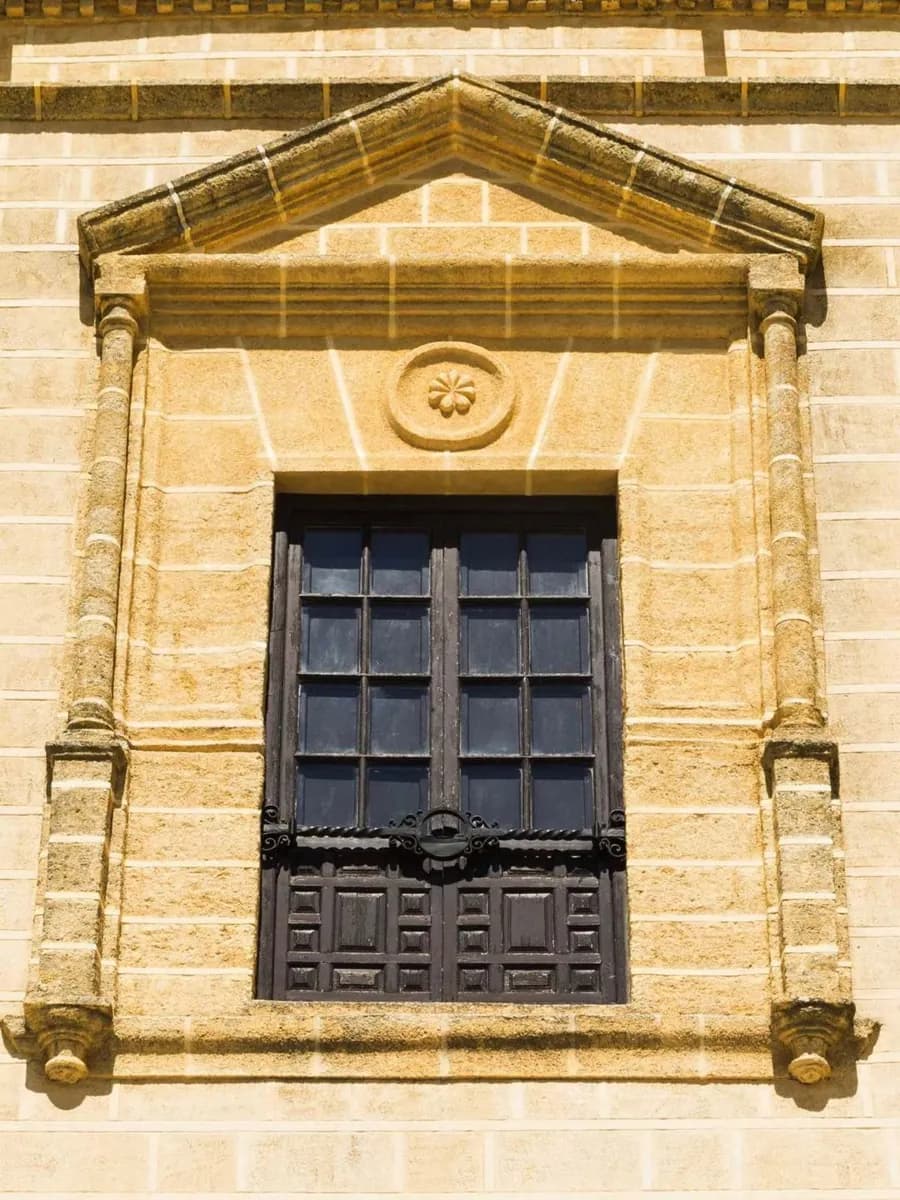
The Royal Tobacco Factory (Real Fábrica de Tabacos) is a 18th century stone building in Seville, southern Spain. Since the 1950s it has been the seat of the rectorate of the University of Seville. Prior to that, it was, as its name indicates, a tobacco factory: the most prominent such institution in Europe, and a lineal descendant of Europe's first tobacco factory, which was located nearby. It is one of the most notable and splendid examples of industrial architecture from the era of Spain's Antiguo Régimen. The factory was built just outside the Puerta de Jerez (a gate in the city walls), in the land known as de las calaveras ("of the skulls") because it had been the site of an Ancient Roman burial ground. Construction began in 1728, and proceeded by fits and starts over the next 30 years. Although the interior has been much altered, especially during the adaptation in the 1950s for use by the University of Seville, the Royal Tobacco Factory is a remarkable example of 18th century industrial architecture.
Useful to know
- See the exterior in daylight, then confirm official access before planning an interior visit.
- Combine it with nearby stops to avoid crossing the city twice in the strongest afternoon heat.
Your next visit
Estimated · Declared scenario and planning estimates; no live opening, weather, queue or booking service.
Outdoor visit · 30–45 min
World planning estimate; admission, opening, visit duration and access need checking.