
Why go
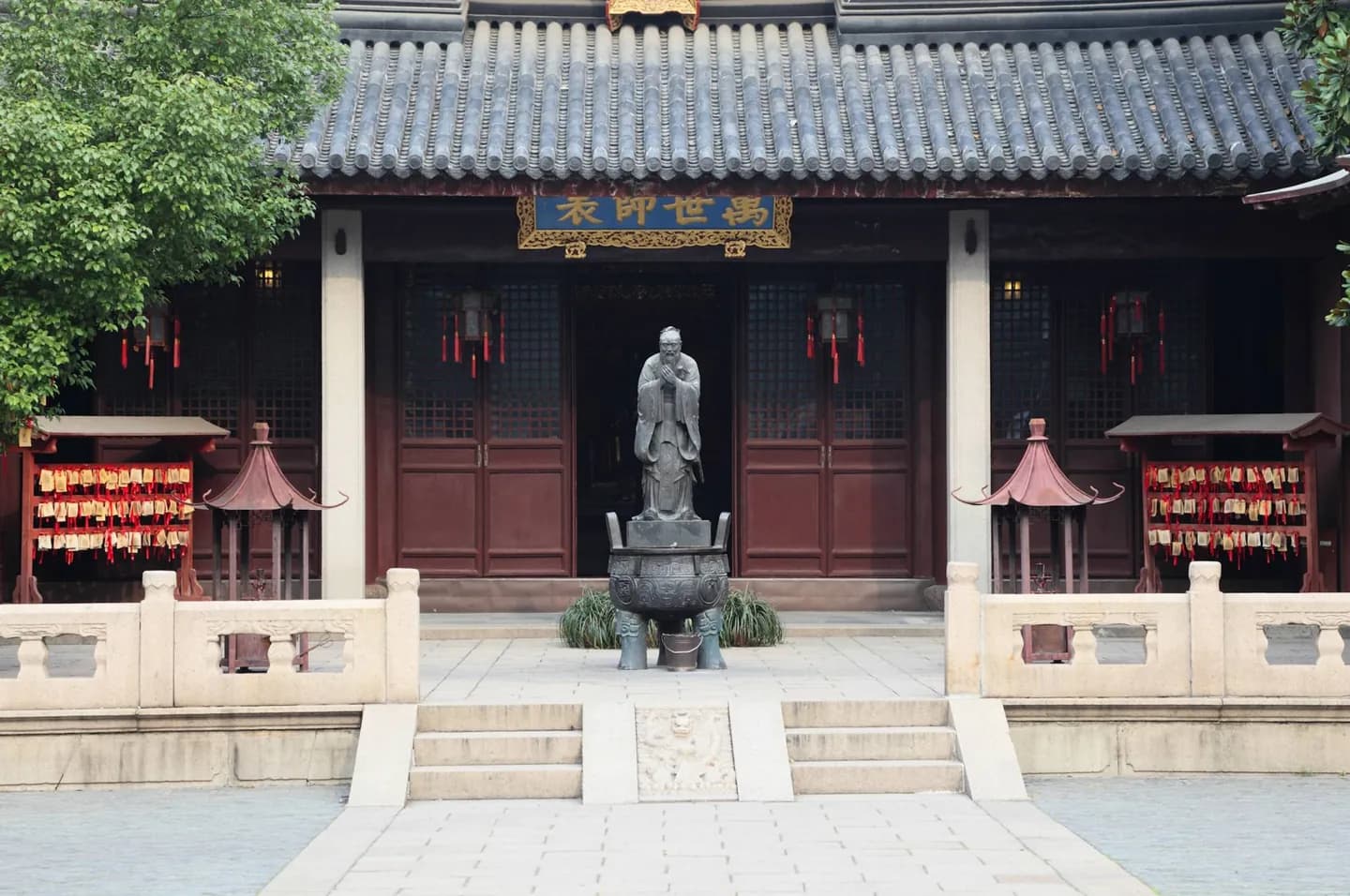
This was a temple and a county learning institution, linking the worship of Confucius with the training of local scholars. That role sets it apart from Shanghai’s Buddhist monasteries and the City God Temple. Its repeated rebuilding also connects the site to the old town’s political conflicts and later preservation work.
What to look for
- A historic temple-and-school complex devoted to Confucius
- A Yuan-dynasty foundation linked to Shanghai becoming a county seat
- The present site rebuilt after nineteenth-century conflict
The full story
Wen Miao was founded during the Yuan dynasty, when Shanghai gained county status. In the Confucian model, a temple and a school belonged together: respect for Confucius was linked to the education of scholars and the administration of the county. The complex was rebuilt several times as the city changed. During nineteenth-century fighting, the Small Swords Society occupied the temple, and the battle to retake it caused extensive destruction. The authorities subsequently rebuilt it at the present location in 1855. Later damage and repair added further layers to that history. The book trade around the temple echoed its association with learning, but it was a separate use of the precinct rather than the institution’s original purpose. Understanding these different roles makes the site valuable for reading how education, ritual and neighborhood life developed together in Shanghai’s old town.
Useful to know
- Confirm temple access before traveling specifically for an interior visit.
- Do not build the outing around the former Sunday book market.
- Compare its educational role with the religious purpose of the nearby old-town temples.
Your next visit
Estimated · Declared scenario and planning estimates; no live opening, weather, queue or booking service.
Outdoor visit · 30–45 min
World planning estimate; admission, opening, visit duration and access need checking.