
Why go
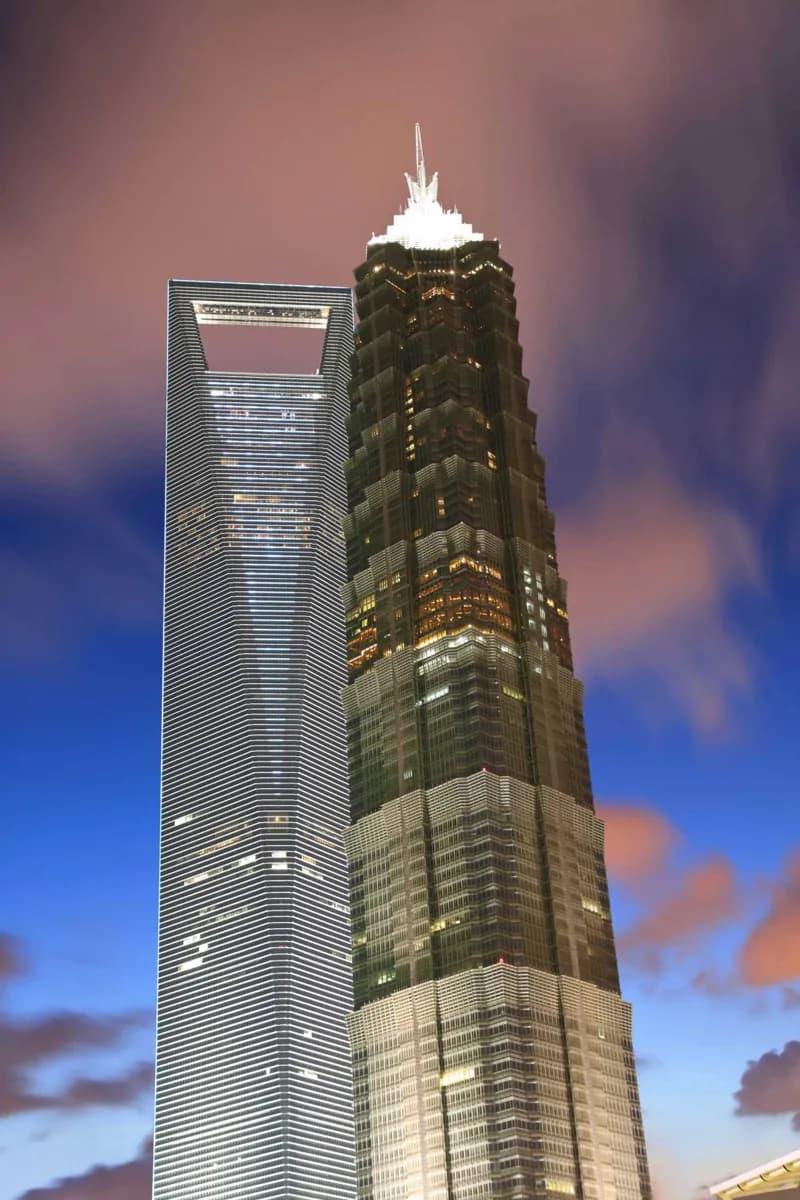
The tiered exterior gives the tower a rhythm that is easy to follow from the street. Its design translates traditional Chinese architectural forms into a modern office-and-hotel building. Standing beside the World Financial Center and Shanghai Tower, it helps you compare three distinct ideas of how a tall building should meet the skyline.
What to look for
- A pagoda-inspired profile stepping back as it rises
- Repeated octagonal geometry in an 88-storey tower
- A SOM-designed landmark beside Shanghai Tower and the World Financial Center
The full story
Skidmore, Owings & Merrill designed Jin Mao around a combination of modern engineering and references to traditional Chinese architecture. The number eight, associated with prosperity, appears in its floor count and repeated structural geometry. Its octagonal concrete core is surrounded by groups of columns, with supporting trusses connecting the outer structure to the center. The visible tiers shorten as they rise, giving the building the rhythm of a pagoda without reproducing one literally. These choices make the tower more interesting than its former position in height rankings. The structure also combines offices with hotel accommodation, so it belongs to the daily commercial life of Lujiazui. Seen beside the straighter World Financial Center and the curved Shanghai Tower, Jin Mao demonstrates how architectural references can remain legible even when translated into the enormous scale of a skyscraper.
Useful to know
- Step back from the base to follow the sequence of tiers.
- Compare its profile with the curved Shanghai Tower and the World Financial Center’s cut summit.
- If you want a deck visit, choose one tower and confirm its admission arrangements.
Your next visit
Estimated · Declared scenario and planning estimates; no live opening, weather, queue or booking service.
Outdoor visit · 30–45 min
World planning estimate; admission, opening, visit duration and access need checking.