
Why go
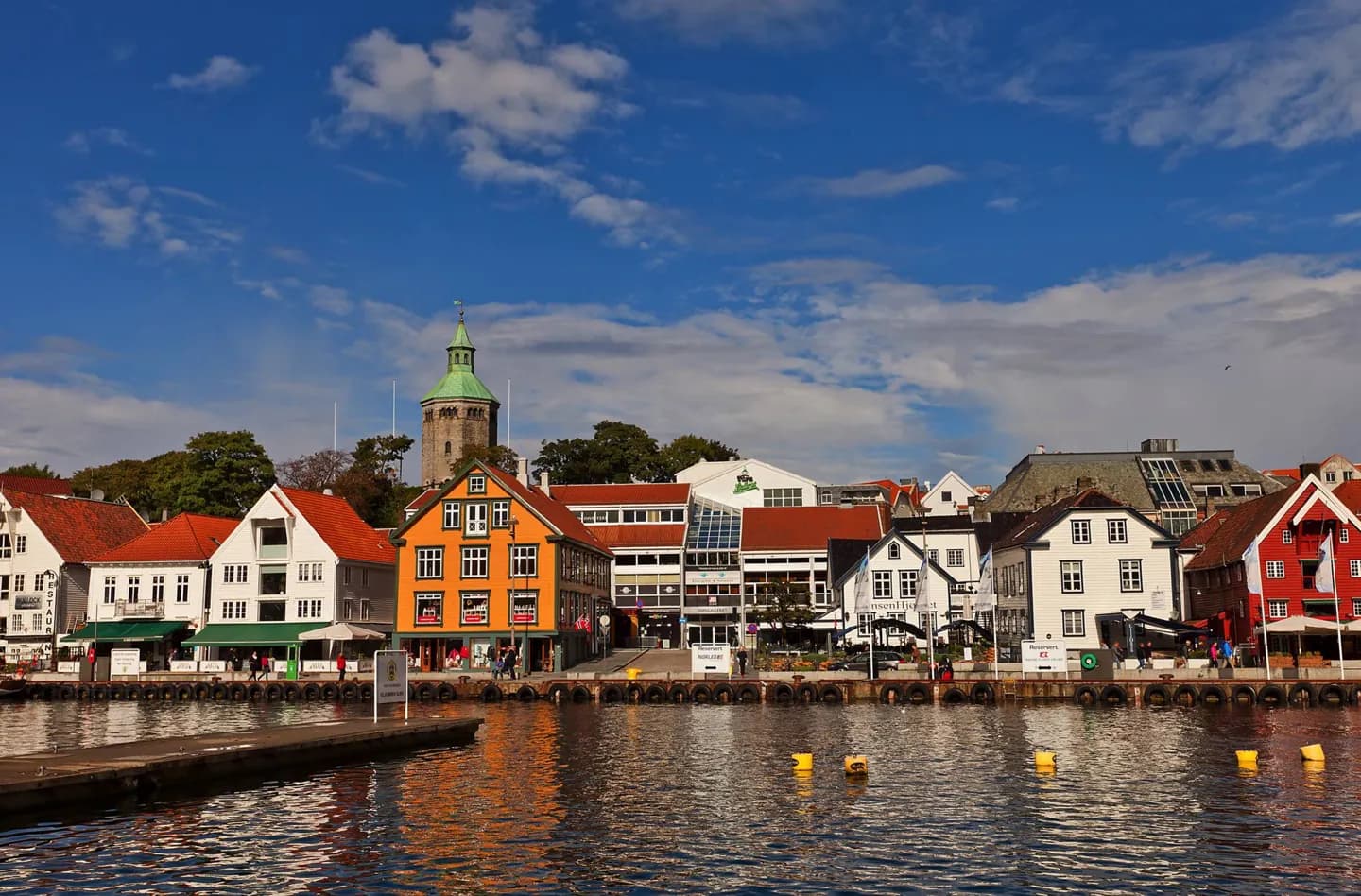
The city’s history explains the striking mix of a medieval cathedral, wooden harbour streets and an offshore industry museum. It also gives context to the Three Swords monument at Hafrsfjord, which marks an earlier story about royal power in the region.
The full story
People lived in the Stavanger region long before the city emerged. North Jæren’s position on coastal routes and near fertile land made it important in the Viking Age. Hafrsfjord is traditionally associated with a battle in the late ninth century and the consolidation of royal power, although the date and details remain debated. Stavanger developed as a church and market centre in the twelfth century. A bishopric was established, and the city counts 1125, the traditional completion year of its cathedral, as its foundation. The cathedral still makes that medieval role visible in the centre. The Reformation weakened Stavanger’s religious importance, and the city later experienced periods of decline. The nineteenth-century herring trade brought renewed work to the harbour, followed by shipping, shipbuilding and fish canning. Gamle Stavanger’s wooden houses and the Norwegian Canning Museum help explain this phase of the city’s life. When oil was discovered in the North Sea in 1969, Stavanger became a key onshore centre for the Norwegian sector. Rapid growth followed. The Norwegian Petroleum Museum tells that later story beside the same waterfront that had supported earlier maritime trades. Walking between these places makes Stavanger’s repeated changes of fortune easier to see.
Useful to know
- Compare the cathedral, Gamle Stavanger and Petroleum Museum to see the main eras in one central visit.