
Why go
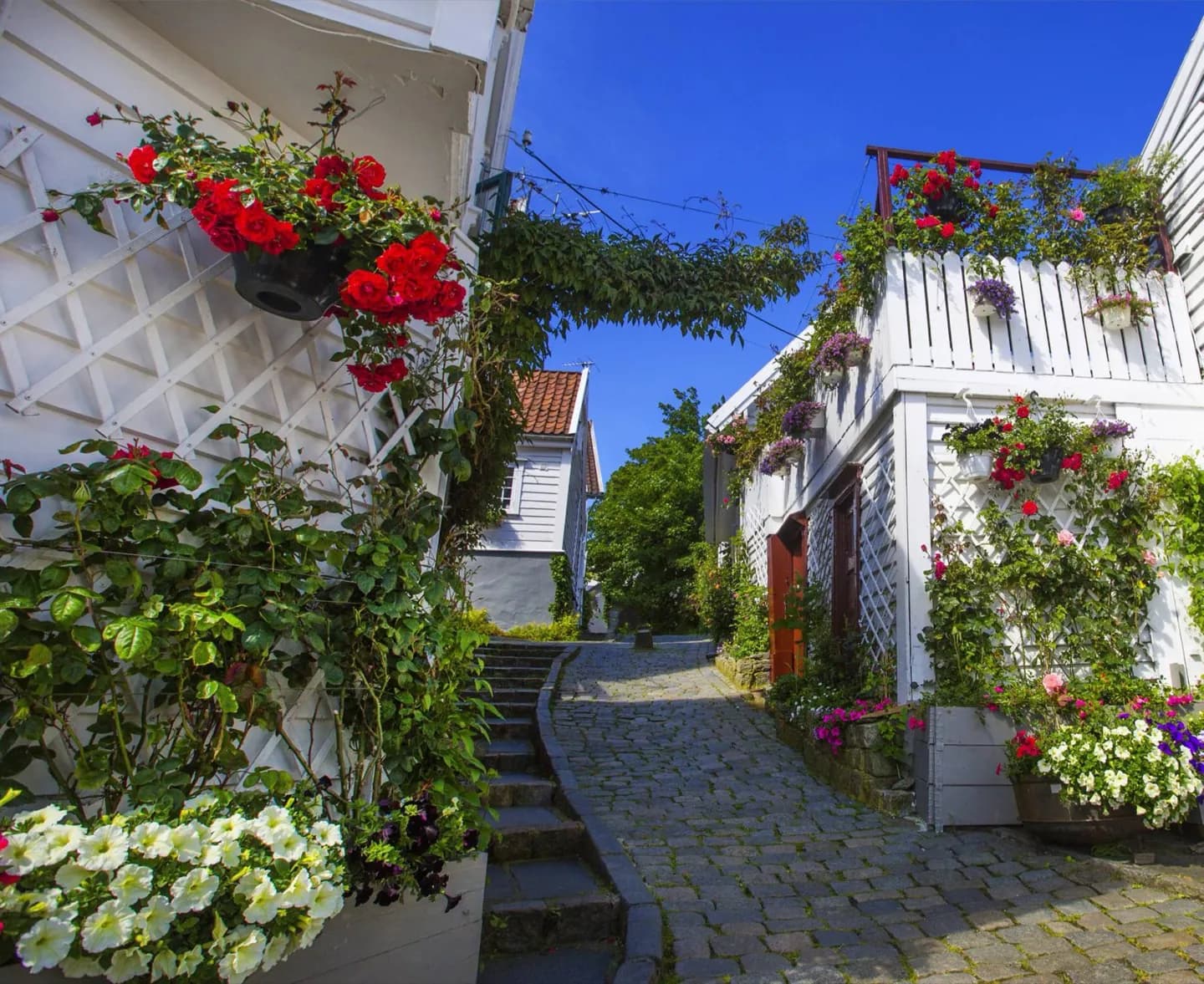
Start with Stavanger Cathedral and Gamle Stavanger to read the city’s oldest layers. The Canning Museum and Norwegian Petroleum Museum explain successive industries, while Fargegaten, the art museum by Mosvatnet and Sverd i fjell offer different reasons to leave or extend the central walk.
The full story
Stavanger Cathedral is the clearest place to begin: its medieval origins explain why this harbour town became a religious centre. From there, Gamle Stavanger shifts the story to narrow streets and wooden houses associated with the city’s later maritime and canning economy. The Norwegian Canning Museum makes that working past tangible; the Norwegian Petroleum Museum on the waterfront follows the offshore industry that reshaped Stavanger in the twentieth century. For a less historical walk, Øvre Holmegate, often called Fargegaten, is known for its brightly painted façades. The street is a quick contrast with the older white wooden houses across town. The art museum near Mosvatnet offers another perspective on the region, including work associated with Stavanger-born landscape painter Lars Hertervig. A visit there can be paired with a lakeside walk. Sverd i fjell, the Three Swords monument, stands by Hafrsfjord outside the centre. It evokes the battle traditionally linked with Norway’s early unification, though the exact historical chronology is debated. Give it a separate trip rather than squeezing it between central museums. Weather matters for the exposed waterfront, lake and fjord stops; indoor museums make a useful alternative when rain or wind limits the outdoor walk.
Useful to know
- Group the cathedral, Gamle Stavanger and central museums on foot.
- Treat Mosvatnet and Sverd i fjell as separate outings from the central sights.