
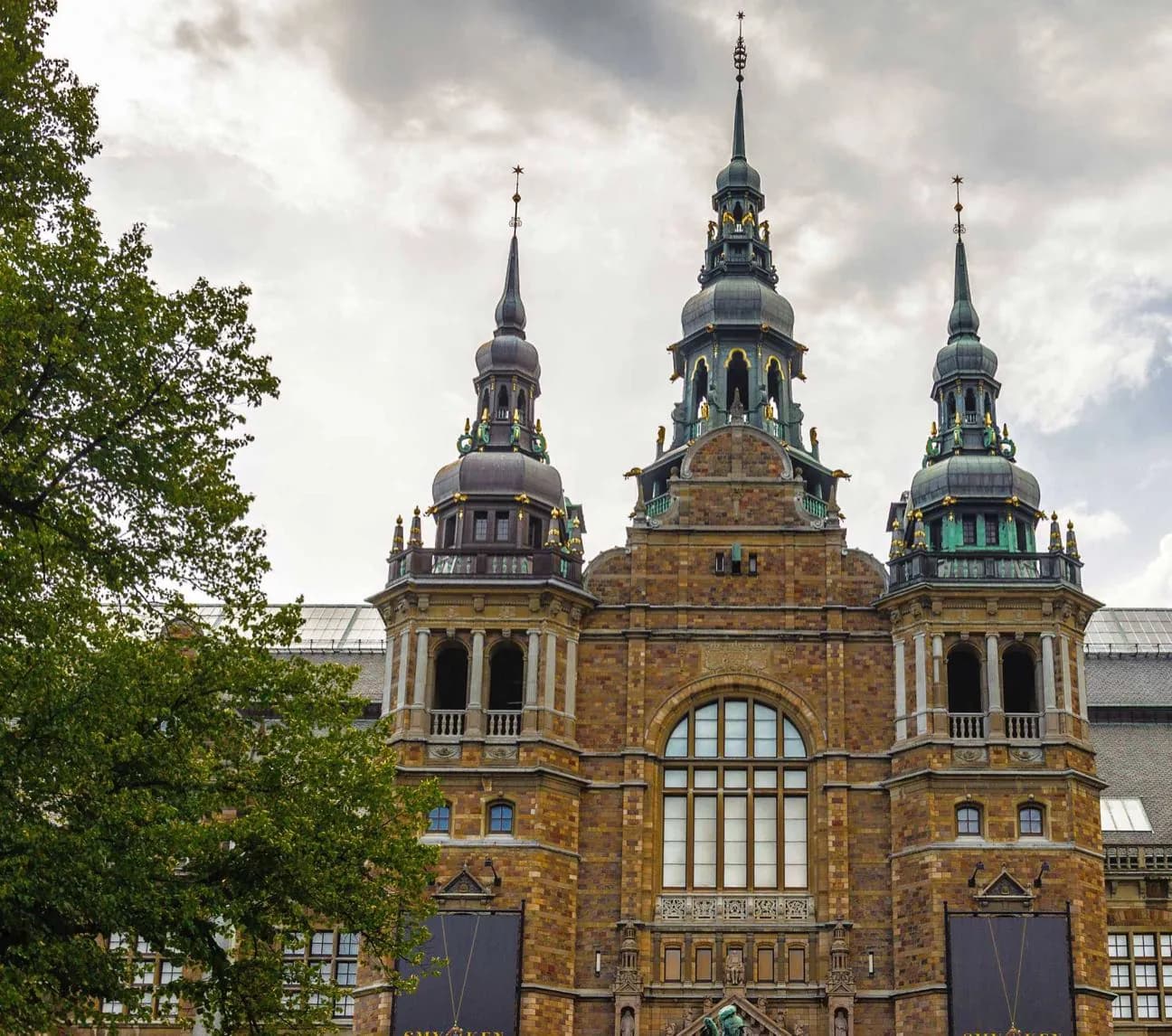
Why go
Visit for social history told through clothing, interiors, crafts, traditions and domestic objects rather than kings and battles alone. The cathedral-like main hall and changing exhibitions make the building itself part of the experience, especially on a museum-focused Djurgården day.
What to look for
- The vast central hall beneath Isak Gustaf Clason’s architecture.
- Collections tracing Nordic life from the sixteenth century onward.
- Domestic interiors, textiles and traditions that make broad history tangible.
The full story
Nordiska museet was founded in the late nineteenth century by Artur Hazelius, who also created the Skansen open-air museum. His aim was to collect and interpret the material culture of Sweden and the Nordic countries at a moment of rapid industrial and social change. The present building, designed by Isak Gustaf Clason, was completed in 1907. It was originally imagined on an even larger scale as a national monument, and the surviving structure still feels palatial, with a great hall that dwarfs visitors before they reach the collections. Inside, the emphasis moves from monumental architecture to ordinary life: furniture, clothing, tools, festivals and domestic environments. That contrast is productive. The building announces national importance, while the objects show that cultural history is constructed from repeated practices and personal possessions as much as famous events.
Useful to know
- Allow two hours and use the official schedule for the current day.
- Combine it with the Vasa Museum nearby, but expect both together to fill most of an afternoon.
Your next visit
Estimated · Declared scenario and planning estimates; no live opening, weather, queue or booking service.
Indoor visit · 30–45 min
World planning estimate; admission, opening, visit duration and access need checking.