
Why go
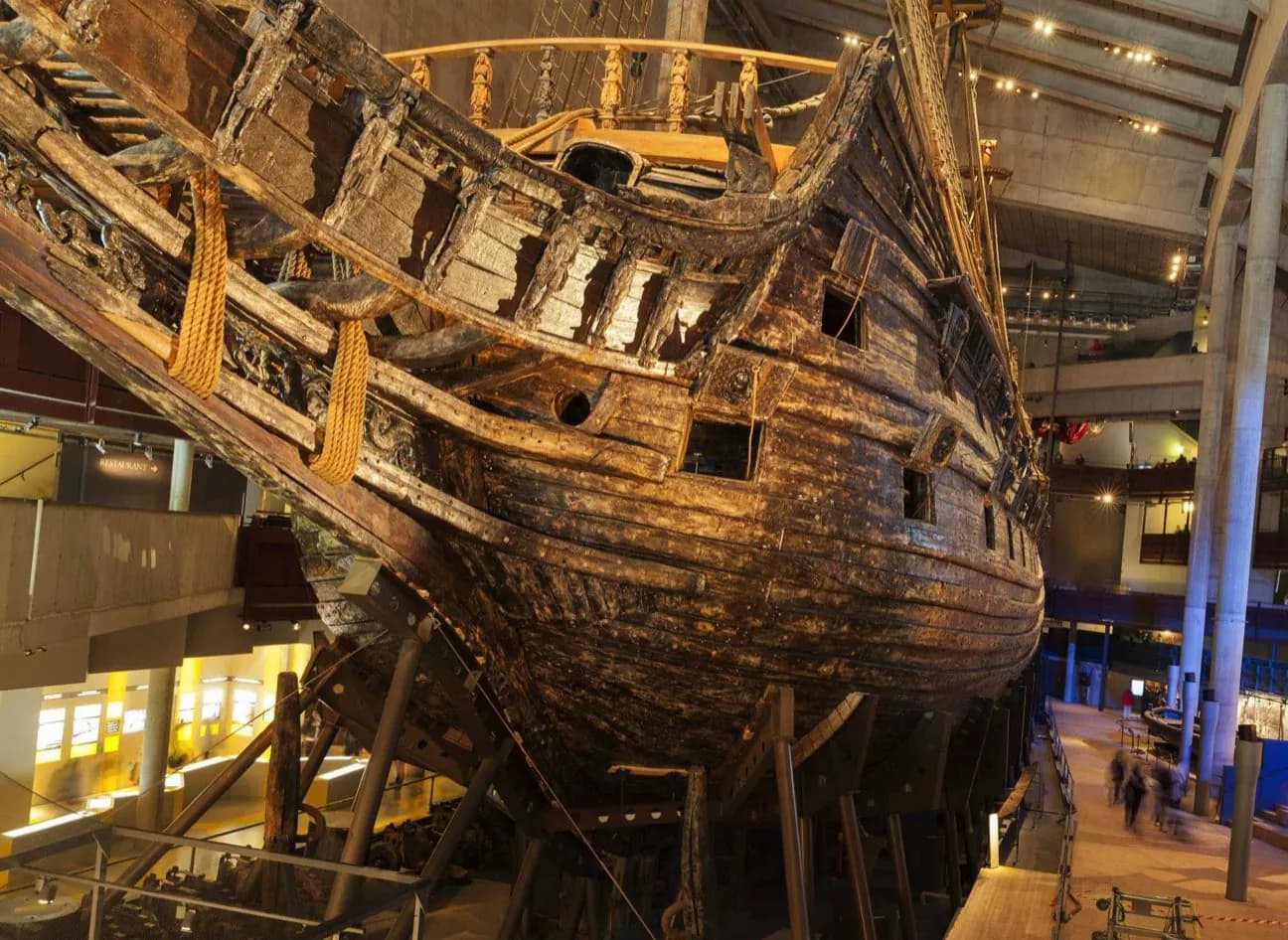
Prioritize this museum if one concentrated object can anchor your understanding of Sweden’s maritime past. Multiple viewing levels expose the ship’s scale and carved decoration, while surrounding exhibitions explain why it sank in 1628 and how it was raised after 333 years.
What to look for
- The original warship viewed from several heights.
- Hundreds of carved figures across the stern and upper works.
- Displays on construction, life aboard, sinking, salvage and conservation.
The full story
Vasa was a heavily armed royal warship built during Sweden’s seventeenth-century military expansion. It sailed from Stockholm in 1628 but capsized and sank on its maiden voyage after traveling only a short distance. The Baltic’s cold, brackish water helped preserve the wooden hull, and the ship was located in the twentieth century before being raised in 1961. Archaeologists recovered the vessel, human remains and thousands of objects connected with life aboard. The present museum opened on Djurgården in 1990 and was designed around the conserved ship. Its dark hall and multiple galleries let visitors inspect a structure that cannot be boarded. Notice the difference between the surviving timber and reconstructed elements, then use the exhibitions to understand the unstable design, the political pressure behind the project and the continuing conservation challenge.
Useful to know
- Allow about ninety minutes and bring a light layer because preservation keeps the hall cool.
- Large bags are restricted; check current admission and opening information before arrival.
Your next visit
Estimated · Declared scenario and planning estimates; no live opening, weather, queue or booking service.
Indoor visit · 30–45 min
World planning estimate; admission, opening, visit duration and access need checking.