
Why go
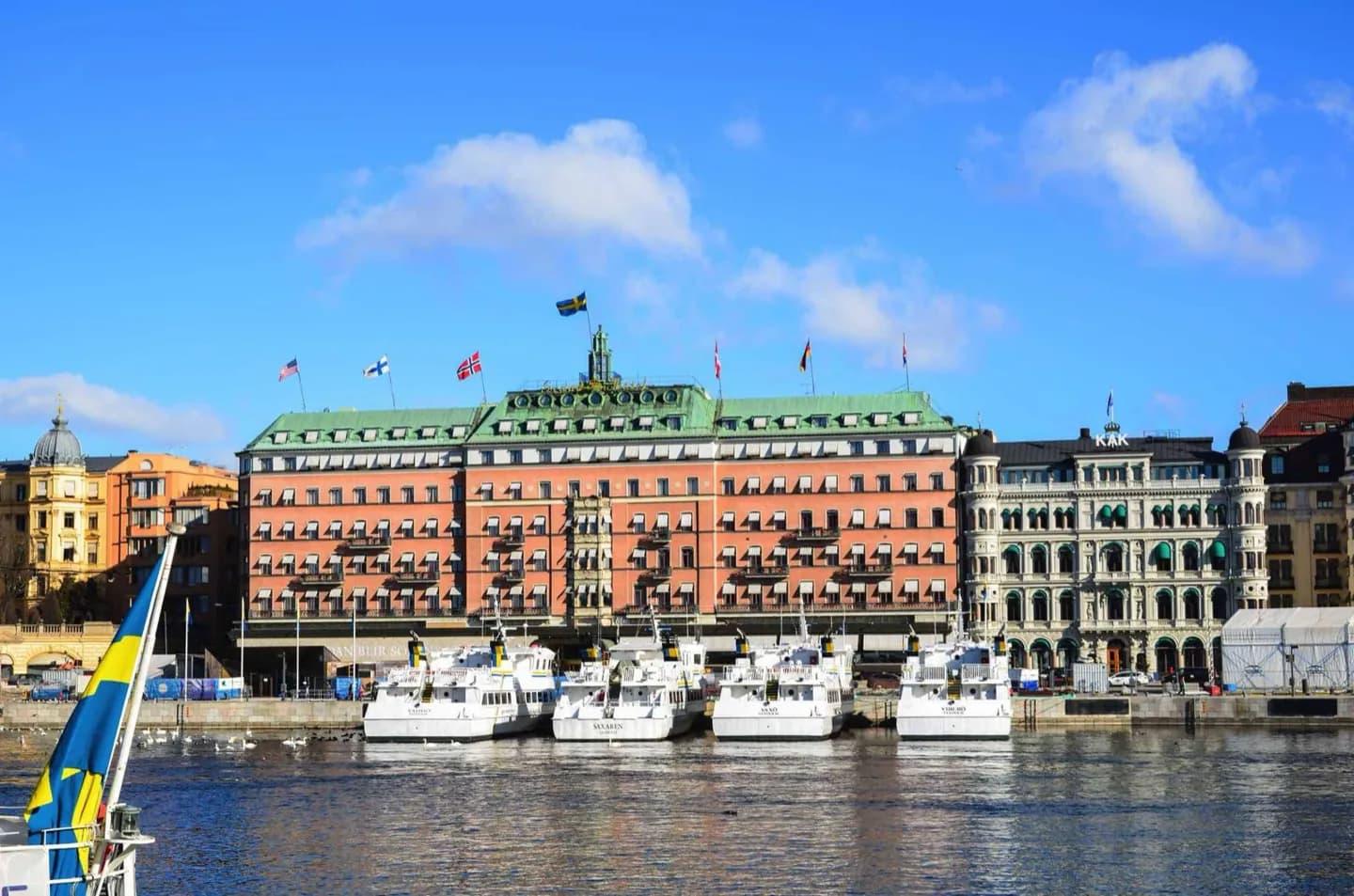
The building is best treated as part of Blasieholmen’s urban panorama rather than a conventional attraction. Its facade, harbor position and views toward Gamla Stan explain why the hotel became a setting for high-profile visitors and formal city life. The waterfront position explains the hotel’s enduring ceremonial presence.
What to look for
- The main facade facing the palace across the water.
- Its immediate relationship with Nationalmuseum and the archipelago quays.
- The hotel’s long association with Nobel laureates.
The full story
Grand Hôtel was founded by the French hotelier Jean-François Régis Cadier and opened in 1874. Its location on Blasieholmen placed guests opposite the Royal Palace and Gamla Stan, close to the opera, parliament and boats serving the archipelago. That concentration of institutions helped the hotel become part of Stockholm’s official social geography. Since the early twentieth century, Nobel laureates and their families have traditionally stayed here during prize week, strengthening its association with international ceremony. The building has changed and expanded over time, so its significance lies less in one preserved design than in continuity of use and setting. From the waterfront, compare the hotel’s formal facade with Nationalmuseum nearby and the palace across the harbor. The ensemble shows how nineteenth-century Stockholm framed elite travel, culture and state occasions around the water.
Useful to know
- View the exterior while walking between Nationalmuseum and Kungsträdgården.
- Interior spaces belong to an operating hotel; enter only for a booking or publicly offered service.
Your next visit
Estimated · Declared scenario and planning estimates; no live opening, weather, queue or booking service.
Outdoor visit · 30–45 min
World planning estimate; admission, opening, visit duration and access need checking.