
Why go
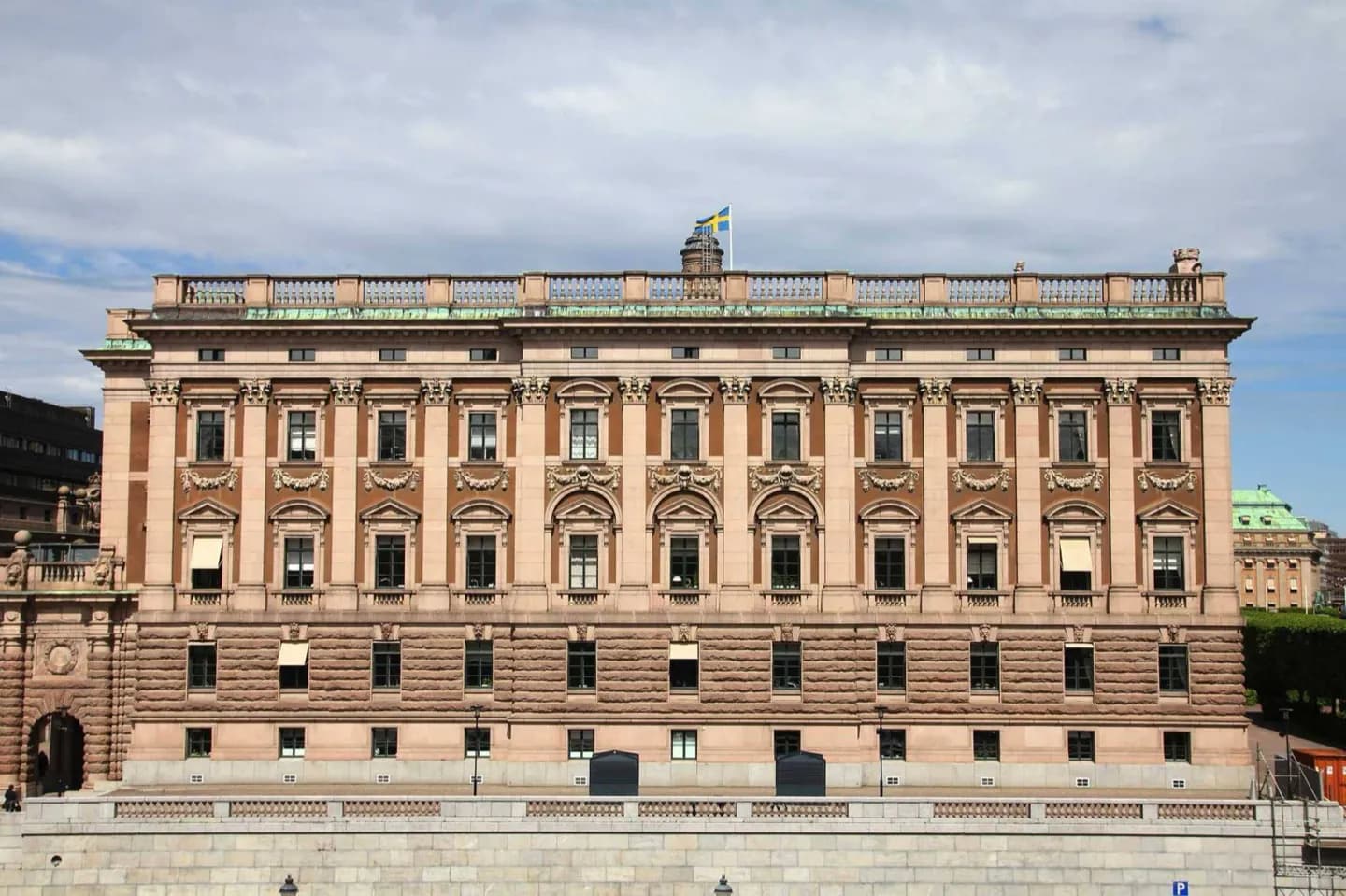
The exterior explains Sweden’s national government through architecture and geography: parliament sits between the Royal Palace, the commercial center and the water. Public tours, when scheduled, add the assembly spaces and the workings of contemporary Swedish democracy. The island setting makes the institution’s relationship with Gamla Stan unusually legible.
What to look for
- The long ceremonial facade facing the water and city center.
- The complex’s position across the small island of Helgeandsholmen.
- Views linking parliament with the Royal Palace and northern Gamla Stan.
The full story
The Parliament House, Riksdagshuset, was erected between 1897 and 1905 on Helgeandsholmen. It replaced the older parliamentary premises on Riddarholmen and originally accommodated both the Riksdag and Sweden’s national bank. Political reform later changed the building. When the bicameral parliament became a single chamber in 1971, the former bank portion was rebuilt to house the new assembly hall. The complex therefore reflects both the monumental confidence of the turn of the twentieth century and the practical adaptation required by modern democracy. Its island site is especially significant. Parliament lies directly between the Royal Palace in Gamla Stan and the later commercial city to the north, connected by bridges and surrounded by moving water. That placement turns a government building into a visible part of everyday movement through central Stockholm.
Useful to know
- Exterior views work in daylight without a timed visit.
- For a tour, consult the Riksdag calendar and allow extra time for the required security check.
Your next visit
Estimated · Declared scenario and planning estimates; no live opening, weather, queue or booking service.
Outdoor visit · 30–45 min
World planning estimate; admission, opening, visit duration and access need checking.