
Why go
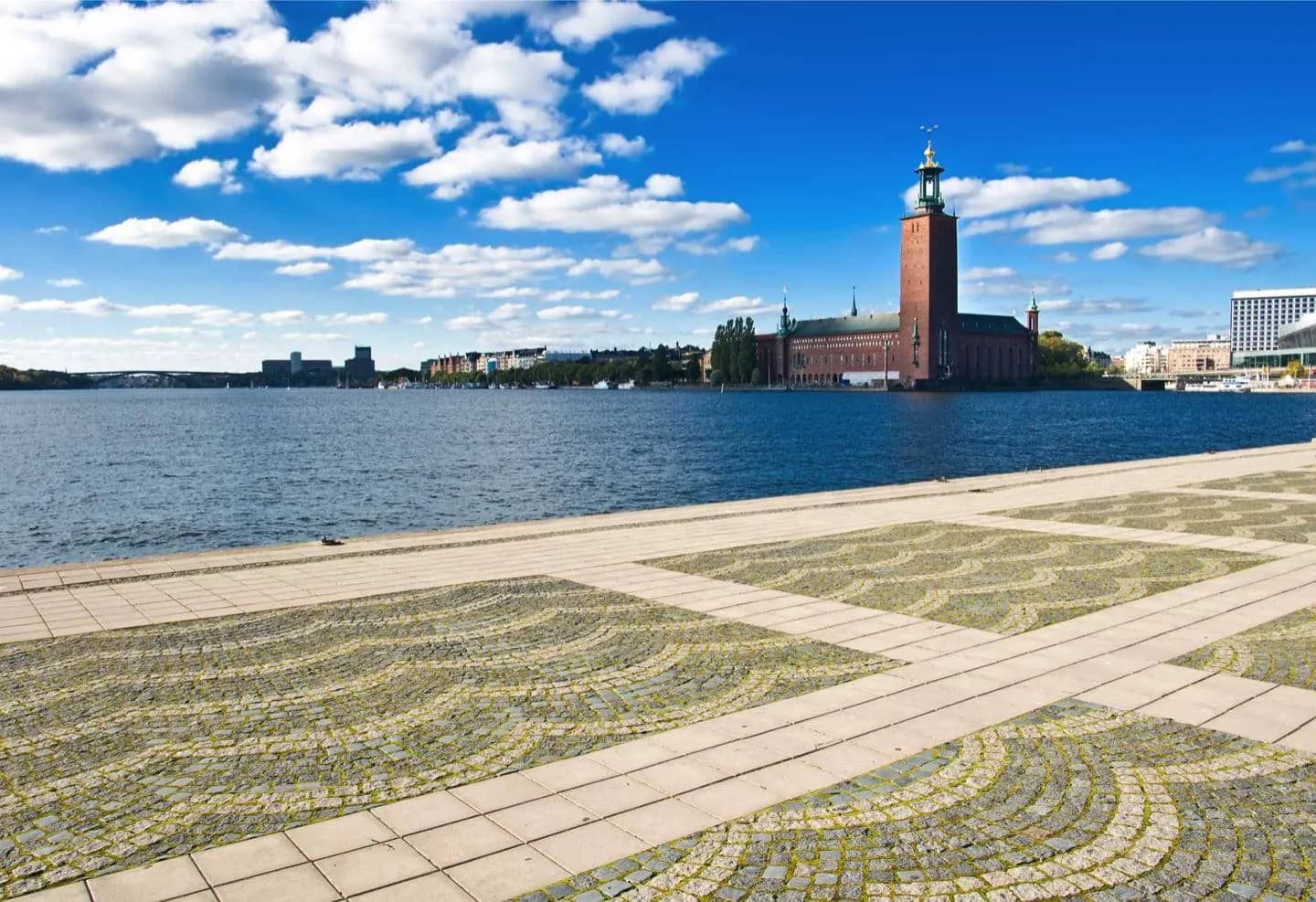
Come for architecture that defines the city from both land and water. The tower, courtyards and relationship with Riddarfjärden reward an exterior visit; an official tour adds the ceremonial interiors associated with Stockholm government and the Nobel banquet. The lakeside setting makes its civic symbolism especially easy to read.
What to look for
- The tower and three-crown finial dominating the waterfront skyline.
- Borgargården courtyard and the building’s carefully framed arches.
- The contrast between the brick exterior and richly decorated ceremonial halls.
The full story
Stockholm City Hall stands at the eastern tip of Kungsholmen, facing Riddarholmen and Södermalm across Riddarfjärden. Architect Ragnar Östberg designed the building, completed in 1923, around two major open spaces: the civic courtyard Borgargården and the Blue Hall inside. More than a municipal office, the complex was conceived as a symbolic city monument shaped by Swedish National Romanticism and references to Italian civic architecture. Its brick mass and tower create one of Stockholm’s defining silhouettes. The Blue Hall hosts the annual Nobel banquet, while the Golden Hall is known for its extensive mosaics. These ceremonial associations can overshadow the most useful architectural insight: the building is organized around movement between enclosed courts, arcades and open water. Walk the perimeter to see how Östberg repeatedly frames the city beyond the walls.
Useful to know
- Check official tour times if interiors are essential; otherwise allow thirty minutes for the exterior and waterfront.
- The exposed shoreline can feel cold or windy even when nearby streets are comfortable.
Your next visit
Estimated · Declared scenario and planning estimates; no live opening, weather, queue or booking service.
Outdoor visit · 30–45 min
World planning estimate; admission, opening, visit duration and access need checking.