
Why go
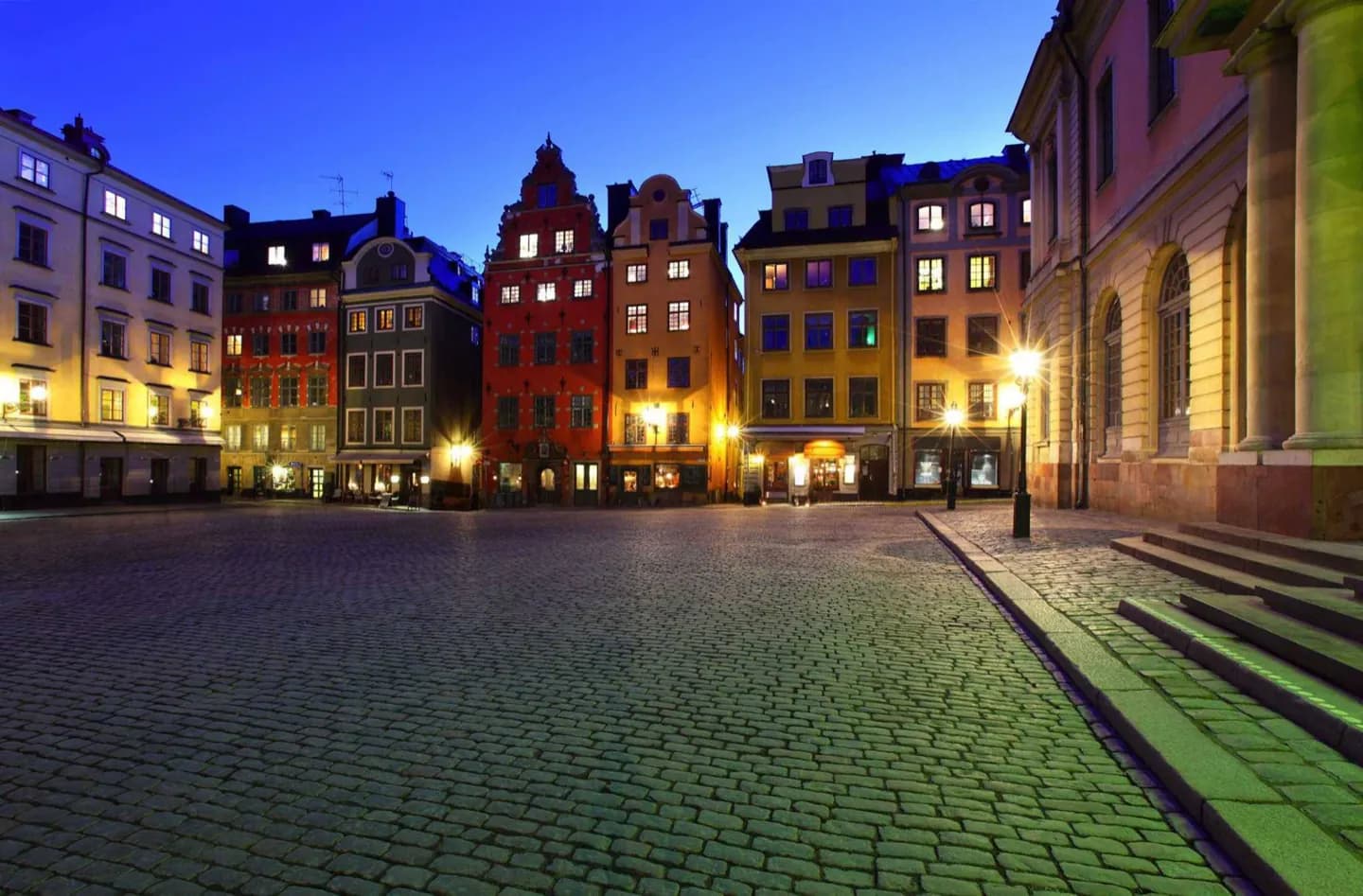
Pause here to read the Old Town’s urban structure rather than simply photographing the buildings. The square links the Nobel Prize Museum, historic merchant houses and lanes descending toward both waterfronts, making it the clearest orientation point in Gamla Stan.
What to look for
- The narrow colored facades on the western side.
- The former Stock Exchange Building occupying the square’s formal northern edge.
- Street openings that reveal the uneven medieval topography.
The full story
Stortorget, literally the Big Square, is small by modern standards but fundamental to Stockholm’s history. The medieval town developed around this plateau on Stadsholmen, and the surrounding streets still descend from it toward the water. Its irregular proportions reflect gradual urban growth rather than a single formal plan. Later buildings gave the square stronger architectural edges, especially the Stock Exchange Building on the north side and the tall merchant houses to the west. Public memory also attaches the square to political conflict and civic ceremony, while contemporary life brings demonstrations, performances and a seasonal market. The enduring value is spatial. Stand near the center and compare each exit: some lanes narrow immediately, others reveal church towers or lead toward the quay. That network explains why Stortorget remains the practical and symbolic heart of Gamla Stan.
Useful to know
- Arrive early if you want space to study the facades before group traffic builds.
- Use the square as a pivot between the cathedral, Österlånggatan and the western lanes.
Your next visit
Estimated · Declared scenario and planning estimates; no live opening, weather, queue or booking service.
Outdoor visit · 30–45 min
World planning estimate; admission, opening, visit duration and access need checking.