
Why go
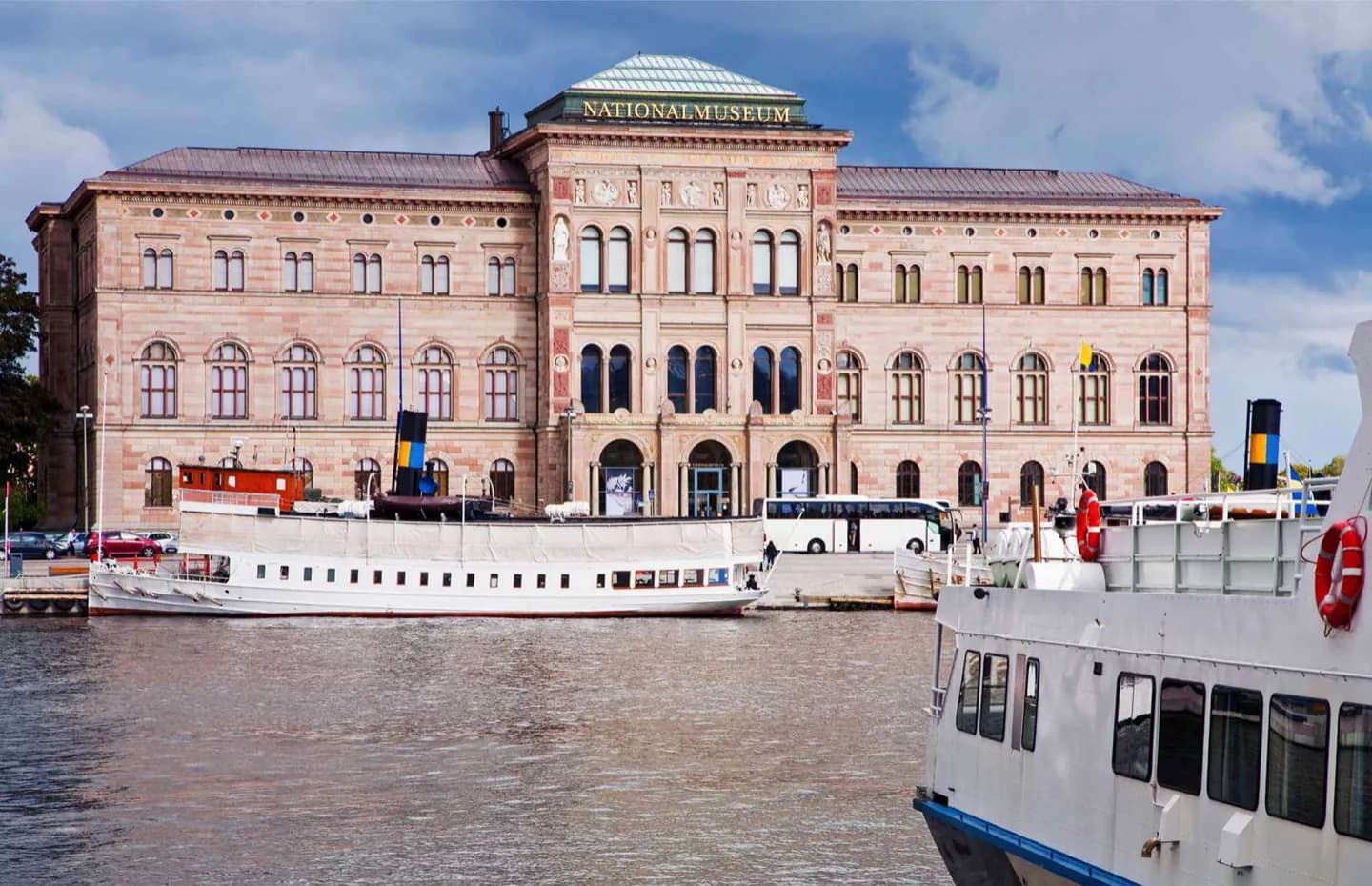
Choose it for a broad, indoor survey rather than a single famous masterpiece. The collection connects European painting with Swedish art, decorative objects and design, while the restored building itself provides a measured sequence of galleries and public halls. The waterside approach strengthens the transition from city to collection.
What to look for
- Painting and sculpture from the Renaissance through the nineteenth century.
- Swedish works shown alongside wider European traditions.
- Applied arts and design displayed across several centuries.
The full story
Nationalmuseum traces its institutional origins to the Royal Museum founded in 1792, drawing on collections assembled by the Swedish crown and prominent patrons such as Carl Gustaf Tessin. The current building opened on Blasieholmen in 1866 and gave the museum its modern name. Its holdings span paintings, sculpture, drawings, prints, porcelain and applied arts, allowing visitors to follow both European traditions and the development of Swedish visual culture. The museum’s waterfront position also matters. It faces the Royal Palace and sits beside the route toward Skeppsholmen and Djurgården, placing art within Stockholm’s ceremonial landscape. Recent restoration renewed the galleries while retaining the historic architecture. Instead of rushing toward isolated highlights, follow one chronological or material thread—portraiture, Scandinavian painting, ceramics or furniture—to see how collecting priorities and ideas of national culture changed over time.
Useful to know
- Allow at least two hours for the main collection and check current exhibition access.
- Thursday has later opening under the current official schedule; confirm exceptions before visiting.
Your next visit
Estimated · Declared scenario and planning estimates; no live opening, weather, queue or booking service.
Outdoor visit · 10–15 min
Public-space walk and exterior observation only; no interior, garden, tower or ticketed admission included. Durations and walking are estimates. Check temporary restrictions and park or market opening times.
Indoor visit · 30–45 min
World planning estimate; admission, opening, visit duration and access need checking.