
Why go
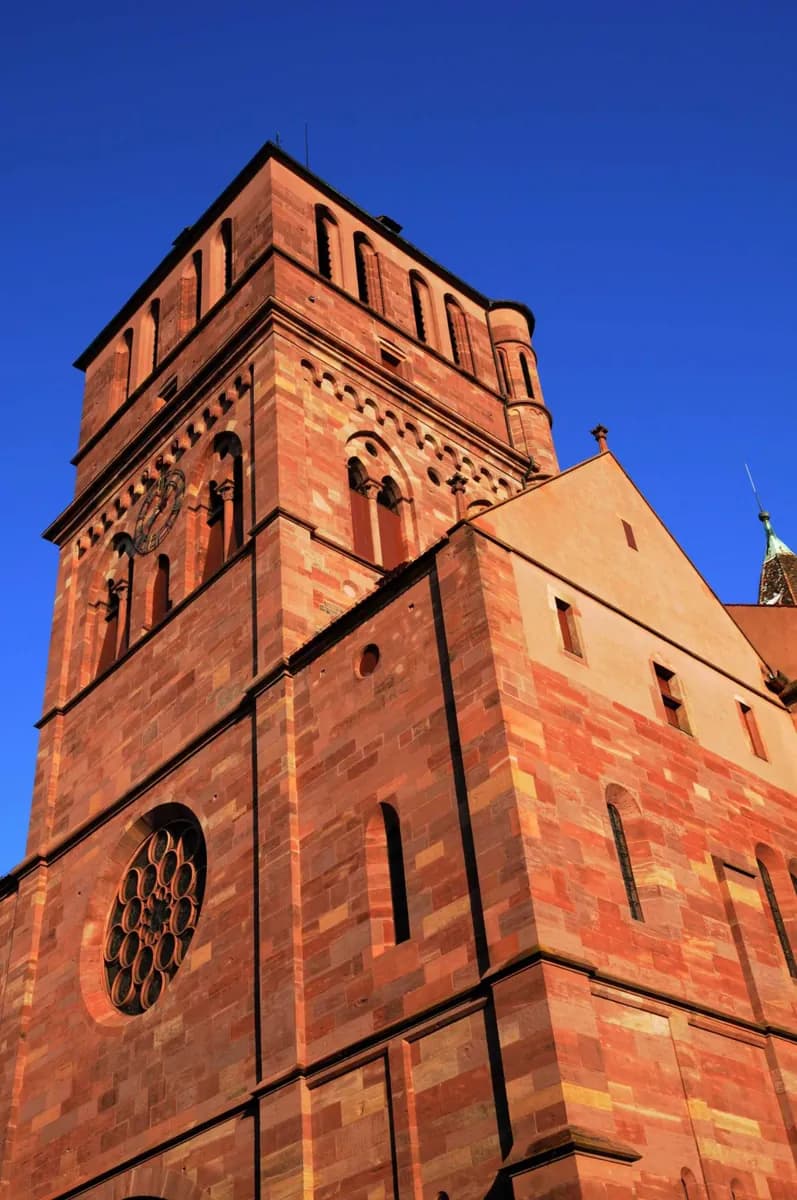
After Strasbourg Cathedral returned to Catholic worship, Saint-Thomas became a central Protestant church. Its five-aisled hall, historic organs and Maurice de Saxe mausoleum give the visit several distinct points of focus. It is especially rewarding if you want to compare the city’s religious traditions through their buildings.
What to look for
- Five aisles form an unusually broad hall-like interior.
- The mausoleum of Maurice de Saxe dominates the choir.
- Historic organs include a Silbermann instrument associated with Mozart.
The full story
Saint-Thomas carries a different strand of Strasbourg’s religious history from the cathedral. When the cathedral returned to Catholic use after the city passed to France in 1681, this church became a principal Protestant centre. Its five-aisled hall plan produces a notably wide interior, one in which the side spaces feel closely connected to the main nave. Music is part of that history: the church has an eighteenth-century Silbermann organ that Mozart played in 1778, and another organ linked to Albert Schweitzer’s design ideas. The monuments stretch across many periods, but the grand late Baroque mausoleum of Marshal Maurice de Saxe, made by Jean-Baptiste Pigalle, commands particular attention in the choir. Its theatrical sculpture sits within a church whose earlier fabric tells a longer story. Looking from the broad aisles toward the tomb helps you see how architecture, commemoration and Protestant worship share the same space.
Useful to know
- Check visiting access around services before setting out.
- Give the choir monument and organs separate attention inside.
Your next visit
Estimated · Declared scenario and planning estimates; no live opening, weather, queue or booking service.
Indoor visit · 20–35 min
World planning estimate; admission, opening, visit duration and access need checking.