
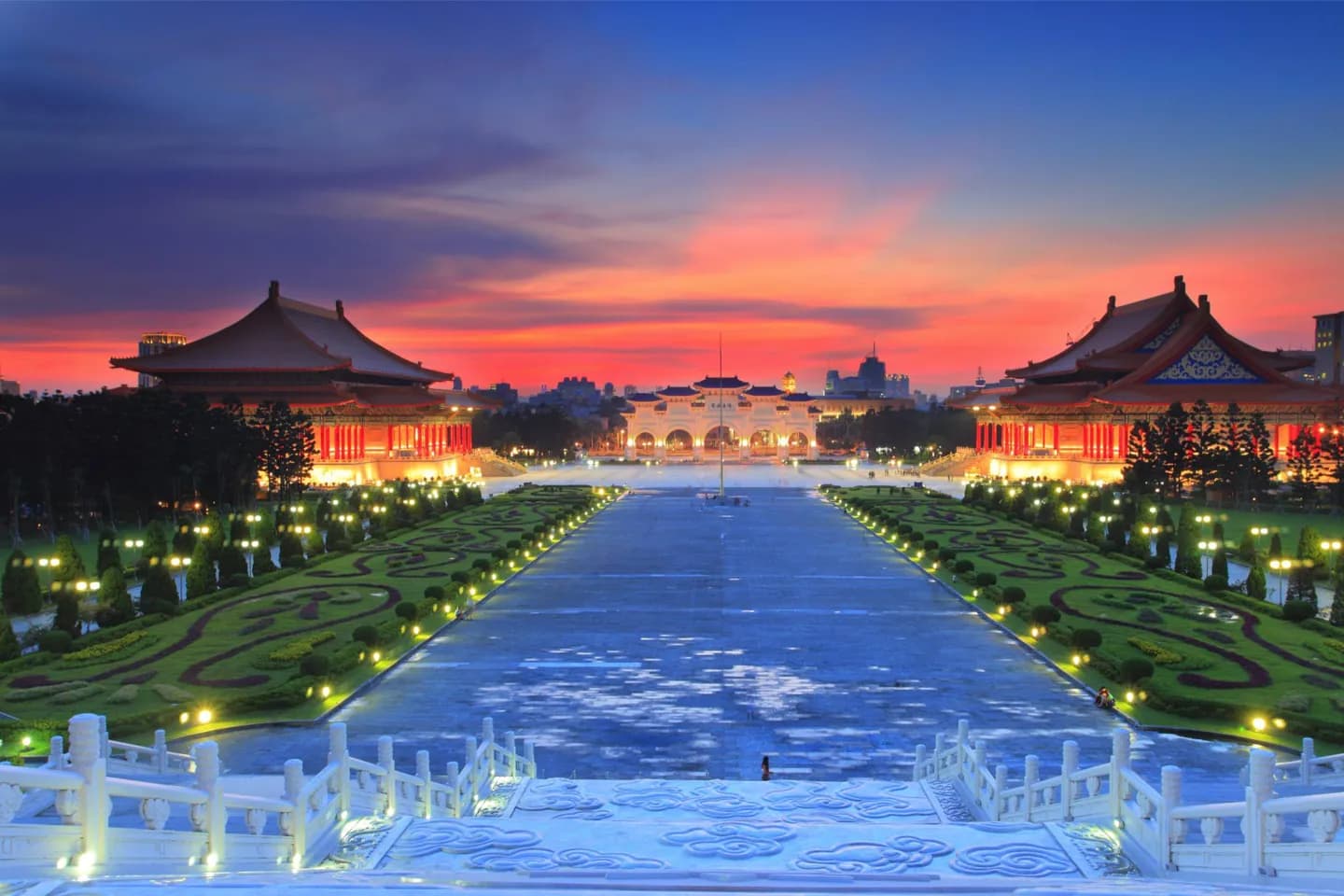
Why go
The Republic of China government relocated to Taipei in 1949 as the Chinese Civil War ended on the mainland. Martial law stayed in force until 1987 and restricted opposition. Later constitutional and electoral changes made public political participation possible on a different scale, giving present-day memorials and civic spaces a deeper timeline.
The full story
After defeat by Communist forces on the mainland, Chiang Kai-shek and the Republic of China government moved to Taiwan in 1949. Soldiers, officials and civilians arrived with them, changing the island’s population and politics. The Kuomintang continued to govern under martial law, which had been declared in May 1949 and remained in place for decades. The state used those emergency powers to suppress political opposition. Political liberalization gathered pace in the late twentieth century. Martial law ended in 1987, and new parties and elections gradually changed the system that had supported one-party dominance. Constitutional reforms in the early 1990s led to direct presidential voting in 1996. These milestones matter on a visit because they place large official buildings, memorials and public squares in a living political history rather than a finished monument story. The contrast between authoritarian rule and later elections is one of the clearest ways to understand the country’s recent past.