
Why go
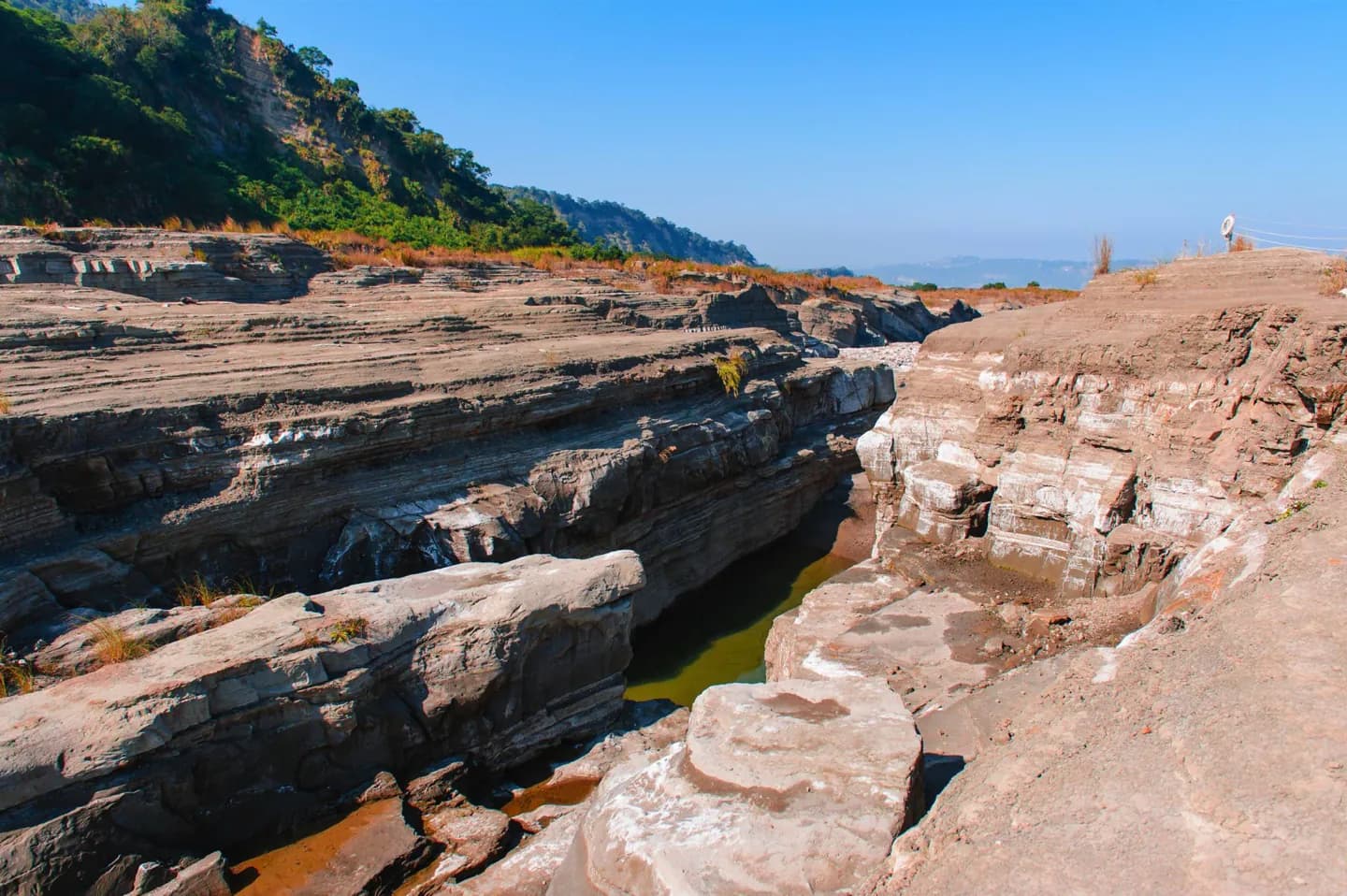
The shallow Taiwan Strait was exposed during periods of lower sea level, while the island’s rising mountain ranges created sharply different environments. Finds in Tainan and on the southeast coast show early human presence. Later farming communities connect Taiwan to the wider Austronesian world, adding depth to museum visits and encounters with Indigenous heritage.
The full story
Taiwan stands on an active boundary between the Eurasian and Philippine Sea plates. The mountains that dominate its east are part of that geological story. During the last glacial period, sea levels were much lower, exposing parts of today’s Taiwan Strait as land. Fossils and human remains found around the strait and in Tainan point to a long prehistory; some of the Zuozhen human fragments have been dated to roughly 20,000–30,000 years ago. Archaeological sites on the southeast coast have yielded chipped-stone tools associated with the Changbin culture. Around 5,000 years ago, farming communities from the southeastern Chinese coast settled on the island. They are linked in the source account to Austronesian languages, whose speakers later spread across islands of the Pacific and Indian Oceans. Present-day Indigenous peoples are connected to that history, though their cultures are not a single uniform tradition. The useful perspective for a visitor is scale: the Dutch forts and Qing towns belong to a comparatively recent chapter of an island already inhabited for millennia.